Int’l cooperation helps with combating drug crime in Vietnam

The enhancement of international cooperation as well as the implementation of bilateral and multilateral agreements has helped Vietnam prevent domestic drug crime efficiently.
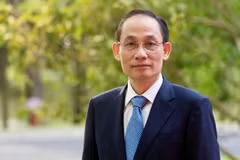
Int’l cooperation helps with combating drug crime in Vietnam ảnh 1Deputy Minister of Public Security Le Quy Vuong speaks at the UNGASS Special Session (Photo: VNA)

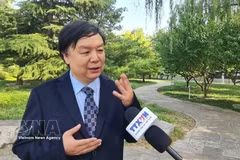
Hanoi (VNA) – The enhancement of international cooperation as well as the implementation of bilateral and multilateral agreements has helped Vietnam prevent domestic drug crime efficiently, Deputy Minister of Public Security Le Quy Vuong said in an interview granted to the Vietnam News Agency on April 20.

The official is leading a Vietnamese delegation to attend the Special Session of the United Nations General Assembly on the World Drug Problem (UNGASS), which is underway in New York city, the US, from April 19-21.

Vietnam always attaches much importance to strengthening and expanding collaboration with international organisations, he said, adding that following the spirit of multilarisation and diversification of relations, Vietnam has been a responsible member and reliable partner of the UN.

Apart from proactively integrating into the global community, Vietnam has actively joined other nations to implement socio-economic development programmes and step up prevention of crimes and particularly drug related crime, he said.

He went on to say that Vietnam has engaged in many UN Conventions and signed a number of bilateral cooperation agreements on narcotics control with multiple countries in the region and beyond, while enhancing coordination with international organisations, especially the United Nations Office on Drugs and Crime (UNODC), the Commission on Narcotic Drugs (CND) and the International Criminal Police Organisation (Interpol).

Vietnam also upholds the respect for sovereignty, territorial integrity and the principle of not interfering in domestic affairs in addressing drug-related issues, he said, confirming the crucial role of CND in the UN system on building global drug policies.

The official noted that Vietnamese forces have received, handled and exchanged a large amount of information relating to drug crimes provided by other countries, thus successfully cracking down on major cross-border drug trafficking cases.

The establishment of the Border Liaison Office (BLO) and the conducting of joint activities with China, Laos and Cambodia have enabled Vietnam to verify and address hundreds of received data on foreign drug crimes as well as control and prevent the activities involved in selling and buying drug precursors.

Vietnam has also collaborated with relevant agencies of other countries to arrest and transfer a number of wanted foreign criminals escaping into the country and Vietnamese criminals fleeing abroad, he said.

Through diplomatic activities and international cooperation, Vietnam has obtained the support of other countries and international organisations in training and improving the capacity of officials in drug crime fighting as well as sharing experience at numerous workshops, he added.

According to the Deputy Minister, the Vietnamese delegation also attended an event on cooperation mechanism to prevent trading, producing and using of drugs in the Golden Triangle – one of Asia’s main opium-producing areas, on the sidelines of the UN session.

The delegation participated in several events hosted by ASEAN countries and held bilateral meetings with some partner countries in the field./.
VNA

See more

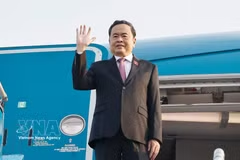
National Assembly President Tran Thanh Man leaves Hanoi on October 11 for an official visit to China. (Photo: VNA)

National Assembly President departs for official visit to China

The visit aims to further implement the foreign policy set out at the 14th National Party Congress, enhance the effectiveness of cooperation between Vietnam’s National Assembly and the National People’s Congress of China, and reaffirm the pivotal role of parliamentary cooperation in the overall Vietnam-China comprehensive strategic cooperative partnership.

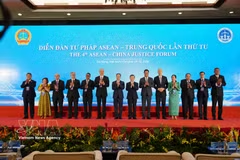
Officials pose for a group photo at the opening ceremony of the fourth ASEAN–China Justice Forum in Da Nang on October 10, 2026. (Photo: VNA)

Da Nang hosts fourth ASEAN–China Justice Forum

The forum offers a venue for participants to share experience in handling cross-border criminal cases and civil and commercial disputes, as well as to explore ways for more effective cooperation in line with national laws and international treaties.

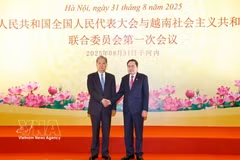
President of the National Assembly Tran Thanh Man (right) and Chairman of the Standing Committee of the National People’s Congress of China Zhao Leji at the first session of the Cooperation Committee between the two legislative bodies in Hanoi on August 31, 2025 (Photo: VNA)

Top legislator’s visit to step up Vietnam–China parliamentary ties

NA President Tran Thanh Man's visit is expected to mark further progress in cooperation between the two Parties and countries, as well as between their parliaments, helping to further develop the Comprehensive Strategic Cooperative Partnership and the Vietnam–China community with a shared future that carries strategic significance.

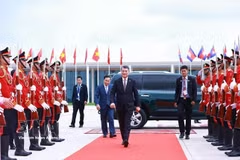
Prime Minister Le Minh Hung leaves Phnom Penh at noon October 10, concluding the wo-day official visit to Cambodia. (Photo: VNA)

PM Le Minh Hung wraps up official visit to Cambodia

PM Le Minh Hung’s first official visit to Cambodia as head of the Vietnamese Government is an important diplomatic activity, demonstrating the high priority that the Party, State and Government of Vietnam attach to relations with Cambodia.

Prime Minister Le Minh Hung meets with staff of the Vietnamese Embassy and representatives of the Vietnamese community in Cambodia on October 10, 2026. (Photo: VNA)

PM pledges continued support for Vietnamese community in Cambodia

Sharing the difficulties facing Vietnamese-origin people in Cambodia, PM Le Minh Hung said the Vietnamese Government will continue to urge Cambodia to provide favourable conditions for the community to stabilise their lives and secure sustainable livelihoods.

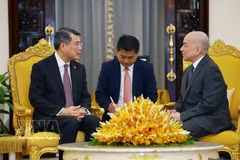
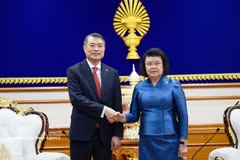
Prime Minister Le Minh Hung meets with Cambodian King Norodom Sihamoni at the Royal Palace in Phnom Penh on October 10, 2026. (Photo: VNA)

Vietnamese PM pays courtesy visits to Cambodian King, Queen Mother

King Norodom Sihamoni voiced firm confidence that under the leadership of the Communist Party of Vietnam, headed by General Secretary and President To Lam, and through the dedicated efforts by the Vietnamese Government, National Assembly, and people, the country will continue to achieve even greater accomplishments in its national construction and development.

Prime Minister Le Minh Hung pays tribute to late Cambodian King Norodom Sihanouk (Photo: VNA)

PM pays tribute to King Norodom Sihanouk, lays wreaths at Cambodian monuments

Prime Minister Le Minh Hung’s official visit to Cambodia on October 9-10, at the invitation of Prime Minister Hun Manet, marks a particularly significant diplomatic milestone. It underscores the consistent priorities of Vietnam’s foreign policy in the new term, including proactive engagement, strengthened political trust and a stronger focus on translating bilateral commitments into tangible outcomes.

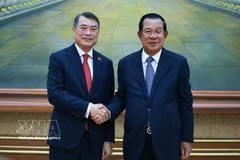
Prime Minister Le Minh Hung (left) and CPP President and President of the Cambodian Senate Hun Sen ( Photo: VNA)

Prime Minister meets with Cambodian People's Party, Senate leader

To further advance bilateral ties in the new era, the two leaders agreed to continue making full use of existing cooperation mechanisms across all channels, including meetings between the two Parties, promote exchanges between young leaders and youth from both countries, and expand cooperation between their legislative, executive and judicial bodies, people’s organisations and localities.

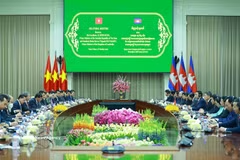
Prime Minister Le Minh Hung holds talks with his Cambodian counterpart Hun Manet in Phnom Penh on October 9. (Photo: VNA)

Vietnam, Cambodia seek to bolster all-round ties

The two PMs expressed their satisfaction with the positive development of Vietnam-Cambodia relations in recent years. Political ties have continued to be consolidated, with political trust strengthened through regular high-level visits and contacts.