A corner of Ho Chi Minh City at night (Source: VNA)
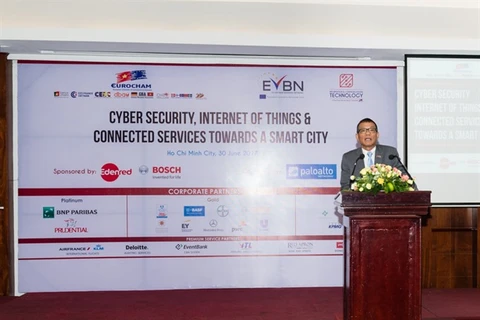
 HCM City (VNA) – The International Smart City Conference opened in Ho Chi Minh City on October 25, attracting more than 500 delegates from Japan, Singapore, Malaysia, Russia, Taiwan (China), and Thailand.
Speaking at the event, the municipal Party Secretary Nguyen Thien Nhan listed some of the major challenges the city is facing like failure to improve its competitiveness in recent years, gap between infrastructure and population growth, and failure to boost and take full advantage of regional cooperation.
Taking cognisance of these challenges, “in 2016, the city administration decided that becoming a smart city is one of the best solutions for effective urban development”, he said.
According to him, there are five main goals behind the push to become a smart city: make economic growth more sustainable, improve the living and working conditions of its people, engage citizens in city management, improve public services, and ensure sustainable use of natural resources.
The administration, businesses, citizens and social organisations need to act smarter for developing smart city, he said.
He said there are key factors that enable conversion into a smart city, the first being the administration’s ability to anticipate threats and suggest solutions for economic and social development. This is one of the city’s weaknesses at the moment, he said candidly.
The others are building a shared database for all organisations, businesses and citizens; developing the IT infrastructure; and citizens’ inclusion in assessing development progress, he said.
David Wong, Chairman of the Asian Oceanian Computing Industry Organisation, said the digital era encourages the building of smart cities, but there are three key challenges not only in Vietnam but everywhere.
The first is digital infrastructure development both in urban and rural areas.
“This is particularly not easy for a city like Ho Chi Minh City with a population of more than 10 million.”
Speaking at the event, the municipal Party Secretary Nguyen Thien Nhan listed some of the major challenges the city is facing like failure to improve its competitiveness in recent years, gap between infrastructure and population growth, and failure to boost and take full advantage of regional cooperation.
Taking cognisance of these challenges, “in 2016, the city administration decided that becoming a smart city is one of the best solutions for effective urban development”, he said.
According to him, there are five main goals behind the push to become a smart city: make economic growth more sustainable, improve the living and working conditions of its people, engage citizens in city management, improve public services, and ensure sustainable use of natural resources.
The administration, businesses, citizens and social organisations need to act smarter for developing smart city, he said.
He said there are key factors that enable conversion into a smart city, the first being the administration’s ability to anticipate threats and suggest solutions for economic and social development. This is one of the city’s weaknesses at the moment, he said candidly.
The others are building a shared database for all organisations, businesses and citizens; developing the IT infrastructure; and citizens’ inclusion in assessing development progress, he said.
David Wong, Chairman of the Asian Oceanian Computing Industry Organisation, said the digital era encourages the building of smart cities, but there are three key challenges not only in Vietnam but everywhere.
The first is digital infrastructure development both in urban and rural areas.
“This is particularly not easy for a city like Ho Chi Minh City with a population of more than 10 million.”
The second challenge is human resources, but Vietnam has an advantage since it has so many people, workers and talents, something many countries lack, he said.
The third is cyber security, which has become a threat.
The conference heard more suggestions for building smart cities from local and international participants, like the need to build a standard framework, evaluating the smart city based on smart city index, ICT platforms for smart cities and e-governance.
This is the second international conference on smart cities held in Vietnam after the first held in Hanoi two years ago.
Wong said due to the importance of collaboration between the public and private sectors and the need for sharing ideas and expertise between countries in the region to realise the transformation into smart cities, the conference would be held in a different country each year.
Next year it would be held in Japan, he added.-VNA
The third is cyber security, which has become a threat.
The conference heard more suggestions for building smart cities from local and international participants, like the need to build a standard framework, evaluating the smart city based on smart city index, ICT platforms for smart cities and e-governance.
This is the second international conference on smart cities held in Vietnam after the first held in Hanoi two years ago.
Wong said due to the importance of collaboration between the public and private sectors and the need for sharing ideas and expertise between countries in the region to realise the transformation into smart cities, the conference would be held in a different country each year.
Next year it would be held in Japan, he added.-VNA
VNA