Iodised salt for food processing is necessary: experts

The regulation of adding iodine should be applied to all food, the Vietnam Dairy Association suggested in a dialogue with the Ministry of Health earlier this week.
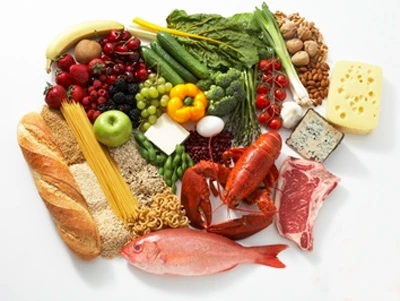
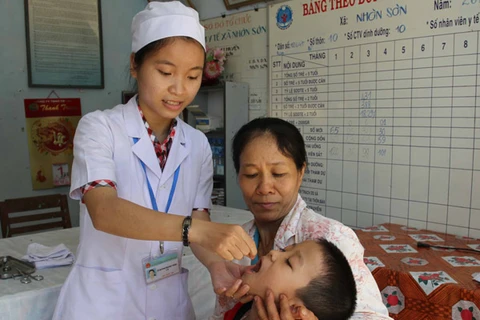
Iodised salt for food processing is necessary: experts ảnh 1Illustrative image (Photo: suatangchieucao.com)
Hanoi (VNA) – The regulation of adding iodine should be applied toall food, the Vietnam Dairy Association suggested in a dialogue with theMinistry of Health earlier this week.

Last week, the government issued decree 09/2016/ND-CP to introduce iodine,iron, zinc and vitamin A as compulsory elements that need to be included inVietnamese food.

The decree on food fortification, which took effect from March 15 this year,regulates that the four micronutrients should meet national technical standardsand regulations on food safety.

Salt fortified with iodine, iron and zinc must be added to wheat flour, whilevegetable oil that contains soybean oil, coconut oil, canola oil or peanut oilis required to have vitamin A – excluding vegetable oil used in industrial foodprocessing, according to the decree.

In the meeting, which was attended by representatives for the GovernmentOffice, food processing businesses, the World Health Organisation – Vietnam (WHO),UNICEF, and scientists, Tran Quang Trung, the association’s President, raisedhis concern that the regulation on adding iodine to food will causedifficulties for milk production businesses.

“Iodine is an oxidizable substance and is changeable during food processing. Soit will change the colour and smell of milk products”, said Trung.

“This means that dairy businesses will suffer”, he said.

Therefore, the Vietnam Dairy Association recommended that the iodine supplementshould be regulated to seasoning products only.

Meanwhile, President of the Vietnam Association of Food Scienceand Technology Phan Thi Kim said many studies showed that each kind offood contains different levels of iodine, so different processing andpreservation methods will change the iodine levels.

Iodine could change the colour and smell of foods, which is important to customers,Kim said.

“We thought that the addition of iodine should be regulated for specific kindsof food. Businesses will face difficulties if the regulation was applied acrossthe board”, she said.

For example, salt for direct use must be fortified with iodine, but addingiodine to salt for food processing will need the Ministry of Health’s detailedinstructions, she said.

"Each individual has different iodine demands," Kim said.

Meanwhile, Ministry of Health, WHO and UNICEF representatives affirmed theimportance of iodine for people’s health, especially with the lack ofmicro-nutrition in Vietnam.

Nguyen Huy Quang from the Ministry of Health, said the regulation on addingiodine to salt for food processing is necessary.

According to Quang, thanks to the implementation of the National Programmeon Iodine Deficiency Disorders Control from 1994 to 2005, the rate of childrenaged 8 to 10 afflicted with Basedow’s disease dropped dramatically, while theiodine level across all Vietnamese people reached WHO standards.

However, after the year 2005, when the use of iodine salt became optional, therate of children with Basedow’s disease increased to 9.8 percent, Quang said.

This has become a concern and requires intervention, as recommended by UNICEF,he told the meeting.

“This was the reason behind the decree. The Ministry of Health has carried outseveral meetings to collect opinions from related businesses”, he said.

Recently, the WHO recommended supplementing micro-nutrition in daily meals andfood processing as an effective and economical measure which is used in morethan 100 countries all over the world.

The WHO representative told the meeting that a recent study showed that thechanges in colour and smell of food processed with iodised salt werenegligible.

Dr. Friday Nwaigwe, UNICEF Vietnam’s Head of Child Survival andDevelopment, affirmed the need of fortifying iodine in food in Vietnam toensure physical and mental health for Vietnamese children.

In many nations, using iodised salt in food processing faces obstacles like inVietnam, and the policy requires the support from the business community, hesaid.

In the meeting, Deputy Prime Minister Vu Duc Dam asked the Ministry of Healthto give detailed instructions to dairy and food processing businesses aboutusing iodised salts.-VNA
VNA

See more

The 47th Asia Pacific Dental Congress and the second Hanoi International Dental Exhibition and Congress 2026 (Photo: VNA)

Vietnam hosts 47th Asia Pacific Dental Congress for first time

The three-day event is co-hosted by the Vietnam Odonto-Stomatology Association (VOSA), the Asia Pacific Dental Federation (APDF), the Hanoi Central Odonto-Stomatology Hospital (NHOS), and the FDI World Dental Federation. It’s the first time Vietnam has hosted the APDC, drawing over 4,000 domestic and foreign experts, scientists, and dental practitioners.

Mr. Gilberto recovered well after treatment at Hong Ngoc General Hospital.

US veteran calls Vietnamese doctors “heroes” after life-saving treatment

After being assisted on a medically supported flight back to the United States for continued treatment, Gilberto’s health condition showed positive improvement. From afar, he later sent a heartfelt video message expressing gratitude to the medical team at Hong Ngoc General Hospital, the people he called “heroes.”

Residents in Hanoi's Bach Mai ward receive free health check-ups. (Photo: VNA)

Vietnam moves toward universal free annual health checkups from 2026

Every Vietnamese citizen from 2026 onward will be entitled to at least one free annual medical checkup or screening. Each individual will also have a digital health record integrated into the national digital identification platform VNeID, enabling authorities and healthcare providers to manage health data in a synchronised and continuous manner.

Ho Chi Minh City's digital citizen application (Photo: nld.com.vn)

Ho Chi Minh City rolls out electronic health records on digital citizen app

Under the plan, each resident will be assigned a unique EHR linked to their personal identification number, ensuring accuracy and consistency while minimising duplication and data discrepancies. Health data will be continuously updated from medical facilities, routine check-ups, and screening programmes, then integrated and centrally displayed on the application.

At the Government’s regular press briefing (Photo: VNA)

Hospital duo on track for Q2 opening as roadblocks vanish

The Health Ministry has worked in lockstep with the Ministry of Construction to clear cost-appraisal and contract-approval bottlenecks, with the process now flowing smoothly. It has also teamed up with the construction and defence ministries to press contractors to accelerate outstanding licensing requirements, including fire safety and waste treatment systems.

A kidney transplant performed at the Hue Central Hospital. (Photo published by VNA)

Six lives extended through single organ donation

When one heart stops beating so that others may live on, it represents not only a medical transfer but also a continuation of compassion and humanity, said Professor Dr Pham Nhu Hiep, Director of the Hue Central Hospital.

Doctors at the University Medical Center Ho Chi Minh City perform colorectal cancer surgery on the Indonesian patient. (Photo: published by VNA)

Indonesian patient travels to Vietnam for colorectal cancer surgery

The successful colorectal cancer surgery for an Indonesian patient once again demonstrates the advances in the professional expertise of Vietnamese doctors and has further strengthened the country’s medical reputation and the trust of patients across the region and beyond.

Illustrative photo (Photo: VNA)

Vietnam intensifies efforts to end malaria by 2030

In 2025, the country reported 246 cases with no deaths, down more than 30% year-on-year. In the first months of 2026, only 25 cases were recorded, again with no fatalities. So far, 26 out of 34 provinces and cities have been officially recognised as malaria-free.

Illustrative image -(Source: Internet)

Vietnam warns of HiPP baby food after Austria’s recall

The Austrian Agency for Health and Food Safety (AGES) has announced that HiPP – a German-Swiss baby food producer – and supermarket chain SPAR had recalled all 190g-jars of HiPP Vegetable Carrot with Potato from 1,500 stores in Austria due to suspected contamination with rat poison.

The caregivers’ club in Coc village, Pu Luong commune, the north-central province of Thanh Hoa, has established a livelihood support fund, helping households develop their economies through models such as rice cultivation, vegetable growing, fish farming and poultry raising. (Photo: VNA)

Community-based child nutrition care model benefits Thanh Hoa’s locality

After more than one year of implementation with the support of World Vision, the model has delivered positive outcomes in improving nutrition and enhancing the quality of childcare. Household livelihoods have improved, mothers’ awareness and caregiving skills have been strengthened, and notably, the rate of child malnutrition in Coc has declined markedly.