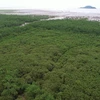
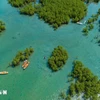
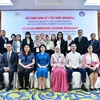
An International Union for Conservation of Nature (IUCN) funded project has not only helped protect Can Gio mangrove forest in Ho Chi Minh City’s Can Gio district, but also increased income for locals, heard a conference in the city on December 15.
The four-year project, which was launched in 2011, aims to improve resilience to climate change impacts for coasts in Southeast Asia, including Can Gio biosphere reserve.
Can Gio, the only coastal district of Ho Chi Minh City with mangrove forests covering over 50 percent of its total area, is strong for aquaculture and maritime economy. However, the area is also one of the most vulnerable localities to climate change and sea level rise in the Mekong lower basin.
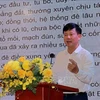
According to Doan Van Son, Vice Chairman of the Can Gio People’s Committee, the project helped form groups of households engaging in managing and protecting mangrove forests, while building a strong force of communicators to raise public awareness of climate change.
Meanwhile, a smaller project is being carried out to improve livelihood for households involving in conservation of mangrove forests through the model of oyster farming under forest canopy, he said. It has helped locals raise their incomes and focus on forest protection.
Andrew Wyatt, IUCN Director for Mekong Delta Programme Manager, said the Can Gio mangrove forest is an important biosphere reserve and a buffer zone confronting climate change impacts.
However, he noted, activities harming the forest are still seen in the area such as illegal fishing, deforestation, while the coordination between the forest management board and locals has been poor.
The project activities have contributed to enhance local community’s resilience to climate change, while assisting the protection of the Can Gio forest after the project concludes.
The project, which covers eight coastal provinces and cities in Thailand, Cambodia and Vietnam, has been implemented in Can Gio district and some provinces of Soc Trang, Kien Giang and Ben Tre.
During a yearly conference held in October this year within the framework of the project, the three countries approved the Preah Sihanouk statement on improving resilience to climate change impacts for coasts in Southeast Asia.-VNA
The four-year project, which was launched in 2011, aims to improve resilience to climate change impacts for coasts in Southeast Asia, including Can Gio biosphere reserve.
Can Gio, the only coastal district of Ho Chi Minh City with mangrove forests covering over 50 percent of its total area, is strong for aquaculture and maritime economy. However, the area is also one of the most vulnerable localities to climate change and sea level rise in the Mekong lower basin.
According to Doan Van Son, Vice Chairman of the Can Gio People’s Committee, the project helped form groups of households engaging in managing and protecting mangrove forests, while building a strong force of communicators to raise public awareness of climate change.
Meanwhile, a smaller project is being carried out to improve livelihood for households involving in conservation of mangrove forests through the model of oyster farming under forest canopy, he said. It has helped locals raise their incomes and focus on forest protection.
Andrew Wyatt, IUCN Director for Mekong Delta Programme Manager, said the Can Gio mangrove forest is an important biosphere reserve and a buffer zone confronting climate change impacts.
However, he noted, activities harming the forest are still seen in the area such as illegal fishing, deforestation, while the coordination between the forest management board and locals has been poor.
The project activities have contributed to enhance local community’s resilience to climate change, while assisting the protection of the Can Gio forest after the project concludes.
The project, which covers eight coastal provinces and cities in Thailand, Cambodia and Vietnam, has been implemented in Can Gio district and some provinces of Soc Trang, Kien Giang and Ben Tre.
During a yearly conference held in October this year within the framework of the project, the three countries approved the Preah Sihanouk statement on improving resilience to climate change impacts for coasts in Southeast Asia.-VNA