Japan to help ASEAN cope with aging

The Japanese government will launch a public-private consultation system with the ASEAN in the next fiscal year to help member nations cope with their aging populations.
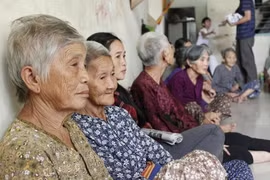
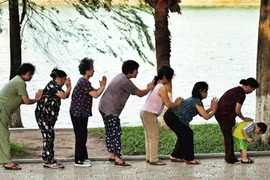
Japan to help ASEAN cope with aging ảnh 1The project aims to utilise Japan’s experience in handling the growing trend of the population aging (Source:Internet)

 The Japanese government will launch a public-private consultation system with the Association of Southeast Asian Nations (ASEAN) in the next fiscal year to help member nations cope with their aging populations.

The government plans 15 million JPY (125,000 USD) for the project in budget requests for the next fiscal year.

The project aims to utilise Japan’s experience in handling the growing trend of the population aging in ASEAN nations.

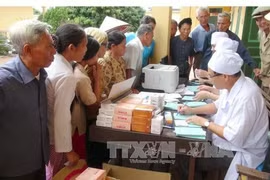
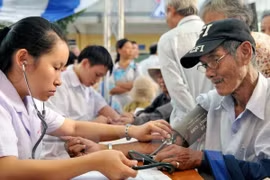
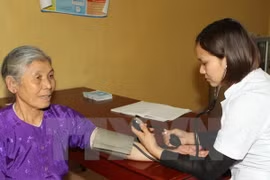
It is also expected to allow Japanese companies involved in medical and nursing care services to more easily enter ASEAN markets, which are forecast to face rapid population aging and have a high demand on made-in-Japan medical products and equipment in the future.

Government officials and experts from Japan as well as ASEAN nations are expected to join the consultation mechanism to discuss issues related to nursing care services in each country.

The first round of consultation talk is being planned for ASSEAN and the Japanese government is considering holding such talks on a regular basis.

ASEAN countries are expected to age at a faster pace than Japan.

According to the United Nations, Japan took 25 years for its population of individuals 65 or older to double from 7 percent to 14 percent as of 1995. Vietnam is expected to see the same shift in only 15 years, by 2033, and Indonesia is expected to see it in 17 years, by 2038.-VNA
VNA

See more

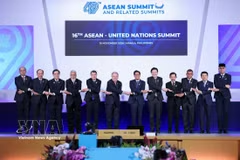
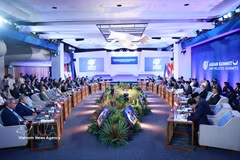
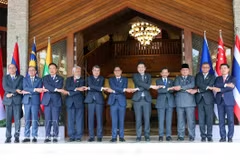
Prime Minister Le Minh Hung (fifth from left), other ASEAN leaders and UN Secretary-General Antonio Guterres (sixth from left) at the 16th ASEAN–UN Summit in Manila, the Philippines, on November 16, 2026 (Photo: VNA)

PM calls for stronger ASEAN–UN cooperation

PM Le Minh Hung called on the UN to continue supporting ASEAN centrality and work alongside ASEAN in developing mechanisms for proactive prevention, early warning and crisis management.

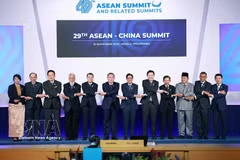
Prime Minister Le Minh Hung (fifth, left) and other ASEAN leaders and Chinese Premier Li Qiang at the 29th ASEAN-China Summit (Photo: VNA)

PM suggests priorities for elevating, deepening ASEAN-China cooperation

First, Prime Minister Le Minh Hung stressed that the two sides should continuously strengthen strategic trust and maintain an environment of peace and stability. The PM called for expanded exchanges and cooperation, stronger coordination in responding to emerging non-traditional challenges, and enhanced cooperation at the United Nations and other multilateral forums.

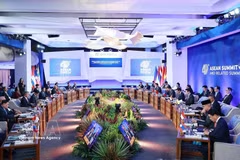
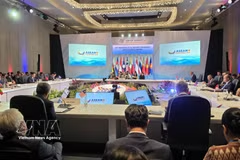
An overview of the dialogue between ASEAN leaders and the ASEAN Business Advisory Council (ASEAN-BAC) in Manila on November 15 (Photo: VNA)

Vietnam puts forward priorities to advance ASEAN cooperation

Appreciating ASEAN-BAC’s report and recommendations, Deputy Minister of Foreign Affairs Dang Hoang Giang, head of Vietnam’s ASEAN Senior Officials’ Meeting (SOM) delegation, called for simplifying procedures, reducing costs, accelerating digitalisation, upgrading the ASEAN Single Window (ASW) and effectively implementing the ASEAN Digital Economy Framework Agreement (DEFA) to make the regional market more accessible.

An overview of the ASEAN Leaders’ Interface with Representatives of the ASEAN Inter-Parliamentary Assembly (AIPA) in Manila on November 15 (Photo: VNA)

Vietnam proposes three key directions for ASEAN-AIPA cooperation

Prime Minister Le Minh Hung affirmed that close and effective coordination between the governments and parliaments of member states is a foundation and important driving force for ASEAN to realise its vision of a united, resilient, dynamic and people-centred community.

ASEAN signs Digital Economy Framework Agreement

ASEAN signs Digital Economy Framework Agreement

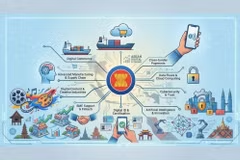
The Digital Economy Framework Agreement (DEFA), the bloc’s first standalone and legally binding digital economy agreement, establishes common rules covering digital trade, cross-border data flows, electronic payments, cyber security and artificial intelligence (AI).

An overview of the ASEAN Foreign Ministers’ Meeting on November 14, 2026 (Photo: VNA)

Vietnam backs ASEAN culture of consultation, dialogue, preventive diplomacy

Deputy Minister of Foreign Affairs Dang Hoang Giang stressed that amid conflicts and instability in various parts of the world, ASEAN should give top priority to strengthening the foundations of peace and stability, uphold the rule of law and promote the bloc’s principles and norms of conduct, particularly the Treaty of Amity and Cooperation in Southeast Asia (TAC).

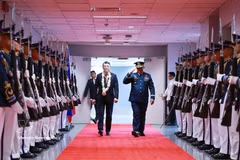
The welcome ceremony for Prime Minister Le Minh Hung at Ninoy Aquino International Airport on November 14 afternoon (Photo: VNA)

Vietnamese PM arrives in Philippines for 49th ASEAN Summit

PM Le Minh Hung’s attendance underscores Vietnam's sustained commitment to the bloc, which aligns consistently with the foreign policy set forth by the 14th National Party Congress, which defines ASEAN as a bloc of strategic importance and a top priority in Vietnam’s external relations.

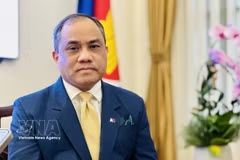
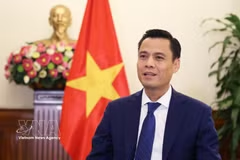
Deputy Minister of Foreign Affairs Dang Hoang Giang. Photo: VNA

Vietnam aims to promote ASEAN unity, resilience and practical cooperation: Deputy FM

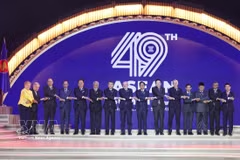
Prime Minister Le Minh Hung's attendance at the 49th ASEAN Summit and related summits in Manila, the Philippines, from November 14-17 aims to concretise Vietnam's foreign policy of independence, self-reliance, resilience, multilateralisation and diversification, and reaffirm ASEAN's position as Vietnam's foremost strategic priority in its foreign policy.