Japanese director inspired by true Vietnamese spirit

Tsuyoshi Sugiyama is a young Japanese director and a member of a group of hot new talents that are gradually asserting their name at home and abroad. The Vietnamese spirit has inspired the creation of some of his works.
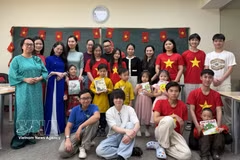
Japanese director inspired by true Vietnamese spirit ảnh 1Director Tsuyoshi Sugiyama (third, left) and artists of Youth Theatre (Photo provided by Director Tsuyoshi Sugiyama)

Hanoi (VNA) – Tsuyoshi Sugiyama is a young Japanese director and a member of a group of hot new talents that are gradually asserting their name at home and abroad. The Vietnamese spirit has inspired the creation of some of his works.

The leading and talented Japanese director is known for his unique artistic style through decoding the world's classic theatrical works from a modern perspective.

Having been trained and influenced by the creative thinking of the theatrical scene in Europe, Tsuyoshi Sugiyama is currently a typical face of the generation of young directors who are gradually asserting their name at home and abroad.

He worked for the first time with Hanoi-based Youth Theatre in 2016 and now decided to stick with the theatre in particular and the Vietnamese stage in general to develop his artistic impressions. He talked to The Hanoi Times about his inspirations in Vietnam and what they mean to him.

The Japanese director said that he first came to Vietnam in 2016 on the occasion of the 3rd International Experimental Theatre Festival, bringing the play “The Seagull” (Chekhov) to the festival and winning the award for the best performance.

The then director of the Youth Theatre, Truong Nhuan, invited him to participate in an exchange with Hanoi's artists. After that, he also received an invitation to collaborate with the theatre to produce “Uncle Vanya”.

He then decided to stay on with the Youth Theatre in particular and the Vietnamese theater in general.

Sugiyama said that the biggest difficulty for him was language, along with the difference in the lifestyles of Vietnamese and Japanese.

Commenting on Vietnamese artists, Sugiyama held at they are very talented and passionate about the performing arts industry. Sometimes, they will recognise and exploit abilities that they don't realise they have as yet. The role of the director is to explore and suggest for actors to express their creativity and expression. “I'm trying really hard to do that,” he said.

“There is one memory that I cannot forget. That was when I was working on ‘Uncle Vanya’, and sometimes I felt stuck, unable to think of a way to express my ideas or find a direction in a certain scene. I would get angry and resentful with everyone around me. The actors were also very tired and stressed, but everyone stuck to the plan and no one showed an unpleasant attitude. On the contrary, they told jokes to make me and everyone laugh together. We made it through those difficult times. This was a completely new and exciting experience that I had never seen before in Japan.

“I think this is something special in the character of Vietnamese people. Even in difficult situations, people never get depressed, but they use laughter, humour, and optimism to overcome. This makes me feel really comfortable working here. It is the Vietnamese spirit that inspires me to find my creative direction.

“I am very happy to work in Vietnam. Actors always give me positive energy. They most certainly have talent here that is on par with artists in other countries. Only directors and managers need to motivate them, so that they feel their profession has meaning and value, that will certainly motivate them to contribute more.”

Sugiyama also discussed his positive impression of food in Hanoi as well as the local weather. “People are agile and straightforward. They will speak out if they do not feel OK about something. They are also open and caring of others,” he said.

“I like the Hanoi Old Quarter with its houses with an ancient culture, though the area is sometimes full of tourists. I like strolling in the quiet old streets. I also like parks with many trees and lakes which bring me peace and tranquility,” Sugiyama added./.
VNA

See more

Lanterns, once a traditional handicraft closely associated with Hoi An, have become one of the most recognisable symbols of the heritage destination. (Photo: VNA)

Hoi An International Lantern Festival to promote heritage and cultural exchange

The festival, to be held at Hoai River Square and other venues across the ancient town, is organised by the Da Nang Department of Culture, Sports and Tourism under the direction of the municipal People’s Committee, with the participation of 12 cities from China, Japan, the Republic of Korea, Thailand, Indonesia, the Philippines, Laos and Singapore.

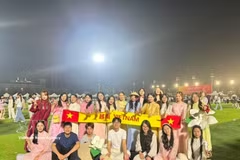
Participants pose for a photo at the 2026 Mid-Autumn Festival for overseas Vietnamese in the Republic of Korea (Photo: vNA)

Vietnamese families, language and community key to preserving national identity abroad

Preserving national identity starts at home, from Vietnamese conversation, stories about grandparents and ancestors, to Lunar New Year (Tet) and Mid-Autumn celebrations and traditional customs. Affection, filial piety, sharing and mutual aid keep members tied to one another and to the homeland, said Le Thuong, Chair of the Vietnamese Association in Japan’s Kansai region and Director of the Centre for Vietnamese Studies.

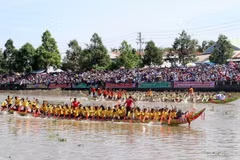
During the Ok Om Bok Festival, alongside rituals such as floating lanterns and moon worship, the Ngo boat race is always the most eagerly anticipated event among the Khmer community. (Illustrative photo: VNA)

First Vietnam Culture Festival 2026 to take place from November 23-27

Featuring the flow of Vietnamese culture from its origins to the future, the festival will create a vibrant cultural space where the past, present and future converge. It will highlight values shaped over thousands of years of history and demonstrate how these are preserved, passed down and creatively developed in contemporary life.

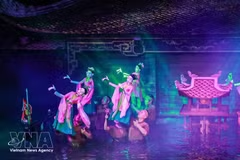
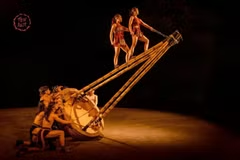
A performance by Thang Long Water Puppet Theatre. Photo: VNA

Water puppetry: from Vietnamese village ponds to UNESCO recognition

Vietnam is taking steps towards realising its ambition of bringing water puppetry, one of the country's distinctive cultural treasures, to the international stage, following the Government's approval in principle of the preparation of a scientific dossier seeking UNESCO recognition for the art form as an outstanding intangible cultural heritage. This marks a strategic move in preserving and promoting Vietnamese cultural identity amid deeper international integration.

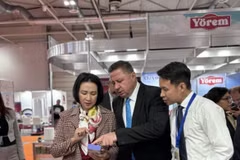
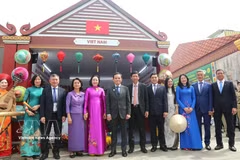
Bulgarian Deputy Foreign Minister Christo Polendakov and Vietnamese Ambassador Nguyen Thi Minh Nguyet at the Vietnamese pavilion. (Photo published by VNA)

Vietnamese products promoted at international food fair in Bulgaria

The Vietnamese embassy, in coordination with the Vietnam Trade Office in Bulgaria, set up two booths featuring coffee, tea, fruit juices, traditional confectionery and natural health supplements. The displays aimed to introduce Vietnamese products to visitors, importers and distributors, while helping Vietnamese businesses seek partners and expand into the Bulgarian and European markets.

The Vietnamese delegation visits the Village Francophone (Photo: VNA)

Vietnam joins cultural exchange at Village Francophone in Phnom Penh

Vietnam’s presence at the Village Francophone reaffirms Vietnam’s focus on cultural diplomacy and its view of culture as a spiritual foundation, an internal strength and a key driver of sustainable development. Through displays, performances and international exchanges, Vietnam is projecting an image of a country rich in tradition, diverse in identity, dynamic, creative and proactive in integration.

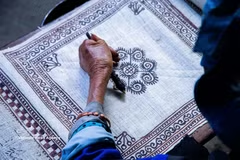
With their skillful hands and innovative thinking, Mong women have transformed traditional flax fiber into a "cultural ambassador". (Photo: VNA)

Mong women turn traditional craft into destination appeal

Alongside local cuisine, traditional attire, and folk games, linen weaving has become a crucial asset in enhancing Lung Tam commune's tourism appeal, creating new livelihood opportunities, and inspiring locals to preserve their heritage.

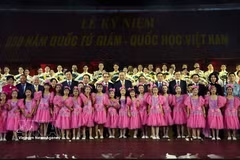
Leaders pose with artists and performers at the ceremony marking 950 years of Quoc Tu Giam (Imperial Academy) on November 13 (Photo: VNA)

Top leader attends ceremony marking Quoc Tu Giam’s 950th anniversary

General Secretary of the CPV Central Committee and President To Lam called for preserving the Van Mieu – Quoc Tu Giam heritage and putting its spirit into daily school life. He asked Hanoi to work closely with culture, education and research agencies to complete open digitised materials on the relic soon.

The opening ceremony for the 2026 Hanoi Creative Design Festival on November 13 (Photo: VNA)

Hanoi Creative Design Festival 2026 opens, targets creative economy

Running from November 13-28, the festival features 150 activities across five cultural, heritage and creative clusters and draws nearly 1,000 domestic and foreign artisans, artists, designers and experts, including nearly 100 foreign artists and overseas Vietnamese from 21 countries.

950 years on, Quoc Tu Giam continues to inspire Vietnam’s pursuit of knowledge ​

950 years on, Quoc Tu Giam continues to inspire Vietnam’s pursuit of knowledge ​

The 950th founding anniversary of Quoc Tu Giam (Imperial Academy), Vietnam’s first national university, is an occasion to reaffirm the enduring values of the country's tradition of learning, respect for teachers, and promotion of talent, which have shaped the nation’s intellectual foundations and continue to support its development in a new era.

Chair of the Canada-Vietnam Cultural & Educational Council (CVCEC) Phan Thi Quynh Trang (first from left) (Photo: VNA)

Vietnam’s learning tradition gets Canadian reboot

The Canada-Vietnam Cultural & Educational Council (CVCEC) is building culture lessons on Vietnamese landmarks, with the Temple of Literature as a core module. Kids will hear stories about teacher Chu Van An, and practice greetings, gratitude to teachers and respect for elders.