JICA helps Vietnamese hospitals in fight against COVID-19

The Japan International Cooperation Agency (JICA) has provided aid packages worth 80 million JPY (around 733.300 USD) to support Vietnam’s fight against the COVID-19 pandemic.
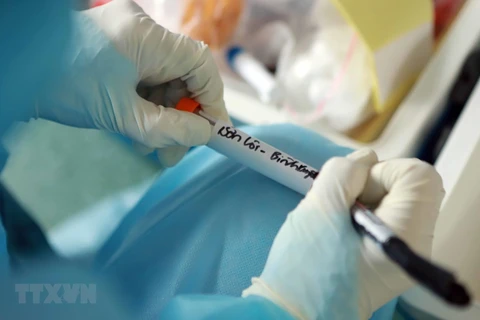
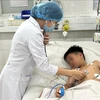
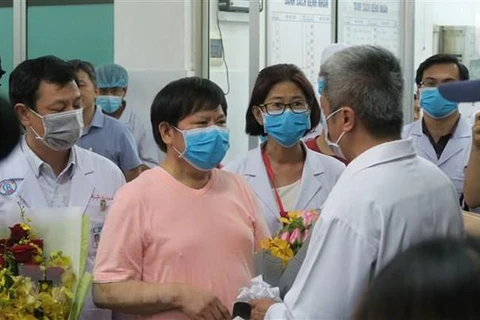
JICA helps Vietnamese hospitals in fight against COVID-19 ảnh 1Patient 91 is being treated at Cho Ray Hospital. (Photo: VNA)

Hanoi (VNA) - The Japan International Cooperation Agency (JICA) has provided aid packages worth 80 million JPY (around 733.300 USD) to support Vietnam’s fight against the COVID-19 pandemic.

The first part of the aid package worth 60 million JPY (550,000 USD) allocated for Cho Ray Hospital in Ho Chi Minh City includes 2,000 copies of the Nosocomial Infection Control Manual. The manuals were handed over to the Cho Ray Hospital by the JICA Vietnam Office on June 3.

Another package worth 20 million JPY (some 183,300 USD) will be given to six provincial Centres of Disease Control (CDCs) in northern Nam Dinh, Ha Giang, Bac Giang, Vinh Phuc, and southern Kien Giang and Tra Vinh provinces.

The manual was compiled by the infection control ward at the hospital with technical assistance from JICA experts. It is also hoped to improve infection control activities at the Cho Ray Vietnam-Japan Friendship Hospital (Cho Ray 2) as well as at 21 provincial-level hospitals in the south and the Mekong Delta.

Speaking at a meeting with a delegation of the JICA Vietnam Office at the Cho Ray Hospital on June 3, Director of Cho Ray Hospital Nguyen Tri Thuc said Cho Ray was one of the first hospitals in Vietnam to receive support from JICA, beginning in 1969.

The hospital is working with JICA to build the Cho Ray Vietnam -Japan Friendship Hospital, Thuc said.

JICA is implementing a technical cooperation project to improve hospital management at the Cho Ray Hospital through applying safety procedures for patients, coordinating between clinical procedures and multidisciplinary teams, and promoting measures to control hospital infections.

In August last year, in a bid to strengthen infection control at Cho Ray and within the framework of the project, training courses on the use of protective equipment were held for the hospital’s doctors and nurses.

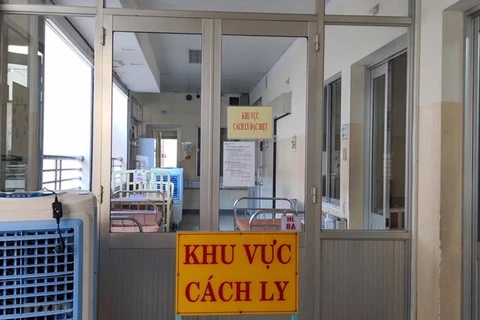
Before the first COVID-19 case was moved to the Cho Ray Hospital for treatment in January 2020, JICA experts provided documents and organised training courses on infection control at the hospital.

JICA has implemented non-refundable aid projects since 2006 to help improve the capacity of medical laboratory networks regarding biosafety and the examination of highly hazardous and infectious pathogens at the National Institute of Hygiene and Epidemiology (NIHE) and the HCM City-based Pasteur Institute, in the context of Vietnam not having to deal with many infectious diseases in the past.

JICA experts have also worked with NIHE and the Pasteur Institute to identify solutions to improve testing capacity for dangerous infectious diseases as well as COVID-19 in provincial-level CDCs in particular and in medical establishments around Vietnam in general.

JICA is advancing its activities around the pillars of a field-oriented approach, human security, and enhanced effectiveness, efficiency, and speed.

The agency, with its partners, will take the lead in forging bonds of trust across the world, aspiring for a free, peaceful and prosperous world where people can hope for a better future and explore their diverse potentials.

In February, JICA presented the first batch of biological products worth about 2.3 million JPY (20,900 USD) to Vietnam, aiming to help the country promptly respond to the acute respiratory disease caused by the novel coronavirus.  

The products were handed to the Hanoi-based National Institute of Hygiene and Epidemiology.

The batch is part of Japan’s aid package valued at about 14 million JPY for Vietnam, which includes different types of biological products in service of rapid and accurate virus testing. 

The Ministry of Health has assigned the National Institute of Hygiene and Epidemiology to carry out tests on samples of suspected COVID-19 cases in the northern region./.
VNA

See more

Under a phased rollout beginning in 2026, every resident in Ho Chi Minh City will receive at least one annual health check-up or health screening. (Photo: VNA)

Ho Chi Minh City develops integrated multi-tier healthcare system

Under the new model, healthcare is organised into interconnected levels based on people's needs rather than administrative boundaries. Patients can move seamlessly between levels while their electronic health records and treatment information remain connected through digital platforms, referral systems, telemedicine, electronic medical records, and integrated health databases.

Doctors conduct heart and lung examinations for workers. (Photo: VNA)

Draft policy encourages people to prepare for old age from middle age

A draft circular guiding the implementation of the National Target Programme on Health Care, Population and Development (2026-2035) marks a shift from focusing solely on elderly care to encouraging healthy and independent ageing through early preparation. It covers healthy lifestyles, regular health check-ups, financial planning, suitable employment and home-based elderly care skills.

The meeting between the Vietnam Military Medical University delegation and leaders of the Lao Ministry of National Defence in Vientiane (Photo: VNA)

Vietnam, Laos deepen military medical cooperation

Since 1954, Vietnam Military Medical University has trained 687 Lao military medical personnel, including 322 doctors, 67 master's degree holders, 10 doctorate holders, and dozens of specialist physicians, alongside hundreds of pharmacists and medical technicians.

Vietnam's first penis transplant from a brain-dead donor is successfully performed at Viet Duc University Hospital. (Photo published by VNA)

Vietnam reaches new milestone in reconstructive transplant surgery

As the first operation of its kind in Vietnam, the hospital spent months developing treatment protocols, studying international experience and assembling a multidisciplinary team that included experts in transplantation, andrology, microsurgery, anaesthesia, immunology and pathology.

Dr. Nguyen Thanh Xuan is performing brain surgery on a patient (Photo published by VNA)

National strategy aims to build advanced medical ecosystem

Vietnam's adjusted healthcare network master plan for 2021–2030, with a vision to 2050, also outlines a regional structure covering the country's six socio-economic regions. It envisages 17 provincial general hospitals serving regional functions, at least one highly specialised hospital in each region, and at least one advanced medical facility in every province and city.

Vietnamese Ambassador to Bulgaria Nguyen Thi Minh Nguyet and Prof. Dr. Nguyen Huu Tu, President of Hanoi Medical University, meet with Prof. Boycho Landjov, President of Sofia Medical University. (Photo: VNA)

Vietnam, Bulgaria forge closer medical ties

The visit's highlight was the signing of a memorandum of understanding (MoU) between Hanoi Medical University and Sofia Medical University, creating a long-term framework for academic exchanges, scientific research and institutional cooperation between the two countries' leading medical schools.

The Intensive Care Unit at Duc Giang General Hospital has continuously introduced and applied advanced specialised techniques to improve the treatment and survival of critically ill patients. (Photo: VNA)

40 years of renewal: Healthcare quality advanced for new era

Over the past four decades of Doi moi (Renewal), Vietnam’s healthcare sector has made remarkable progress, and is now well positioned to achieve further breakthroughs by harnessing science, technology and innovation to improve public health care in the new era, according to experts from the Vietnam Union of Science and Technology Associations (VUSTA).

Doctors from Cho Ray Hospital conduct preventive health screenings for residents at the Cho Lon ward health station. (Photo: VNA)

Ho Chi Minh City targets completion of universal health check-ups by December 15

According to the municipal Department of Health, as of July 20, a total of 732,873 residents had undergone periodic check-ups and had electronic health records established. The figure reflects encouraging initial results from the citywide campaign launched by the department and underscores local authorities' commitment to implementing one of the largest community healthcare programmes ever undertaken in the southern metropolis.