Two drug dealers were arrested by local police in Quang Tri in June 2016. Officials say that the situation worsened when Laos tightened trading activities in the border areas in 2014. (Source: VNA)
 Quang Tri (VNS/VNA) - Local authorities say that the number of ethnic minority juveniles engaging in drug trafficking at the Vietnamese-Lao border in the central province of Quang Tri has increased sharply over the last five years.
They also say that efforts to fight drug trafficking in the area have been hampered by a change in rules that determines punishment, including detention, on the narcotics content of the drugs seized.
This has created a loophole that traffickers exploit by smuggling reduced quantities of narcotics each time, but increasing the number of cross-border trips.
Colonel Nguyen Thuan Hoa, head of the anti-drug trafficking unit under the province’s Department of Police, told the Tien Phong (Vanguard) newspaper that increased trafficking has complicated the fight against drug addiction in the border district of Huong Hoa in recent years.
The police department estimates that there are more than 1,100 drug addicts in the province at present, half of them in Huong Hoa district, especially in Lao Bao town and Tan Thanh commune.
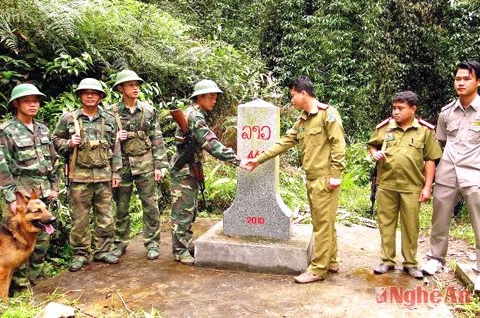
Vietnam’s Quang Trị and Laos’ Savannakhet provinces share a border that is 156km long, with the Lao Bao-Densavan border gate connecting the East-West Economic Corridor.
Drug traffickers are taking advantage of the area’s topography to hire Vietnamese immigrants to set up drug trafficking rings for smuggling drugs from Savannakhet into Quang Tri through the Lao Bao International Border Gate.
Officials say that the situation worsened when Laos tightened trading activities in the border areas in 2014, leaving a large group of Vietnamese immigrants unemployed. These people - many of whom were addicts - then returned to Vietnam and set up drug trafficking rings.
Hoa said drug addiction has become widespread in villages along the Vietnam-Lao border route in recent years. Drug addicts, mostly local residents, soon become drug traffickers who are hired to carry small amounts of drugs into Vietnam. It was difficult to deter these violators as the narcotics content was not enough to arrest them and launch legal proceedings, he said.
Many traffickers do not even have enough money to pay fines for their violations, and all the police can do is seizing the smuggled drugs, he added.
Currently, there are 86 people on the local police’s list of drug trafficking suspects, all of them belonging to ethnic minority communities in Huong Hoa district. Most of these suspects are juveniles, unemployed, and drug addicts. The police also say that the real number could be much higher.
Colonel Ha Trong Hoan, deputy head of the provincial Border Guard’s Department of Drug and Crime Prevention and Control, said that leaders of drug trafficking rings make use of local addicts, who typically have relatives in Laos and know the geography very well, to smuggle the drugs.
Earlier, drug traffickers could be detained and indicted for transporting more than 10 ecstasy tablets. But the latest amendment requiring tests done to specify the content of narcotics in each case has made it more difficult for authorities to crackdown on the crime.
Since they have to define the crime and impose penalties based on the narcotics content, authorities cannot do much when the traffickers carry smaller amounts but increase the number of cross-border trips.
The smuggled drugs are later collected and transported to other areas.
The provincial Border Guard estimates that every day, about 20 youth cross the Vietnamese-Lao border, smuggling small quantities of drugs. The youth spend 40,000 VND (1.5 USD) each ecstasy tablet and sell it for 100,000-150,000 VND (3.9-5.8 USD).
In 2016, the border guards busted 39 cases of drug trafficking and detained 96 people.
Colonel Nguyen Van Dien, head of the provincial Border Guard’s Department of Drug and Crime Prevention and Control, said catching traffickers with small quantities of drugs in raids was not an effective solution. The root of the problem was ring leaders, he said.
They have strengthened cooperation with their Lao counterparts in busting drug trafficking gangs in both countries, he added.
Hoang Huu Chien, commander of the provincial Border Guard Command, said that in order to prevent drug crimes in border areas, the Command has assigned cadres to coordinate with local Party Committees and administrations to raise public awareness on the issue.
The border guards would continue investigating and compiling lists of suspects as they continue their fight against drug abuse and trafficking, he said.-VNS/VNA
They also say that efforts to fight drug trafficking in the area have been hampered by a change in rules that determines punishment, including detention, on the narcotics content of the drugs seized.
This has created a loophole that traffickers exploit by smuggling reduced quantities of narcotics each time, but increasing the number of cross-border trips.
Colonel Nguyen Thuan Hoa, head of the anti-drug trafficking unit under the province’s Department of Police, told the Tien Phong (Vanguard) newspaper that increased trafficking has complicated the fight against drug addiction in the border district of Huong Hoa in recent years.
The police department estimates that there are more than 1,100 drug addicts in the province at present, half of them in Huong Hoa district, especially in Lao Bao town and Tan Thanh commune.
Vietnam’s Quang Trị and Laos’ Savannakhet provinces share a border that is 156km long, with the Lao Bao-Densavan border gate connecting the East-West Economic Corridor.
Drug traffickers are taking advantage of the area’s topography to hire Vietnamese immigrants to set up drug trafficking rings for smuggling drugs from Savannakhet into Quang Tri through the Lao Bao International Border Gate.
Officials say that the situation worsened when Laos tightened trading activities in the border areas in 2014, leaving a large group of Vietnamese immigrants unemployed. These people - many of whom were addicts - then returned to Vietnam and set up drug trafficking rings.
Hoa said drug addiction has become widespread in villages along the Vietnam-Lao border route in recent years. Drug addicts, mostly local residents, soon become drug traffickers who are hired to carry small amounts of drugs into Vietnam. It was difficult to deter these violators as the narcotics content was not enough to arrest them and launch legal proceedings, he said.
Many traffickers do not even have enough money to pay fines for their violations, and all the police can do is seizing the smuggled drugs, he added.
Currently, there are 86 people on the local police’s list of drug trafficking suspects, all of them belonging to ethnic minority communities in Huong Hoa district. Most of these suspects are juveniles, unemployed, and drug addicts. The police also say that the real number could be much higher.
Colonel Ha Trong Hoan, deputy head of the provincial Border Guard’s Department of Drug and Crime Prevention and Control, said that leaders of drug trafficking rings make use of local addicts, who typically have relatives in Laos and know the geography very well, to smuggle the drugs.
Earlier, drug traffickers could be detained and indicted for transporting more than 10 ecstasy tablets. But the latest amendment requiring tests done to specify the content of narcotics in each case has made it more difficult for authorities to crackdown on the crime.
Since they have to define the crime and impose penalties based on the narcotics content, authorities cannot do much when the traffickers carry smaller amounts but increase the number of cross-border trips.
The smuggled drugs are later collected and transported to other areas.
The provincial Border Guard estimates that every day, about 20 youth cross the Vietnamese-Lao border, smuggling small quantities of drugs. The youth spend 40,000 VND (1.5 USD) each ecstasy tablet and sell it for 100,000-150,000 VND (3.9-5.8 USD).
In 2016, the border guards busted 39 cases of drug trafficking and detained 96 people.
Colonel Nguyen Van Dien, head of the provincial Border Guard’s Department of Drug and Crime Prevention and Control, said catching traffickers with small quantities of drugs in raids was not an effective solution. The root of the problem was ring leaders, he said.
They have strengthened cooperation with their Lao counterparts in busting drug trafficking gangs in both countries, he added.
Hoang Huu Chien, commander of the provincial Border Guard Command, said that in order to prevent drug crimes in border areas, the Command has assigned cadres to coordinate with local Party Committees and administrations to raise public awareness on the issue.
The border guards would continue investigating and compiling lists of suspects as they continue their fight against drug abuse and trafficking, he said.-VNS/VNA
VNA