PM Le Minh Hung affirmed that while responsibilities may evolve over time, the trust of the Party, State, and people in Military Region 4 remains steadfast.
Regarding bilateral engagements in Italy and Türkiye, the deputy minister said the trips marked a meaningful step in implementing Vietnam’s foreign policy following the 14th National Party Congress, helping deepen relations with European and Middle Eastern partners while mobilising external resources for national development.
With railway cooperation expected to emerge as a new highlight of bilateral strategic cooperation, China expressed readiness to collaborate with Vietnam on financing, technology, training, and industrial capacity in the railway sector while encouraging capable enterprises to participate in railway construction.
Amid intensifying strategic competition among major powers, the visit sends a message of both countries’ commitment to their foreign policies of independence and self-reliance, and to prioritising stability and cooperation, according to Professor Pan Jin’e.
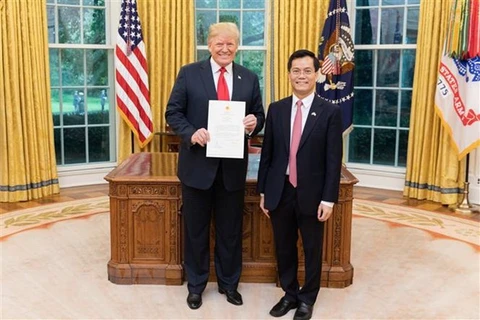
The formal deposition makes Vietnam the first country in Southeast Asia and the third globally to ratify the convention.
Affirming the enduring trust of the Party, the State, and the people, the PM expressed confidence that the force will continue to be a sharp, courageous, and resourceful spearhead in the fight against crime.
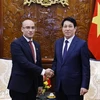
The Vietnamese leader acknowledged and highly valued Tezolmez’s active contributions to the friendship and cooperation between Vietnam and Türkiye, particularly in Istanbul - an important economic, commercial, and international exchange hub.
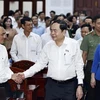
The top Vietnamese legislator expressed his admiration for Türkiye’s cultural identity and its friendly, hospitable people, while highly valuing the European country’s growing role and position at multilateral forums and in regional mediation efforts. He affirmed that Vietnam attaches importance to strengthening ties with Türkiye.
NA Chairman Tran Thanh Man suggested Belgium continue supporting and accompanying Vietnam in the next development period by expanding all-round collaboration, especially in areas matching Belgium's strengths and Vietnam's demand.
Both sides agreed to further deepen political ties, increase delegation exchanges, especially among parliamentary leaders, and enhance the sharing of legislative experiences.
The documents include a cooperation plan between the Communist Party of Vietnam (CPV) and the Communist Party of China (CPC) for the 2026–2030 period; a memorandum of understanding (MoU) on cooperation between the Organisation Commission of the CPV Central Committee and its Chinese counterpart; and a cooperation agreement between the Ministry of Foreign Affairs of Vietnam and the International Liaison Department of the CPC Central Committee.
The top legislator of Vietnam proposed that both sides deepen political and diplomatic connections, as well as parliamentary cooperation, through delegation exchanges, high-level meetings through various channels, and the successful organisation of a visit to Vietnam by the Speaker of Russia’s Federation Council and a trip to Russia by the NA Chairman to co-chair the 5th session of the Inter-Parliamentary Cooperation Committee in 2026.
The two sides highlighted strong complementarities, particularly in high-tech industry, digital transformation and cross-border innovation networks, especially after new railway links connected Guangxi with Vietnamese localities, including Hanoi.
Regarding orientations to strengthen cooperation between the Vietnamese NA and the IPU in the future, Chairman Man underscored the need to foster parliamentary cooperation in science and technology, innovation, digital transformation, green transition, and sustainable development.
During the visit, the two sides are likely to outline steps toward the 150 billion USD bilateral trade target by 2030, marking a shift from traditional manufacturing cooperation to a broader technology and innovation-driven partnership.
A Chinese expert has paid attention to General Secretary and President To Lam's visit to the Xiong'an New Area, meeting with youth representatives of both countries together with his Chinese counterpart Xi Jinping, and experience of high-speed rail travel.
Looking ahead, the minister suggested that the outcomes of the visit will be translated into concrete actions through close coordination at all levels.
The following is a brief review of the day’s events as reported by the Vietnam News Agency.
The trip also included meetings with Vietnamese diplomatic staff and the Vietnamese community in China, exchanges with relatives of Chinese generals, experts and others who had supported Vietnam-China friendship, attendance at a Vietnam - China friendship art programme, a visit to the historic Nanning Yucai School, and participation in activities launching a Vietnam–China Border People’s Festival 2026.
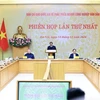
Emphasising the exacting requirements of national development in the coming period, particularly the pursuit of double-digit growth, Prime Minister Le Minh Hung stated that the ministries and agency concerned will need to focus on effectively implementing their assigned core tasks.