Kien Giang: Untouched Nam Du islands attract tourists

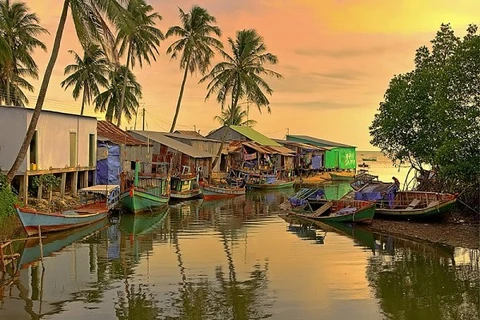
With 21 small islands, the unspoiled Nam Du archipelago in Kien Giang has emerged as an inviting tourist attraction for those who look for pristine tropical beaches surrounded by glittering sea.
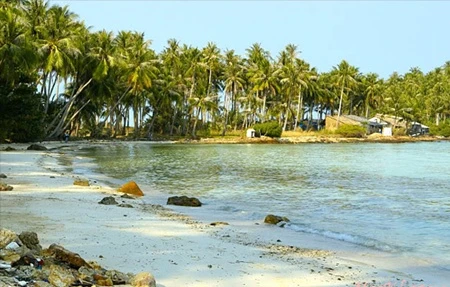
Kien Giang: Untouched Nam Du islands attract tourists ảnh 1Hon Mau island - Nam Du archipelago (Source: VNA)

Kien Giang (VNA) – With twenty one small islands, the unspoiled Nam Du archipelago in the Mekong Delta province of Kien Giang has emerged as an inviting tourist attraction for those who look for pristine tropical beaches surrounded by ​pure atmosphere, glittering sea and smooth white sand.

Situated some 80 kilometres from Rach Gia town on the mainland, Nam Du Archipelago, which was created by two volcanic formations, can only be reached by boat – two hours by speed boat and five by ferry.

Billed as “Ha Long Bay in the south”, the islands drew nearly 20,000 tourists in the first three months of this year, said Tran Van Du, vice chairman of Nam Du commune People’s Committee.

He said that the island welcomes an average of 500-700 people every day.

Together with untouched landscapes, local fresh seafood and floating fish farms they all bring new experiences to the holiday-makers, Du highlighted.

Meanwhile, Tran Van Tam – a tourist guide from Ho Chi Minh City , said that most of the visitors to the islands have been on cloud nine with swimming, sunbathing and boat trips around the island to contemplate gorgeous sceneries and dive on coral reefs.

The tourism upswing has contributed to realising the island’s socio-economic strategies. The locality’s key economic sectory is still from the sea, last year it earned 264 billion VND (11.8 million USD) from aquaculture and floating fish farms. Local livelihoods have increased in recent years while the islands achieved 12 out of 19 criteria set for new style rural area.

However, Nam Du archipelago needs to map out a strategic plan and make comprehensive investment to develop its tourism, as the locality is facing numerous challenges such as insufficient guesthouses, lenient management at beaches, power restrictions, fresh water shortages and inadequate health care clinics.

According to vice chairman Du, the commune is asking local service suppliers to zone off safe swimming areas while checking boats and life buoys when transporting tourists to visit the islands.

In its socio-economic development strategy to 2020, Nam Du will build sustainable and environmentally-friendly tourism as well as focus on protecting and enlarging forest areas to create an immaculate landscape and maintain fresh underground water resources.

It is crucial for the locality to build roads around the islands as well as make investments in ports, re-zoning coastal settlement areas, and to build sea embankments and reservoirs to store water during the dry season.

“The commune is mobilising well-off residents to construct a guesthouse system and build new boats to serve the travellers”, Du said.

He added that local tourism will be on an upswing when the islands are connected to the national grid and the construction of reservoirs and water stations are completed.-VNA
VNA

See more

Karst limestone mountains in the Phong Nha - Ke Bang National Park, with large cave entrances opening amid the primeval forest, reflect a geological formation process spanning millions of years. (Photo: VNA)

Phong Nha - Ke Bang named among Vietnam’s 11 most beautiful destinations

According to the magazine, boat trips into Phong Nha Cave and strolls through Paradise Cave (both family-friendly) offer a tantalising glimpse of their astonishing scale, but the real adventure lies deeper within the park, where cavers wade through underground rivers and weave among stalagmites.

The Trang An Festival 2026 opens at Trang An Ecotourism Site in Ninh Binh province on May 3 (Photo: VNA)

Tourism seeks new growth momentum under Resolution 26

Tourism effectiveness should be measured not only by visitor numbers and revenue, but also by spending, length of stay, repeat visits, job quality, visitor satisfaction and environmental carrying capacity, said experts.

Vietnam welcomes nearly 2 million international visitors in August, up 19.7% from July and 18.4% year-on-year. (Illustrative photo: VNA)

Vietnam tourism maintains strong growth, expands international markets

The National Statistics Office under the Ministry of Finance reported that Vietnam welcomed nearly 2 million international visitors in August, up 19.7% from July and 18.4% year-on-year. The figure represented 63.6% of the tourism sector’s full-year target of 25 million arrivals.

News website news.ru reports that the number of Russian visitors to Vietnam could reach a historic record of 1.5 million in 2026. (Photo: VNA)

Russian arrivals to Vietnam forecast to reach record high

Russian arrivals to Vietnam surpassed 1 million in the first eight months of 2026, representing a remarkable 165.7% increase year-on-year. This was the highest growth rate among Vietnam’s major international tourist markets.

Secretary of the Party Central Committee and Deputy Prime Minister Pham Thi Thanh Tra speaks at the conference. (Photo: VNA)

Vietnam moves to make tourism a true new growth driver

Resolution No. 26-NQ/TW, issued on August 22, sets out a new vision, with a focus on fundamentally renewing the mindset, methods and approaches to tourism development and governance, shifting from quantity to quality and increasing the sector’s contribution to the national economy.

Tourists visit Golden Bridge in Da Nang city in the rainy season. (Photo: hanoimoi.vn)

Turning rainy season into tourism opportunity

Seasonality has long been a challenge for Vietnam’s tourism industry. In many localities, tourism peaks in summer but visitor numbers fall during the rainy months. Destinations are now seeking to restructure their tourism ecosystems and develop products that can operate year-round.

A pot of Mi Quang (Quang noodles). (Photo: VNA)

Da Nang promotes distinctive cuisine as key tourism attraction

As travellers increasingly seek authentic local experiences, the central coastal city of Da Nang is stepping up efforts to integrate cuisine into tourism itineraries, linking culinary promotion with destination branding and cultural preservation.

Flower vendors form a distinctive feature of Hanoi’s autumn. (Photo: VNA)

Hanoi builds four-season tourism appeal

Hanoi’s tourism events are increasingly designed to inspire exploration beyond individual festivals. At the Hanoi Tourism Gift Festival, for instance, visitors can make handicrafts with artisans, explore destinations through virtual reality and discover new tours and tourism stimulus programmes.

A view of the Lo Lo Chai community tourism village in Tuyen Quang province (Photo: VNA)

Vietnam taps community tourism potential for sustainable development

The tourism market is shifting from sightseeing towards living and connecting with destinations. Visitors increasingly seek authentic and locally rooted experiences, interaction with local people, culture and nature, as well as small-group and personalised trips with limited environmental impact and clear benefits for communities.

Delegates press the button to launch the “Phong Nha – Hue Ancient Capital: World Heritage Journey” tourist train. (Photo: VNA)

Tourist train linking Phong Nha and Hue heritage sites launched

The 190-km route runs between Hue, Dong Ha, My Trach, Dong Hoi and Tho Loc stations, giving travellers access to destinations including the Complex of Hue Monuments, Quang Tri Ancient Citadel, Vinh Moc Tunnels, Hien Luong–Ben Hai historical site and Phong Nha-Ke Bang National Park.