Lack of cruise ports hinders tourism in HCM City

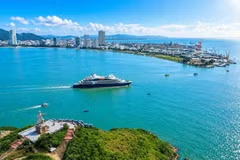
The number of foreign tourists coming to HCM City on cruise ships remains relatively low because of a lack of ports for cruise ships, according to tourism experts.
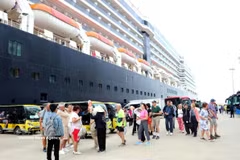
Lack of cruise ports hinders tourism in HCM City ảnh 1Saigontourist Travel Service Company welcomed passengers on the World Dream cruise ship, which arrived at T​an C​ang-C​ai M​ep Port in B​a R​ia-V​ung T​au Province last month. (Photo saigontourist.net)
HCM City (VNA) - The number of foreign tourists coming toHCM City on cruise ships remains relatively low because of a lack of ports forcruise ships, according to tourism experts.

Many cruise ships have to dock at the neighbouring province of Ba Ria-Vung Tau becauseof the lack of harbours in the city.

Phu My Bridge across the Saigon River has a vertical clearance of 45metres, allowing only small ships with a capacity of fewer than 1,000passengers.

Large ships carrying thousands of passengers have to dock at Rau Qua, Navi Oil,and Hiep Phuoc ports which are too busy receiving container ships, their majorfunction. There is no space for cruise ships at these ports.

Large cruise ships have to anchor at Ba Ria- Vung Tau province and cruisepassengers must travel by bus to HCM City.

Earlier last month, Saigontourist Travel Service Company welcomed 3,600passengers on the World Dream cruise ship, which arrived at Tan Cang-Cai MepPort in Ba Ria-Vung Tau province.

Passengers left the port by bus for a brief visit to HCM City beforeleaving for the coastal city of Nha Trang in the south-central province of KhanhHoa.

Phan Xuan Anh, Chairman of Viet Excursions, said that thousands of passengerswould spend more money if large cruise ships stayed overnight in HCM City.

If cruise ships dock at Ba Ria- Vung Tau, they visit HCM City and leave withina day, Anh said.

Vo Anh Tai, Deputy General Director of Saigontourist, said that last year thecompany received 210 cruise ships visiting HCM City, Ba Ria- Vung Tau, Da Nang,Nha Trang, Thua Thien-Hue and Ha Long, with more than 400,000 tourists and crewmembers, an increase of 30 per cent compared to the previous year.

Besides a lack of cruise ports, travel-related services such as tax-free shops,money-exchange stores as well as entertainment and shopping centres should becreated or improved to offer cruise passengers more spending options, Taisaid.

La Quoc Khanh, Deputy Director of the city’s Department of Tourism, underscoredthe rising trend in cruise tourism around the world.

He said the lack of ports with sufficient capacity to serve large ships was dueto a failure in cooperation between the Ministry of Transport and localauthorities.

The city’s cruise industry would enjoy strong growth if the shortage of cruiseports and travel-related services are resolved, according to Khanh.-VNA
VNA
See more

Ca Mau province is a shrimp farming hub of Vietnam. (Photo: VNA)

Ca Mau Shrimp Festival 2026: A celebration of culture, tourism

The southernmost province of Ca Mau will run a five-day event series from November 21-25 celebrating Vietnam Culture Day (November 24) and the second Ca Mau Shrimp Festival 2026 in An Xuyen ward, mixing culture, art, exhibitions, trade promotion and tourism.

Capella Hanoi, developed by Sun Group, is recognised by Condé Nast Traveler as one of Southeast Asia’s most imaginative luxury hotels. (Photo: Sun Group)

Condé Nast Traveler explores a “world of opera” at Sun Group’s Hanoi hotel

Just steps from the Hanoi Opera House, Capella Hanoi opens onto a world distinct from the city streets outside. Through the lens of Condé Nast Traveler, one of the world’s leading travel magazines, the hotel’s appeal extends beyond elaborate design to the theatrical stories woven throughout its spaces, turning a stay into a journey of artistic discovery.

Foreign tourists in traditional Lo Lo costumes visit Lung Cu (Photo: VNA)

Lung Cu tourism development requires coordinated infrastructure investment

Tourism growth has brought more visitors to Lung Cu, prompting accommodation establishments and restaurants to operate at high capacity and driving up demand for electricity and water. However, some infrastructure facilities have yet to keep pace, affecting business operations and visitors' experiences.

Tourists enjoy local food at Con Market in Da Nang. (Photo: VNA)

Da Nang takes local cuisine onto digital map

Cuisine is a major attraction for visitors to Da Nang, with traditional dishes offering not only distinctive flavours but also rich stories that reflect the region's culture, people, and heritage. The city is now developing a digital culinary ecosystem through e-commerce platforms and online services, creating new opportunities to showcase local cuisine, boost tourism, and support the local economy.

Sa Pa in full bloom as cherry blossoms herald the season. (Photo: VNA)

Sa Pa: A mountainous land blossoming in all four seasons

Alongside efforts to preserve the cultural identity of local ethnic communities, Sa Pa ward in the northern mountainous province of Lao Cai is accelerating digital transformation, developing smart urban services and upgrading infrastructure and public spaces to build a green, culturally distinctive and smart urban area.

Large numbers of domestic and foreign tourists continue to choose Hoi An ancient town in Da Nang city despite the ongoing rainy season (Photo: VNA)

Hoi An offers unique tourist experiences during flooding season

Despite the weather conditions, tourists continue to stroll along both banks of the Hoai River in Hoi An, take photographs and explore the flooded streets. Some have rolled up their trousers and waded through the water to continue sightseeing and capture unusual moments of their visits.

Golfers at a golf course in Bac Ninh city (Photo: VNA)

Vietnam’s golf tourism maintains strong international appeal

Vietnam's decade-long recognition as Asia's Best Golf Destination demonstrates its sustained attractiveness and established position in the regional and global golf tourism market. The achievement offers an opportunity to step up destination promotion, expand links with the international golf community and attract high-spending visitors who tend to stay longer.

Quy Nhon Bay, Gia Lai province has emerged as one of the key seaport and logistics hubs in central Vietnam. (Photo: published VNA)

Gia Lai bundles tourism, trade push around 2027 APEC ISOM

The central province of Gia Lai will stage a series of cultural, tourism, trade and experiential activities in early December, tied to the APEC 2027 Informal Senior Officials' Meeting (ISOM) in Quy Nhon, its Department of Culture, Sports and Tourism reported on November 10.

The winding beauty of Tham Ma Pass in Ha Giang. (Photo: VNA)

Vietnam’s best road trips as selected by Lonely Planet

With more than 61 million motorbikes on Vietnam's roads, intrepid bikers will find themselves in good company as they explore the country’s wonderfully diverse landscapes, with ample repair shops, gas stations and food stops along the way.

lllustrative image (Photo: VNA)

VNeID railway ticketing goes official from November 9

Customers need a level-2 VNeID account and must log in successfully on their phone. Automatic verification of personal data from the level-2 account simplifies booking, speeds up the process and adds security. The service covers all railway routes nationwide.

The Vietnam Culture and Tourism Association in Europe (VNCT) signs a memorandum of understanding on cooperation with the Hoan Kiem Tourism Association. (Photo: VNA)

Responsible tourism key to tapping European market

Tran Doan The Duy, General Director of Vietravel Tourism JSC (Vietravel), said Vietnam is seeing strong growth in international arrivals, with Europe among its fastest-growing source markets and the UK recording particularly positive results.

Cruise tourism in Cat Ba is a popular choice among visitors. Photo: VNA

Hai Phong aims to become attractive tourism destination

Hai Phong will develop high-quality, smart, green and creative tourism that reflects cultural identity and generates high added value. It is focusing on implementing this direction to unlock the potential of its marine and island resources, natural heritage and cultural assets.