Hanoi (VNA) – Over the past years, Lai Chau’s efforts to encourage industrial expansion have helped the northern province promote its advantages in terms of materials and workforce, creating high-quality products with high value.
According to the provincial Department of Industry and Trade, since 2011, the locality has implemented 21 projects in industrial expansion at a cost of more than 3.5 billion VND (140,449 USD) from national industrial promotion funds and local budgets.
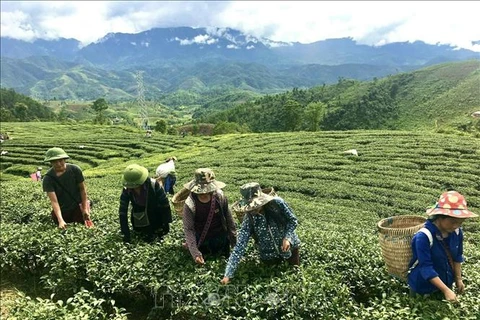
The projects focus on providing local industrial facilities with modern equipment and machineries for the production of tea, cordyceps, macadamia nuts, and tapioca starch, giving advice to the provincial People’s Committee and issuing certificates of outstanding rural industrial products to 25 products of 20 industrial facilities. Seven products of the province have been recognised so far.
Alongside, the province has assisted the building and trademark protection registration for 14 products of local establishments, while providing them with information on industrial development and industrial promotion policies.
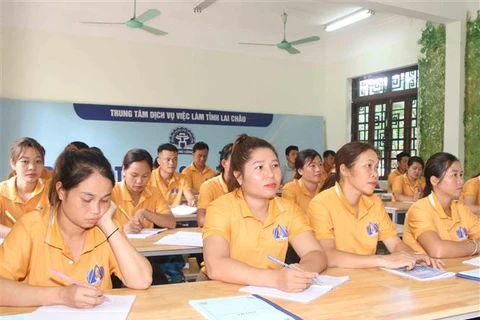
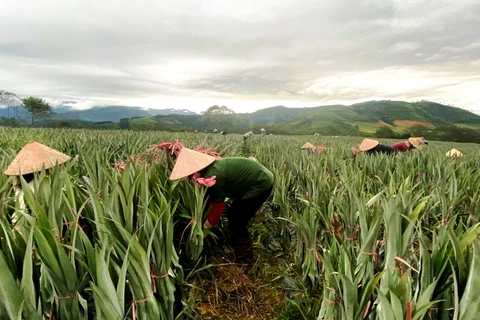
Nguyen Trong Thuc, Vice Director of the Lai Chau Department of Industry and Trade, said that the implementation of industrial promotion projects have produced practical results, optimising the locality’s advantages in material resources and workforce, manufacturing high-quality products with high value, meeting consumers’ requirements, creating jobs and contributing to boosting local socio-economic development in association with new-style rural area building.
However, Thuc said that the implementation of industrial production activities in Lai Chau has faced certain difficulties due to tough terrain and difficult transport.
Besides, the infrastructure system serving production has yet to meet the increasing demands of local people, with poor supporting works for goods production activities. Meanwhile, the province has yet to form production clusters linked as chains, while the infrastructure system for industrial clusters in the locality has yet to be completed.
At the same time, although activities to assist industrial production have been carried out, they have yet to meet requirements, especially in terms of resources for development, while industrial facilities in the province are mostly small in scale with limited capacity.
In order to deal with difficulties in attracting investment in industrial and handicraft development, in the coming time, the provincial Department of Industry and Trade will continue to roll out a number of measures such as step up communications to raise public awareness of the need to boost industrial development among local officials and residents, while continuing effectively building and implementing programmes and plans on industrial promotion, trade promotion, and e-commerce, supporting businesses and cooperatives to participate in activities to introduce and selling agricultural products in the domestic and foreign markets as well as on e-commerce platforms.
Moreover, the province will bring into full play investment resources for the construction of infrastructure system of local industrial clusters, thus creating spaces for projects in the fields of agro-forestry-fishery production, handicraft, and traditional trade.
The department will actively update information from ministries, sectors and central agencies as well as Vietnamese Trade Offices abroad and border localities on the markets, tax policies, technical barriers, quality standards and regulations on food safety, thus providing the information to local businesses, cooperatives and business households, enabling them to design suitable production and business orientations to meet the market requirements./.