Launch of NanoDragon into space affirms capacity of Vietnam’s space industry: Ambassador

The launch of made-in-Vietnam satellite NanoDragon has gone into history and marked a new development milestone of Vietnam’s space industry, Vietnamese Ambassador to Japan Vu Hong Nam said following the successful launch on November 9 morning at the Uchinoura Space Centre in Kagoshima prefecture.
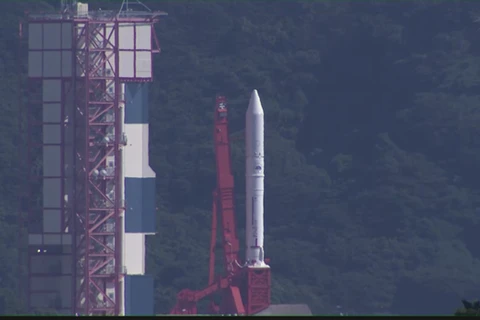
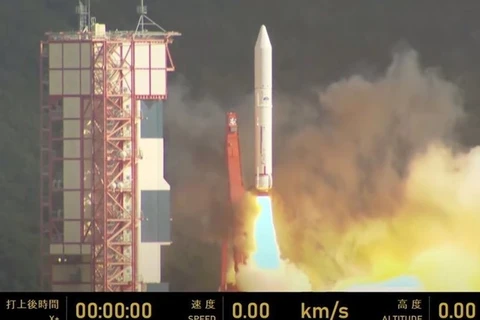
Launch of NanoDragon into space affirms capacity of Vietnam’s space industry: Ambassador ảnh 1The fifth Epsilon solid-fuel rocket carrying NanoDragon and eight other small satellites of Japan successfully launched into outer space. (Photo: VNA)
Tokyo (VNA) – The launch of made-in-Vietnam satellite NanoDragonhas gone into history and marked a new development milestone of Vietnam’s spaceindustry, Vietnamese Ambassador to Japan Vu Hong Nam said following thesuccessful launch on November 9 morning at the Uchinoura Space Centre inKagoshima prefecture.

This event once again proves that Vietnam can fully masterand develop its own space industry, Nam told Vietnam News Agencycorrespondents in Japan.

He stated that all stages in the manufacturing process ofNanaDragon were carried out in Vietnam, demonstrating the development andinitiative of Vietnam on the path of gradually mastering satellitemanufacturing technology.

Vietnam chose Japan to launch NanoDragon because it is apartner to coordinate and support Vietnam in testing small satellites, hestated, adding that this a symbolic cooperation for the friendship and reliablerelationship between the two countries within the framework of theVietnam-Japan extensive strategic partnership towards the 50th anniversary of establishmentof bilateral diplomatic ties in 2023.

The diplomat also expressed his honour to be a representative of the VietnameseGovernment to witness the launch at the Uchinoura Space Centre.

At 9:55am (Japan time) on November 9, the fifth Epsilonsolid-fuel rocket carrying NanoDragon and eight other small satellites of Japanwere successfully launched into outer space.

Launch of NanoDragon into space affirms capacity of Vietnam’s space industry: Ambassador ảnh 2Vietnamese Ambassador to Japan Vu Hong Nam. (Photo: VNA)
NanoDragon, a nano-layer cubesat satellite which weighsaround four kilogrammes, was developed by the Vietnam National Space Centre(VNSC) under the Vietnam Academy of Science and Technology. The development ofthe NanoDragon satellite is part of VNSC's "made in Vietnam" smallsatellite development roadmap.

It was delivered to Japan on August 11 and tested at theUchinoura Space Centre from August 16-17 before being officially transferred tothe JAXA for launching under the second "Innovative satellite technologydemonstration" programme.

Previously, the Japan Aerospace Exploration Agency (JAXA)had to stop launching Epsilon-5 thrice on October 1, October 7 and November 7due to ground radar issue, and unfavourable weather./.
VNA

See more

The Vietnamese delegation led by Deputy Prime Minister Ho Quoc Dung visits the Korea Institute of Science and Technology (KIST). (Photo: VNA)

Vietnam, RoK promote strategic technological cooperation

Deputy Prime Minister Ho Quoc Dung proposed expanding joint research programmes, particularly in strategic areas where Vietnam has development needs, and KIST has strengths, including semiconductor integrated circuits, AI, batteries and energy storage, and biotechnology.

Digital transformation brings economic benefits closer to businesses

Digital transformation brings economic benefits closer to businesses

In addition to streamlining processes and reducing the time required to complete administrative procedures, digital models are creating more opportunities for businesses, household enterprises and small traders to access information, adopt new payment methods, connect with partners and expand their markets.

Images are collected and processed at a satellite image receiving station. (Photo: VNA)

Vietnam, France explore new space technology cooperation opportunities

Building on the effectiveness of VNREDSat-1, Vietnam and France are continuing to promote cooperation in the next phase, including a proposal for VNREDSat-2. The two sides have discussed technological options, resources and an implementation roadmap, with a view not only to developing a new-generation satellite but also to increasing Vietnam’s level of participation and technological capabilities.

Using AI to search and process legal information (Photo: VNA)

Legal profession reshaped in age of artificial intelligence

In Ho Chi Minh City, digital transformation in the legal profession is not simply about introducing more technology into professional practice. It must also create ways of working that ensure technology serves people, while lawyers retain control and responsibility for the quality of legal services. This is particularly important in a metropolis with a large-scale economy and diverse legal needs.

Vietnamese youths learn about AI application scenarios at the China-ASEAN AI Application Cooperation Centre in Guangxi. (Photo: VNA)

China’s Guangxi fosters AI cooperation with Vietnamese localities

During his visit to China and Guangxi in April, General Secretary of the Communist Party of Vietnam (CPV) Central Committee and President To Lam expressed a desire to further expand cooperation between Vietnam, particularly border localities, and Guangxi in areas including AI.

Hanoi Market Surveillance officers inspect products showing signs of violations of regulations on product labelling, advertising and intellectual property. (Photo published by VNA)

Positive progress recorded in tackling intellectual property rights infringements

To raise public and business awareness while improving the effectiveness of preventing and dealing with infringements, the Ministry of Science and Technology will continue working with other ministries, sectors and localities to strengthen intellectual property protection and enforcement on a regular, continuous and sustained basis, with no prohibited areas or exceptions.

Delegates visit exhibition stands at the 2026 national quality and productivity forum in Ho Chi Minh City. (Photo: VNA)

Enabling institutions needed for science-technology to generate new productivity

The Government should shift from providing funding to creating enabling conditions by developing infrastructure, platforms, standards and markets, while coordinating the innovation ecosystem. Innovation and technology diffusion should also go hand in hand, particularly by bringing AI, digital and green technologies to small- and medium-sized enterprises as well as traditional sectors.

Prof. Dr. Nguyen Van Tam, Chair of the Department of Computer Science, Data and Artificial Intelligence at the Polytechnic Institute of Paris (IP Paris) (Photo: VNA)

Expert proposes global Vietnamese intellectual ecosystem to boost AI development

Prof. Dr. Nguyen Van Tam, Chair of the Department of Computer Science, Data and Artificial Intelligence at IP Paris, said the Political Bureau’s Resolution No. 23-NQ/TW, which elevates overseas Vietnamese to one of the country's important strategic resources, should be translated into practical mechanisms for deeper participation of OVs in the country’s scientific and technological development, particularly in artificial intelligence (AI).

The strategy pivots Vietnam toward AI research and development tied to economy-wide transformation. (Illustrative photo: VNA)

Vietnam approves AI strategy targeting regional hub status by 2030

The strategy pivots Vietnam toward AI research and development tied to economy-wide transformation. Instead of retrofitting AI into existing products and processes, the plan treats AI as a core capability from problem identification through design, organisation and operations.

A student at Thang Long Primary School in Hanoi attend an online class. (Photo: VNA)

Vietnam alliance steps up efforts to promote online safety, digital trust

Since its establishment, the Digital Trust Alliance (DTA) has expanded its membership and activities, with hundreds of applications to join recorded in the first six months of 2026. It aims to establish Digital Trust Clubs in all 34 provinces and cities and bring together around 1,000 members nationwide.

Hi-tech shrimp farming and wind power development in Thanh Hai commune, Vinh Long province (Photo: VNA)

Vietnam targets productivity-driven growth over cheap labour

A development model based on productivity, knowledge and technology requires long-term capital, a skilled workforce, innovation capacity, technology absorption and incentives for long-term invest. Therefore, Vietnam’s greatest challenge is moving from cost-based advantages to ones based on productivity, technology and added value.