Lac Lake is one of the largest natural lakes in Vietnam and is considered by many to also be the most beautiful. Covering more than 500ha at an elevation of 500m, it is one of the most famous landscapes in the Central Highlands.
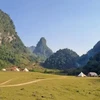
Spectacular mountains and primitive forests surround the lake. Reflections of the pine trees turn the water a beautiful deep green, which can be seen between the lotus flowers that float on the surface.
A twisty path, lined with old trees, tall grass and wild flowers, meanders along the hillside to Bao Dai Palace at the summit. It was originally the summer residence of King Bao Dai, the last king of the Nguyen Dynasty, which has been renovated into a hotel.
From the palace, visitors can enjoy a panoramic view of the lake and the surrounding forests. Glimpses of Mnong villages can be seen through breaks in the leafy canopy.
In good weather, Chu Yang Sin, the highest mountain of the southern Central Highlands, can be seen.
Many generations have passed on legends about Lac Lake through their tradition of oral history. The lake gave Dac Lac Province its name. ‘Dac' in the Mnong language means water, river, stream or lake. ‘Lac' was the name of a young man with overwhelming courage and strength who found the source of water resource for villagers in the area.
Locals tell the legend: Once upon a time, a long time ago, for reasons unknown to man, the God of Fire and the God of Water declared war on each other.
After a fierce fight, the defeated God of Water was forced to hide by turning himself into a boulder. Consequently, there was a huge drought. For many years there was no rain and all the plants and animals perished. Villagers waited in misery for any drops of rain.
Then one day, a poor youth named Y Lac started on a quest to find water for the village. He walked day after day until he became so tired one afternoon he had to sit down on a boulder to eat and rest. His eyes happened to fall upon a small eel coiled up deep within a crack in the rock. He caught it and put it into a pan from which it could not escape. The next morning, Y Lac noticed a drop of water, like a pearl, at the bottom of the pan.
The youth somehow knew that the eel was the God of Water transfigured, so he released it and followed the eel as it slithered away. After a very long journey, the eel disappeared and an immense lake suddenly appeared in front of the youth's eyes. Lac Lake was formed.
Visitors to Lak Lake these days can hear stories about the past, sail around in dug-out canoes, take elephant rides and enjoy the sights, sounds and smells of mountainous Mnong villages. Tourists can also go trekking over streams in the forests to enjoy the beauty of the diverse flora and fauna while listening to the songs of the birds and the breath of the wind.
When night falls, imbibe in a glass of wine, listen to Tay Nguyen boys and girls sing and dance by the firelight to the sound of gongs, while enjoying the elders tell khan tales. For dinner, indulge in a helping, or two, of newly harvested fragrant mountain rice paired with fried thac lac fish, one of the area's specialities.
A visit to Lac Lake promises wonderful experiences for tourists to dance with the locals, wander through the forest on an elephant's back and enjoy unforgettable specialities around the campfire next to stilt houses.
Lac Lake is located about 52km south of Buon Ma Thuot city, in the Central Highlands province of Dac Lac , along National Highway 27 on the road to Da Lat city./.
Spectacular mountains and primitive forests surround the lake. Reflections of the pine trees turn the water a beautiful deep green, which can be seen between the lotus flowers that float on the surface.
A twisty path, lined with old trees, tall grass and wild flowers, meanders along the hillside to Bao Dai Palace at the summit. It was originally the summer residence of King Bao Dai, the last king of the Nguyen Dynasty, which has been renovated into a hotel.
From the palace, visitors can enjoy a panoramic view of the lake and the surrounding forests. Glimpses of Mnong villages can be seen through breaks in the leafy canopy.
In good weather, Chu Yang Sin, the highest mountain of the southern Central Highlands, can be seen.
Many generations have passed on legends about Lac Lake through their tradition of oral history. The lake gave Dac Lac Province its name. ‘Dac' in the Mnong language means water, river, stream or lake. ‘Lac' was the name of a young man with overwhelming courage and strength who found the source of water resource for villagers in the area.
Locals tell the legend: Once upon a time, a long time ago, for reasons unknown to man, the God of Fire and the God of Water declared war on each other.
After a fierce fight, the defeated God of Water was forced to hide by turning himself into a boulder. Consequently, there was a huge drought. For many years there was no rain and all the plants and animals perished. Villagers waited in misery for any drops of rain.
Then one day, a poor youth named Y Lac started on a quest to find water for the village. He walked day after day until he became so tired one afternoon he had to sit down on a boulder to eat and rest. His eyes happened to fall upon a small eel coiled up deep within a crack in the rock. He caught it and put it into a pan from which it could not escape. The next morning, Y Lac noticed a drop of water, like a pearl, at the bottom of the pan.
The youth somehow knew that the eel was the God of Water transfigured, so he released it and followed the eel as it slithered away. After a very long journey, the eel disappeared and an immense lake suddenly appeared in front of the youth's eyes. Lac Lake was formed.
Visitors to Lak Lake these days can hear stories about the past, sail around in dug-out canoes, take elephant rides and enjoy the sights, sounds and smells of mountainous Mnong villages. Tourists can also go trekking over streams in the forests to enjoy the beauty of the diverse flora and fauna while listening to the songs of the birds and the breath of the wind.
When night falls, imbibe in a glass of wine, listen to Tay Nguyen boys and girls sing and dance by the firelight to the sound of gongs, while enjoying the elders tell khan tales. For dinner, indulge in a helping, or two, of newly harvested fragrant mountain rice paired with fried thac lac fish, one of the area's specialities.
A visit to Lac Lake promises wonderful experiences for tourists to dance with the locals, wander through the forest on an elephant's back and enjoy unforgettable specialities around the campfire next to stilt houses.
Lac Lake is located about 52km south of Buon Ma Thuot city, in the Central Highlands province of Dac Lac , along National Highway 27 on the road to Da Lat city./.