Legal changes expected to increase appeal of Vietnam's real estate market

The global economic slowdown, the impact COVID-19 pandemic, and internal difficulties have put Vietnam’s real estate market in a tough situation.
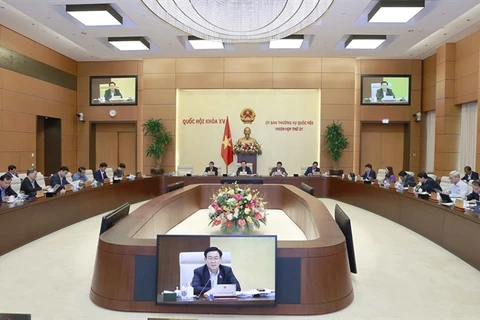
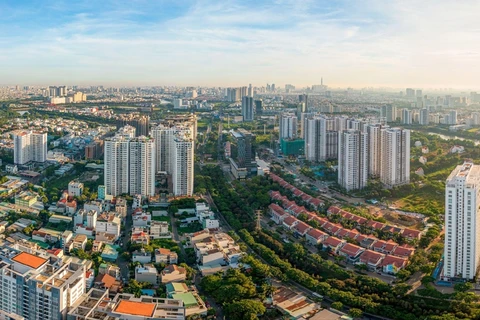
Legal changes expected to increase appeal of Vietnam's real estate market ảnh 1A workshop seeking measures to increase the attractiveness of the market is held by Nha dau tu (Investors) magazine. (Photo: VNA)

Hanoi (VNA) – The global economic slowdown, the impact COVID-19 pandemic, and internal difficulties have put Vietnam’s real estate market in a tough situation.

Responding to the situation, Vietnam has issued policies on economic recovery and development, particularly for the recovery of the real estate market.

Speaking at a recent workshop seeking measures to increase the attractiveness of the market held by Nha dau tu (Investors) magazine, its Editor-in-Chief Nguyen Anh Tuan said that Vietnam is considering amendments to the Land Law, the Law on Real Estate Business (amended) and the Law on Housing (amended). These moves should bring positive changes to the market.

Deputy Minister of Construction Nguyen Tuong Van said that on average, the construction and real estate industries contributed about 11% of GDP in recent years, in which the real estate industry directly made up about 4.5%. 

Foreign investment in this field has continuously increased and made an important contribution to the development of the market.

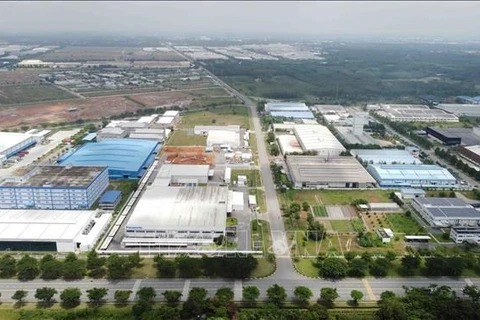
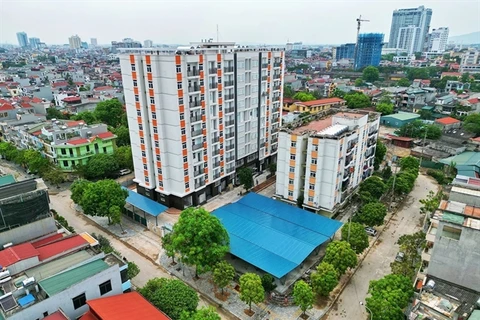
Legal changes expected to increase appeal of Vietnam's real estate market ảnh 2Up to now, FDI capital in the real estate sector has reached 66.4 billion USD, accounting for 15.1% of total FDI capital in Vietnam. (Photo: vneconomy.vn)

Up to now, FDI capital in the real estate sector has reached 66.4 billion USD, accounting for 15.1% of total FDI capital in Vietnam and continuously maintaining the 2nd or 3rd position in FDI attraction. However, in the last few years, the real estate market has faced many difficulties and challenges.

Van said the Ministry of Construction has presided over the drafting of the Law on Housing (amended) and the Law on Real Estate Business (amended). These are two laws of great significance, attracting the attention of people and the business community at home and abroad.

The amendment and completion of the two laws will have a positive impact on the housing and real estate market, drastically improving confidence in the investment environment, and creating transparency and stability for the housing market in Vietnam. 

"Once approved, the amended laws will also help Vietnam's real estate market become more attractive to foreigners living and working in Vietnam and foreign investors,"  Van confirmed.

Nguyen Anh Tuan, Deputy Director of the Foreign Investment Agency under the Ministry of Planning and Investment, said that real estate is one of the fields that have attracted many foreign investors to Vietnam. Currently, investors from 48 countries and territories are investing in the real estate market in Vietnam.

To get high-quality FDI real estate investors, Vietnam needs to focus on several solutions, including perfecting legal regulations on the real estate market. This includes new types of real estate such as smart cities, resort real estate, real estate combined with healthcare, condotels, and officetels in line with international practices.

The country should target investors that have good financial capacity and solutions associated with green and sustainable economic transformation, he said.

Investors have a responsibility to the environment and society during the investment process in Vietnam, he added.

In addition, the flexible and systematic management of monetary policy tools is needed to meet the credit capital demand for the development of the real estate market, creating favourable conditions for businesses, home buyers, and investors to access credit sources.

Reducing lending interest rates is also a solution, according to the official.

He said that along with the continued improvement in infrastructure which facilitates the development of the real estate market, Vietnam needs to improve the business investment environment, and promptly remove difficulties relating to policies, especially for projects that use large areas of land and have been long delayed./.
VNA

See more

A farmer inspects quality of green-skin pomelos in an orchard. (Photo: VNA)

Vietnamese pomelos gain broader access to Australian market

The update by Australia’s Department of Agriculture, Fisheries and Forestry to its Biosecurity Import Conditions system (BICON) on April 10, officially setting out import conditions for Vietnamese pomelos, is regarded as a major milestone in market access efforts.

Vietnamese Trade Counsellor to India Bui Trung Thuong addresses the online seminar. (Photo: VNA)

Vietnam, India boost connectivity in textile, footwear sectors

As global supply chains are being restructured towards diversification, sustainability and digital transformation, Vietnamese Trade Counsellor to India Bui Trung Thuong noted that this is an opportune time for both countries to deepen cooperation towards building integrated value chains and enhancing product value.

A passenger poses for a photo besides a Vietjet aircraft (Photo: VNA)

Vietjet leads Southeast Asia in emissions efficiency

Under comparable operating conditions, Vietjet’s leading position highlights its ability to optimise performance across its entire operational chain, including aircraft configuration, route network design and load management.

Containers loaded at Cai Mep International Terminal (Photo: VNA)

Vietnam ranks 18th among world’s top exporters in 2025

Vietnam’s exports reached about 470 billion USD for the first time last year, up more than 16% year on year, with a trade surplus of over 20 billion USD, contributing significantly to maintaining macroeconomic stability.

Experts speak at the workshop (Photo: VNA)

Vietnam’s pet care market emerges as lucrative investment opportunity

​ Across the Asia-Pacific, 60% of respondents own pets, while Vietnam’s pet ownership rate stands at 79%, among the highest in the region. Notably, 55% of Vietnamese pet owners have two or more pets, signalling that pet ownership has evolved from a hobby into a modern lifestyle choice.

A view of the workshop on the application of AI and real-world data in food product research and development held in Ho Chi Minh City on April 22. (Photo: VNA)

AI emerges as key driver for Vietnam’s F&B sector breakthrough

Businesses start with projects that deliver quick results within six to 12 months, like quality control systems, demand forecasting, or customer service chatbots. In the long run, F&B companies are advised to move toward with AI-driven operating models to keep up with fast-changing market demands.

Trucks carrying imports enter Vietnam through Lao Cai International Border Gate. (Photo: VNA)

Smart border gates power growth in northern border provinces

With a borderline of about 182 km, Lao Cai aims to turn its border gate economic zone into a key growth engine by adopting a smart border gate model, viewing this as a breakthrough measure for improving management efficiency, reducing logistics expenses, and enhancing customs clearance capacity.

Ken Chau (right), Chairman of the Vietnam Canada Business Association, presents flowers to the organising committee of the Vietnamese Entrepreneurs Awards in Canada 2026 at the event. (Photo: Award organising board)

Vietnamese awards in Canada spotlight community strength

The gala brought together nearly 200 participants, including community leaders, entrepreneurs and guests from across the country, highlighting both the achievements of Vietnamese businesses and the community’s growing role in the socio-economic fabric of Vancouver and other Canadian cities.

Passenger numbers are expected to peak at the start of each break, particularly from the afternoon of April 24 to April 25, with a return wave on April 27 following the Hung Kings Commemoration Day. (Photo: VNA)

Transport sector ramps up capacity for holiday travel surge

Transport experts said the back-to-back holidays will create travel patterns different from previous years. While some people are expected to combine the two breaks into a longer holiday, others will travel during either period depending on personal plans. Passenger flows are therefore likely to be more evenly distributed, helping ease pressure on transport systems.

A worker at the factory of the TNG Investment and Trading Joint Stock Company in the Song Cong I Industrial Park, Thai Nguyen province. (Photo: VNA)

Imports accelerate, powering exports, public revenues

Previous years show that Vietnam typically runs a trade deficit in the first quarter before shifting to a surplus in the latter half of the year. The current deficit, therefore, is considered both normal and indicative of an economy “recharging” for growth.