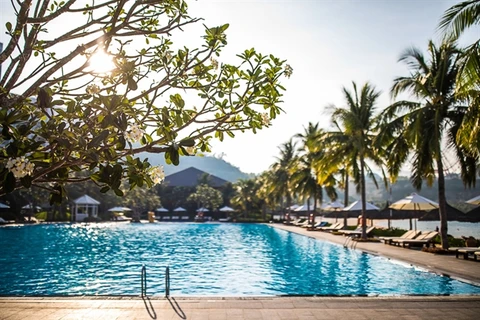
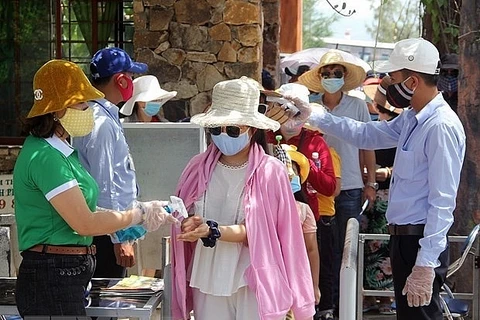
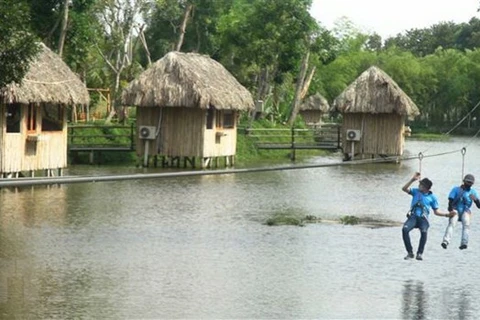
Illustrative image (Photo: VNA)
 HCM City (VNS/VNA) — Hotels need to appeal more to local corporate guests and tourists to help the hospitality sector recover, market researcher Savills has said.
Mauro Gasparotti, director of Savills Hotels APAC, said that creativity would be key to generating additional revenues, and that hotels should appeal to local corporate guests and tourists.
Hospitality was among the first industries to be hit by the COVID-19 crisis, and will likely be among the slowest to fully recover.
All categories are affected, from international hotels, restaurant chains and multinational airlines to smaller family-owned restaurants and accommodations. This has occurred across the world with broadly similar dynamics and business consequences.
By responding early, Vietnam has been more successful than any country containing COVID-19, and the recent partial reopening of restaurants, coffee shops and hotels has given Vietnam a greater headstart over other countries.
A report from Savills said that “hospitality is now seeing a careful recovery and hopes of things returning to normal. The sector is slowly coming back, yet owners are still trying to figure out what will be the 'new normal' and how long before demand gets back to pre-crisis levels”.
So far, strategies implemented by restaurants and hotels are slowdowns or closures to cut costs, retaining key personnel, and preparing for reopening.
This has helped overcome a short-term drop in revenues, but the real question is what level of demand they can expect in the coming months, according to Savills.
Unsurprisingly, in the short-term, local demand will be the highest and the only one, the company said.
MICE (meetings, incentives, conferences and exhibitions) business is expected to be one of the last activities to fully resume operations as it relies heavily on crowds of people getting together.
Local MICE activity, which covers Vietnam and mainly involves local companies, is expected to return when the Government deems it safe. Safety regulations will need to stay in place and companies will have to reduce the size of their gatherings.
“MICE is to be hit by cuts in corporate spending in events and entertainments for at least the next two quarters. We will probably see the return of small-scale events first, as companies celebrate in smaller groups or by separate teams. International events held by multinational corporations with large numbers of international travellers will possibly return only after travel restrictions are lifted and corporate spending rises back to pre-pandemic levels, which may take a lot longer,” said Gasparatti.
According to Savills, recovery was initially expected to follow a “V” shape model, which is common in the travel industry and has happened in Vietnam in the past.
“However, the situation now is very different, and I believe most hotels and resorts should not expect full recovery until well into 2021 as the global economic impact and evolution of the virus are both still uncertain,” Gasparatti said.
Safety is a key factor in the travel industry and people will only travel again when they feel completely safe.
“As mentioned, we will rely on local demand first, especially younger generations of independent travellers, followed by reopening of some single key countries, to slowly come back. That said, looking into the evolvement of other countries like China where the government recently allowed hotels to reopen, it took only six weeks for occupancy to reach 32 percent by the end of March after the drastic fall of occupancy in the month before, and this was mainly due to local travellers," Gasparatti said. "That has allowed hotels and resorts to regain business and reopen operations. We hope Vietnam will once again prove to be a successful example for other countries to follow."/.
VNA