Logistics firms endeavour to meet e-commerce demand

Logistics businesses are accelerating investment in technology to meet the rising demand for delivery of goods at home and abroad amid booming e-commerce, heard a workshop in Hanoi on April 10.
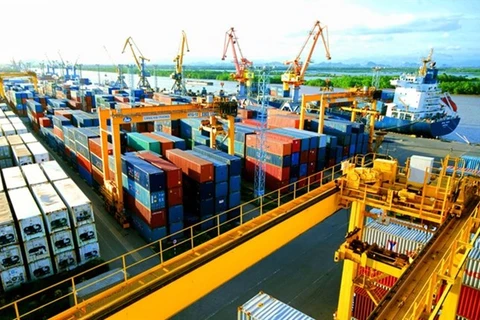
Logistics firms endeavour to meet e-commerce demand ảnh 1Logistics businesses are accelerating investment in technology to meet the rising demand for delivery of goods at home and abroad  (Photo: tapchitaichinh.vn)

Hanoi (VNA) –
Logistics businesses are accelerating investment in technology to meet the risingdemand for delivery of goods at home and abroad amid booming e-commerce, hearda workshop in Hanoi on April 10.

Tran Thanh Hai, deputy head of the Foreign TradeAgency under the Ministry of Industry and Trade, stressed that e-commerce willbe the development trend in the future, to which logistics services areindispensable.

E-commerce and logistics firms have established connectivityin recent time but the partnership faces many problems such as a lack of a lawon e-logistics, regular changes of transport regulations, complicatedadministrative procedures, shortage of skilled and experienced human resources,and low application of technology in e-logistics, Hai noted.

Vice Chairman of theVietnam Logistics Association Dao Trong Khoa said apart from the government’s effort,businesses need to proactively create a favourable business environment andharmonious legal regulations.

The collaboration betweentraditional logistics firms and startups in e-commerce services is essential topromote growth of the two industries, he added.

Khoa pointed out that technologyis a barrier for Vietnamese logistics enterprises that prevent them fromfurther involving in the e-commerce field.

He said if businesseslink up with others, they can take advantage of each other’s services andbetter meet the demand of customers.

Director of LazadaExpress Vu Duc Thinh said logistics costs in Vietnam account for 30 percent ofall e-commerce revenue, which is higher than that in other countries such asIndia, where the rate is no more than 15 percent.

The lack of collaborationbetween e-commerce and logistics enterprises may result in lost opportunitiesfor businesses, he said.

According to the VietnamE-commerce Association (VECOM) growth in the country’s e-commerce sector wasmore than 25 percent last year, and this growth rate could be maintainedbetween 2018 and 2020.-VNA

VNA

See more

An overview of the meeting in Ho Chi Minh City to discuss measures to ease pressures on production and trade, and stablise the domestic market amid the escalating conflict in the Middle East. (Photo: VNA)

Measures sought to address business challenges amid Middle East conflict

Vietnam is facing a three-stage ripple effect - first on transport and fuel-dependent industries, then on sectors relying on their outputs, and ultimately on consumers. Volatility in key commodities like fuel is disrupting the entire supply chain and increasing the risk of market instability.

Workers load rice bags onto a vessel for delivery. (Photo: VNA)

PM directs tasks to accelerate 2026 export growth

During January – February, Vietnam’s total export-import value hit 155.7 billion USD, up 22.3% year-on-year. Of the total, exports were estimated at 76.4 billion USD, up 18.3%, while imports totaled 79.3 billion USD, up 26.3%.

A quick report from data analytics platform Metric shows the number of active sellers across Shopee, TikTok Shop, Lazada and Tiki has dropped to just over 602,000, marking a year-on-year decline of more than 7%. (Illustrative photo: VNA)

Higher marketplace fees weigh on online sellers

Analysts identify rising operational costs as the key factor behind the exodus. In 2025, platforms simultaneously rolled out fee hikes ranging from 10–15%, significantly increasing the financial burden on merchants.

The latest approvals underscore the growing presence of Vietnamese rice in one of the world’s most demanding markets. (Photo: VNA)

Fragrant rice deepens EU market presence

Although the volume of individual shipments remains relatively modest, industry experts say the steady flow of exports reflects stable demand in the EU for high-quality rice.

Promoting stronger foreign direct investment (FDI) inflows is considered an important solution to help drive economic growth. (Photo: VNA)

Vietnam emerges as hub for high-quality FDI

Vietnam is gradually becoming a strategic destination for high-quality global FDI. Investment flows are increasingly directed toward sectors such as high-tech manufacturing, electronics, digital infrastructure, modern logistics, and industries that are closely linked to global supply chains.

Shrimp processing for export at Huy Nam company, An Giang province. (Photo: VNA)

Fisheries sector proactively adjusts to emerging challenges

In addition to food safety regulations, the US continues to closely monitor the origin of imported seafood through the Seafood Import Monitoring Programme (SIMP) administered by the National Oceanic and Atmospheric Administration (NOAA). Requirements linked to the Marine Mammal Protection Act (MMPA) are also a major concern for businesses.