Ly Son island district’s boat racing festival becomes national heritage

The Tu Linh boat racing festival in the island district of Ly Son, the central province of Quang Ngai, has been recognised as part of the national intangible cultural heritage.
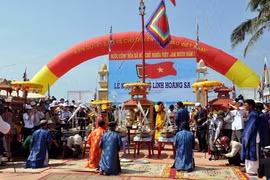
Ly Son island district’s boat racing festival becomes national heritage ảnh 1Teams competing at the Tu Linh boat racing festival of Ly Son district (Photo: tienphong.vn)
Quang Ngai (VNA) – The Tu Linh boatracing festival in the island district of Ly Son, the central province of QuangNgai, has been recognised as part of the national intangible cultural heritage.

The certificate presentation ceremony was heldon April 27 by the provincial Department of Culture, Sports and Tourism and thedistrict People’s Committee.

According to old documents, the Tu Linh (fourmythological creatures – dragon, qilin, tortoise, phoenix) boat racing festivalon Ly Son Island was first held in 1826.

It takes place around the Lunar New Yearfestival to pray for good weather, bumper crops, and peace. It is also meant topay tribute to ancestors who explored this land, as well as the then Hoang Saflotilla that planted sovereignty markers on Hoang Sa (Paracel) and Truong Sa(Spratly) archipelagoes and frequently .

To preserve and bring into play this festival,the Ly Son district People’s Committee conducted many surveys and studies overthe past years to compile a dossier seeking the inclusion of this activity inthe list of national intangible cultural heritage.

The Ministry of Culture, Sports and Tourism madethe recognition in September 2020.

Thanks to this move, Ly Son district iscurrently home to two festivals named national intangible cultural heritages,with the other being “Le khao le the linh Hoang Sa” (Feast and CommemorationFestival for Hoang Sa Soldiers).

The Feast and Commemoration Festival for HoangSa Soldiers this year was held on April 19.
Ly Son island district’s boat racing festival becomes national heritage ảnh 2A ritual in the Feast and Commemoration Festival for Hoang Sa Soldiers (Photo: tienphong.vn)
According to Vietnam’s feudal state history, theHoang Sa Flotilla was set up when the Nguyen Lords began their reign in thesouth of the country. Thousands of sailors overcame roaring waves and storms tosurvey sea routes, plant milestones and erect steles affirming nationalterritory in Hoang Sa and Truong Sa archipelagos, and exploit marine resourcesordered by Nguyen Lords. Their missions were full of dangers, and many of themnever returned to land.

To pay tribute to the men enlisted in theflotilla, “Le khao le the linh Hoang Sa” has been observed through hundreds ofyears by families in Ly Son island and many coastal areas in Quang Ngai.

The festival, which is held every April on theisland, was recognised as part of the national intangible cultural heritage bythe State in 2016. It reflects Vietnam’s history of protecting the nationalsovereignty in the East Sea, especially over the Hoang Sa and Truong Saarchipelagos.

Ly Son island covers an area of less than 10sq.km but it has nearly 100 relics, most of which are related to the Hoang SaFlotilla, such as the empty graves built for Hoang Sa soldiers who neverreturned to land, the temples dedicated to Pham Quang Anh and Vo Van Khiet whowere captains of the Hoang Sa Flotilla, and a showroom displaying the items ofthe Hoang Sa Flotilla sailors who also controlled Bac Hai and Ba Ri Lagoon.

A monument and memorial house dedicated to theHoang Sa Flotilla stand near the main road of the island./. /.
VNA
See more

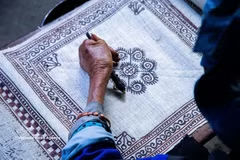
With their skillful hands and innovative thinking, Mong women have transformed traditional flax fiber into a "cultural ambassador". (Photo: VNA)

Mong women turn traditional craft into destination appeal

Alongside local cuisine, traditional attire, and folk games, linen weaving has become a crucial asset in enhancing Lung Tam commune's tourism appeal, creating new livelihood opportunities, and inspiring locals to preserve their heritage.

Leaders pose with artists and performers at the ceremony marking 950 years of Quoc Tu Giam (Imperial Academy) on November 13 (Photo: VNA)

Top leader attends ceremony marking Quoc Tu Giam’s 950th anniversary

General Secretary of the CPV Central Committee and President To Lam called for preserving the Van Mieu – Quoc Tu Giam heritage and putting its spirit into daily school life. He asked Hanoi to work closely with culture, education and research agencies to complete open digitised materials on the relic soon.

The opening ceremony for the 2026 Hanoi Creative Design Festival on November 13 (Photo: VNA)

Hanoi Creative Design Festival 2026 opens, targets creative economy

Running from November 13-28, the festival features 150 activities across five cultural, heritage and creative clusters and draws nearly 1,000 domestic and foreign artisans, artists, designers and experts, including nearly 100 foreign artists and overseas Vietnamese from 21 countries.

950 years on, Quoc Tu Giam continues to inspire Vietnam’s pursuit of knowledge ​

950 years on, Quoc Tu Giam continues to inspire Vietnam’s pursuit of knowledge ​

The 950th founding anniversary of Quoc Tu Giam (Imperial Academy), Vietnam’s first national university, is an occasion to reaffirm the enduring values of the country's tradition of learning, respect for teachers, and promotion of talent, which have shaped the nation’s intellectual foundations and continue to support its development in a new era.

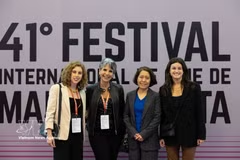
Chair of the Canada-Vietnam Cultural & Educational Council (CVCEC) Phan Thi Quynh Trang (first from left) (Photo: VNA)

Vietnam’s learning tradition gets Canadian reboot

The Canada-Vietnam Cultural & Educational Council (CVCEC) is building culture lessons on Vietnamese landmarks, with the Temple of Literature as a core module. Kids will hear stories about teacher Chu Van An, and practice greetings, gratitude to teachers and respect for elders.

Panamanian President José Raúl Mulino and his spouse visit the Temple of Literature (Photo: VNA)

Quoc Tu Giam at 950: A meeting point for Vietnam’s cultural diplomacy

Van Mieu - Quoc Tu Giam is a symbol of Vietnam's culture and education and a regular pick for high-ranking leaders and politicians. That lifts it from national heritage to a valuable platform for promoting cultural diplomacy and showcasing Vietnam's cultural soft power, helping to convey the country's image and cultural identity to the international community.

Construction on APEC Phu Quoc Multi-purpose Performance Hall (Photo published by VNA)

APEC 2027: Inside the making of Asia’s landmark theatre

One year in, Sun Group’s APEC Phu Quoc Multi-purpose Performance Hall is taking shape as one of Asia’s largest theatres. It boasts 54,680 sq.m of floor area, 17,250 sq.m of roof, six above-ground floors plus a basement, and 4,030 seats, larger than Hollywood’s Dolby Theatre, the Oscars venue.

Visitors will enjoy free admission to the Vietnam Museum of Ethnology on Vietnam Culture Day (November 24). (Photo: nhandan.vn)

Free admission to museums, historical sites, national parks on Vietnam Culture Day

Organisations and individuals will be entitled to free admission every year on November 24 to eight museums: the Museum of Oceanography, the Vietnam Museum of Ethnology, the Museum of the Cultures of Vietnam’s Ethnic Groups, the Vietnam National Museum of History, the Vietnam National Fine Arts Museum, the Yersin Museum, the Vietnamese Women's Museum and the Vietnam Military History Museum, as well as the Independence Palace historical site.

Vietnamese Consul General in Perth Pham Hai Anh (Photo published by VNA)

Vietnamese community in Australia seen as bridge for bilateral ties

Vietnamese identity and life in Australia are complementary rather than separate. The more successful overseas Vietnamese became in Australia, the greater their ability to contribute to their homeland and bilateral ties, said Vietnamese Consul General in Perth Pham Hai Anh.

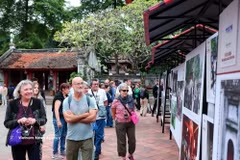
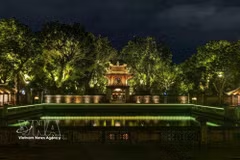
Van Lake within the Temple of Literature (Photo: VNA)

UNESCO Representative: Quoc Tu Giam offers inspiration for new approaches to education

UNESCO Representative to Vietnam Jonathan Wallace Baker said one of the things that stands out in Vietnam is the deep and enduring respect for education, learning and scholarship. Van Mieu –Quoc Tu Giam is a remarkable expression of that tradition, reminding that knowledge, talent and ethical responsibility have long been closely connected in Vietnamese society.

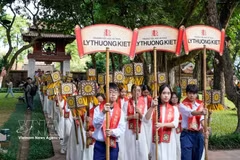
A highlight of the programme is the participation of 950 students in performances staged within the Temple of Literature complex (Photo: VNA)

950 years of Quoc Tu Giam: Continuing Vietnam’s enduring tradition of learning

Through evocative images of students of the Quoc Tu Giam, alongside performances by students and artists, the programme vividly recreated the journey of Vietnam’s scholarly tradition, from the era of the imperial examinations to the spirit of learning in contemporary society. It also helped bring the cultural values of Thang Long-Hanoi to life today.

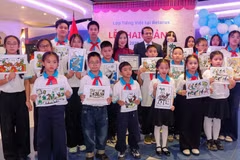
Students pose for a photo at the ceremony (Photo published by VNA)

Mother tongue connects Vietnamese community in Belarus

Vietnamese language education in Belarus not only helps younger generations take pride in their heritage and better understand and appreciate traditional culture, but also serves as a bridge for promoting Vietnamese culture among international friends.

General Secretary of the Communist Party of Vietnam Central Committee and President To Lam (fourth from left, first row) and his spouse, Ngo Phuong Ly, attend the Vietnam-Japan Friendship Concert in Kanagawa Prefecture on November 10 evening. (Photo: VNA)

Vietnam-Japan Friendship Concert fosters cultural cooperation

In his welcoming remarks, Vietnamese Ambassador to Japan Pham Quang Hieu said the concert brought together talented musicians from the Vietnam National Symphony Orchestra and artists who are current or former members of renowned Japanese orchestras, including the NHK Symphony Orchestra, Tokyo Metropolitan Symphony Orchestra, New Japan Philharmonic and Kanagawa Philharmonic.