Major Hanoi hospital projects dropped

Several major hospital construction projects that would have provided residents of the capital and its surroundings with thousands of beds have been abandoned over the past decade.
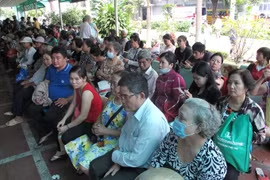
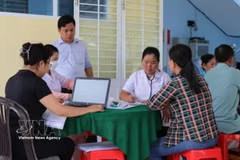
Major Hanoi hospital projects dropped ảnh 1Patients register for their health examination at the Hoai Duc district General Hospital. — VNA

Hanoi (VNA) - Several major hospital construction projects that would haveprovided residents of the capital and its surroundings with thousands of bedshave been abandoned over the past decade.

Such was the case with the planned Ha Dong International Hospital in Ha Dong district,with a total area of about 16.65ha.

The project was approved by the former Ha Tay province People’s Committee (theprovince has since been merged into Hanoi). In 2008, the Ha Long Investment andDevelopment Co Ltd announced its investment in the new hospital complex.

In 2011, the Hanoi People’s Committee asked the investor to speed up theproject’s progress, but by 2014, the ground clearance had not even beencompleted.

Recently, the Aeon Vietnam Company signed a contract with the Ha Long companyto build a mall in Ha Dong district. The capital authorities have thus decidedto change the plan and approve a smaller hospital with a mall next door.

Under the new plan, the Ha Dong International Hospital will be built on 7.1hawith 600 beds, occupying nearly 43 percent of the land. And the remaining pieceof land will be used to build the mall on 9.5ha.

Another plan was approved in 2011 by the Hanoi People’s Committee to build fourhospitals, each with 1,000 beds, in four suburban districts to meet residents’demand.

Under the plan, the Northern General Hospital would be built in Me Linh district,scheduled to start in September 2011 and open for public use in June 2013. Thesecond hospital was to be built in Dan Phuong or Thach That district on 10ha,scheduled to start in September 2011.

The third hospital was planned for Gia Lam district and the fourth for Phu Xuyendistrict.

The Hanoi People’s Committee assigned the municipal Department of Planning andInvestment to mobilise capital for the plan.

Nguyen Xuan Truong, chairman of the Me Linh district People’s Committee, toldthe Tien Phong (Vanguard) newspaper that after the municipal authoritiesissued a decision related to the Me Linh hospital, the district hospital movedto another place to make room for the new facility.

The new Me Linh hospital was expected to serve the demand of residents from SocSon, Dong Anh, Dan Phuong districts and neighbouring provinces, such as Vinh Phucand Phu Tho. “We looked forward to the project,” he said.

But local authorities appear to have changed their policies on medicalfacilities, preferring smaller, more specialised ones to major districthospitals.

At a recent conference between the Ministry of Health and the Hanoi People’sCommittee, Minister Nguyen Thi Kim Tien said that the Government agreed tobuild a paediatrics, obstetrics and gynaecology hospital in Quoc Oai district,and a dental, stomatology and ophthalmology hospital in a suburban district.

Officials of the Hanoi People’s Committee held that the city should not buildbig hospitals, and build smaller hospitals instead, located in residentialquarters so that residents can access them easily for examination andtreatment.-VNA 
VNA
See more

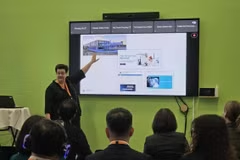
A speaker delivers presentations at the conference (Photo published by VNA)

Vietnam, Denmark expand cooperation in high-tech healthcare

Ambassador Nguyen Le Thanh called on Vietnamese and Danish partners to identify priority areas and promote research and training programmes, knowledge transfer and technology application in line with Politburo's Resolution No. 57-NQ/TW on breakthroughs in science – technology development, innovation and national digital transformation.

Ho Chi Minh City has favourable conditions for developing the ecosystem, including a large population, diverse healthcare needs and an extensive public and private medical network. (Illustrative photo: VNA)

Ho Chi Minh City develops multi-tier elderly care network amid population ageing

Dr. Huynh Minh Chin, Deputy Director of the department, said rising elderly care needs are putting pressure on traditional family-based care, as older people increasingly face multiple chronic illnesses, mobility problems, malnutrition, dementia and depression, requiring continuous support and closer coordination among hospitals, grassroots healthcare facilities, families and social support institutions.

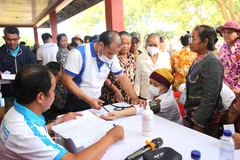
Local residents in Mondulkiri province, Cambodia, receive free medical check-ups and health consultation. (Photo: VNA)

Free medical examinations provided to remote communities in Cambodia

Vietnamese Ambassador Nguyen Minh Vu said the programme has been jointly organised by the embassy and the hospital annually in various Cambodian localities to provide healthcare support to disadvantaged households and contribute to the Cambodian Government’s efforts to improve public health. The initiative also reflects close cooperation in healthcare and the strong bonds between the people of Vietnam and Cambodia.

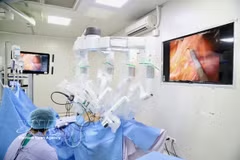
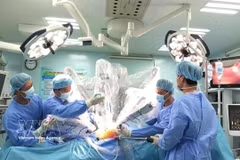
With the assistance of robotic-assisted laparoscopic surgery, doctors successfully perform a complex operation (Photo: VNA)

Vietnam advances towards high-quality, specialised healthcare

Recent developments in Hanoi and other localities highlight efforts to develop specialised treatment, standardise professional practices and apply artificial intelligence (AI) and advanced medical techniques, towards a more modern healthcare system.

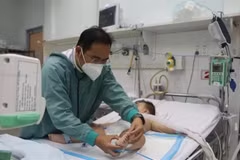
Collecting a sample from a pediatric patient for influenza testing (Photo: VNA)

Ho Chi Minh City acute respiratory infections surge over 64%

According to the Ho Chi Minh City Centre for Disease Control (HCDC), influenza viruses are are among the fastest-rising pathogens, with 151 positive samples in a single week. Influenza A is the dominant strain, with A/H1N1pdm09 in 116 samples, or nearly 77%.

A doctor at Trung Nguyen Medical Station in Te Lo commune, Phu Tho province, examines a child patient. (Photo: VNA)

Phu Tho builds hospital culture to improve patient satisfaction

In recent years, alongside efforts to improve the quality of medical examinations and treatment, Phu Tho province’s health sector has focused on creating civilised, friendly hospital environments and strengthening healthcare workers’ sense of responsibility and service-oriented attitudes, with the aim of earning patients’ trust and satisfaction.

An overview of the meeting between Deputy Prime Minister Pham Thi Thanh Tra and César Louis-Philip Marseille, Managing Director of VAMED Engineering GmbH of Austria and member of the Board of Directors of VAMED+WWH Group of Germany,in Hanoi on October 7. (Photo: VNA)

Deputy PM suggests studying long-term development of hospital ship model

Vietnam is one of VAMED’s important partners in Southeast Asia. The group plans to invest 1.2 billion EUR in Vietnam over the next five years, creating jobs for thousands of workers and promoting knowledge and technology transfer. It also wishes to expand cooperation through preferential credit projects, public-private partnerships (PPPs) and partnerships with private enterprises; and supply medical products from Austria and Germany for Vietnamese partners.