Marine biodiversity conservation needs master plan

Experts are urging the building of a master plan on preserving marine biodiversity in its true sense to improve the efficiency of the work in the country.
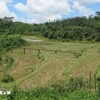
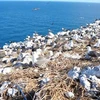
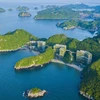
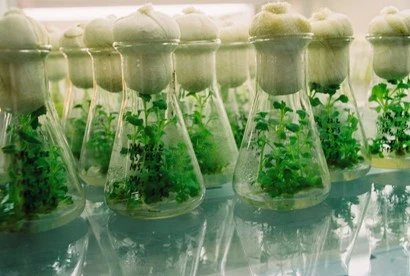
Marine biodiversity conservation needs master plan ảnh 1Illustrative image (Photo: esbtrib.com)

Hanoi (VNA) – Experts are urging the building of a master plan on preserving marine biodiversity in its true sense to improve the efficiency of the work in the country.

With more than 3,000 kilometres of sea shore and 20 million peoples’ livelihoods dependant on sea and coastal areas, Vietnam has always paid attention to protecting marine biodiversity, both via creating laws and establishing marine conservation areas to protect sea creatures, coastal landscapes as well as the unique features of sea and islands.

The country has created a number of programmes and strategies to the purpose, including a plan on conserving biodiversity in chapter 2 of the Law on Biodiversity in 2008 and the national sea strategy until 2020.

However, Associate Prof. Dr. Nguyen Chu Hoi, from the National University of Hanoi, Vietnam does not yet have an overall plan on preserving marine biodiversity in its true sense.

More than 11,000 species have been identified in Vietnam’s seas and they live in 20 different types of ecosystems, in six different areas of biodiversity.

Of the known species, 6,000 are seabed species, 2,038 are fish species, 152-528 fish species in coral reefs, 653 seaweed species and 225 shrimp species.

Besides this, more than 1,300 species of animals and plants have been detected on islands.

According to Hoi, the total number of known species is still lower than the real number because investigation and research on sea and coastal biodiversity has not been carried out regularly, especially on small islands.

Coastal ecosystems are seen as “natural infrastructure” in protecting the sea shore, ensuring social security, preventing floods, and fighting climate change and rising sea levels – including tidal waves. That is the reason why the International Union for the Conservation of Nature (IUCN) has sent out a message that investing in coastal ecosystems is an investment for the future.

Despite the huge potential, Vietnam’s marine and coastal ecosystems have been facing adverse impacts caused by social-economic development activities and natural disasters, including climate change and rising sea levels.

In addition, poor infrastructure, a lack of necessary equipment, and preservation officials’ thin role coupled with the complete absence of participation by locals in planning and managing preservation areas, combine to limit the effectiveness of management on marine biodiversity and marine nature preservation.

At present, around 100 species under threat have been included in Vietnam’s Red Book and the IUCN’s Red List on endangered species that need urgent protection.

In order to save endangered species, the planning to preserve marine biodiversity must be implemented ahead of development activities like investment, exploitation and use.

The efforts in the past few years by relevant agencies and scientists in applying the marine space planning method, with the division of marine biodiversity areas has produced initial results.

Scientists have designated marine zones in need of preservation and built a national plan of marine preservation areas until 2020 along with a programme for the management of such areas following their approval.-VNA

VNA

See more

Houses in Xuan Canh commune, Dak Lak province, completely collapse. (Photo: VNA)

Typhoon Kalmaegi damages over 26,470 houses and causes extensive losses

The typhoon and its aftermath left five people dead, three missing, and 17 injured. It also damaged 3,721 ha of rice and crops, and 3,958 ha of industrial and perennial fruit trees, up by 14 ha from the previous report. For aquaculture, 54,335 cages and 18 ha of shrimp and fish farms were destroyed, along with 118 cattle and 3,593 poultry. Additionally, 21 boats were sunk and 44 others damaged.

Nguyen Thi Vang is the oldest member of the scrap-collecting cooperative group in An Dong ward in Hue city. (Photo: VNA)

Hue turns waste into resource through tech-enabled scrap collectors

Through the mGreen application, women who once earned their living by collecting recyclable waste have become “green warriors” connected to a digital recycling supply chain. The initiative is not only improving livelihoods and enhancing social status but also forming a sustainable waste circulation loop, reinforcing Hue’s image as a green city.

Vice Chairman of the Hanoi People’s Committee Nguyen Manh Quyen receives Sylvain Ouillon, Chief Representative of the French National Research Institute for Sustainable Development (IRD) in Vietnam (Photo: Hanoi Moi)

Hanoi strengthens ties with IRD to tackle air pollution

Vice Chairman of the Hanoi People’s Committee Nguyen Manh Quyen on November 6 received Sylvain Ouillon, Chief Representative of the French National Research Institute for Sustainable Development (IRD) in Vietnam, to discuss potential cooperation in air quality monitoring and pollution reduction in the capital city.

Houses inundated by storm-triggered flooding. (Photo: VNA)

Central, Central Highlands localities race to recover from Storm Kalmaegi

According to Vietnam Disaster and Dyke Management Authority (VDDMA), the storm left five people dead and six injured. As of 7 a.m. on November 7, 52 houses had collapsed and 2,593 others were damaged or unroofed, including 2,412 in Gia Lai province. Nine fishing vessels were reported sunk.

High waves in Ly Son island, Quang Ngai province due to Typhoon Kalmaegi. (Photo: VNA)

Central, Central Highlands localities respond to Typhoon Kalmaegi

As Typhoon Kalmaegi, the 13th storm to hit the East Sea this year, intensifies and heads toward Vietnam’s central coast, localities across the central and Central Highlands regions, including Dak Lak, Lam Dong, Da Nang and Quang Ngai, have activated their highest-level disaster response measures to ensure the safety of people and property.

A map released at 2pm on November 4, tracking the path of Typhoon Kalmaegi (Source: National Centre for Hydro-Meteorological Forecasting)

PM urges proactive measures in response to Typhoon Kalmaegi

As Typhoon Kalmaegi is expected to enter the East Sea on the morning of November 5, with sustained winds of level 13–14 and gusts reaching level 17, Prime Minister Pham Minh Chinh has ordered ministries, sectors, and local authorities to implement the highest-level response measures to protect lives and minimise damage.

Residents in the buffer zone of the UNESCO-recognised Western Nghe An Biosphere Reserve (Photo: VNA)

Vietnam's World Biosphere Reserves eye to become ideal destinations

Vietnam's World Biosphere Reserves have truly become a rendezvous for integration, cooperation, and the exchange of information and experiences among countries and international organisations in the field of conservation and sustainable development, as well as an ideal destination for domestic and international tourists, heard a conference in the central province of Khanh Hoa on November 3.

Heavy rain and prolonged flooding have caused deep inundation, making transportation difficult. (Photo: VNA)

Heavy downpours, floods leave 37 dead, five missing

In addition, floods have submerged and damaged 7,897 hectares of paddy and crops, and 64,356 livestock and poultry have died or been swept away. Across the nation, 103 houses have collapsed or been washed away, 451 others damaged, and 12,676 flooded.