Maritime sector struggles to maintain workforce

The maritime shipping sector is facing difficulties caused by strong drops in its workforce.
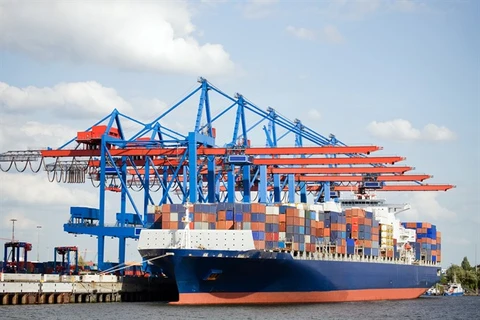
Maritime sector struggles to maintain workforce ảnh 1Illustrative image. (Photo: VNA)

Hanoi (VNA) – The maritime shipping sector is facingdifficulties caused by strong drops in its workforce.

Statistics of the Vietnam Maritime Administration (VMA)showed the workforce of the industry dropped from more than 45,000 in 2014 to over39,000 in May 2018, with the highest fall seen in the number of sailors.  

According to Vu Khac Cuong, head of the VMA’s Register Shipsand Seafarers, a large number of sailors quitted in the past time, whilemaritime colleges are no longer attractive to high school graduates.

Director of the Tan Dai Duong (New Ocean) Shipping JSC Vo HongKhanh said there are many reasons for sailors to quit, one of which is low payand insecure welfare.

He noted that average monthly salary of Vietnamese sailors isaround 10 million VND (nearly 440 USD) compared to 14-15 million VND in Chinaand 1,300-1,500 USD in Japan or the Republic of Korea.

In addition, many Vietnamese ship owners do not buy insurancefor sailors, or if they do, the maximum payment for a sailor in case of anaccident is around 30 million VND (around 1,310 USD), while sailors on Japaneseor RoK ships are eligible for between 25,000-40,000 USD.

Khanh added that while Vietnamese sailors working for foreignships are exempted from personal income tax, those working on domestic shipsare not, which is unfair.

On the other hand, ship owners said it is difficult for themto raise the salary for sailors.

The transport fee for cargo on the Sai Gon (Ho Chi Minh City)– Hanoi route is around 70,000 – 80,000 VND (3 – 3.49 USD) per tonne,equivalent to two bowls of Pho, said Vice Chairman of the Diem Dien Shipping Association Vu Duc Then.

Many ship owners are also facing the risk of bankruptcy ifthere is no timely policy from management agencies in terms of finance andadministrative procedures, Then said.

In order to keep and attract more workers to the sector, BuiViet Hoai, Deputy Director General of the Vietnam National Shipping Lines (Vinalines)suggested that training establishments should cooperate with prestige shippingcompanies to provide trainees with opportunities to practise in a professional environmentand find job after graduation.

According to Bui Thien Thu, Deputy Director of the VMA, theadministration aims to raise the maritime workforce to 42,000 by 2020.-VNA

VNA

See more

Electronic components are produced at a factory in Hanoi. (Photo: VNA)

Hanoi's imports surge 41% in first eight months of 2026

Hanoi aims to achieve average annual export growth of at least 12% during 2026-30, with the city seeking to diversify export markets, boost high-tech and value-added products and reduce reliance on traditional markets.

Ben Thanh Market in Ho Chi Minh City attracts a large numbers of domestic and international visitor.( Photo: VNA)

Vietnam targets 50 million international visitors by 2030

The Ministry of Culture, Sports and Tourism has outlined three scenarios for 2027–2030. Under the high-growth scenario, international arrivals would rise 15–18 percent annually to reach 45–50 million, while domestic tourism would reach around 160 million trips. Total tourism revenue is projected at 80–90 billion USD.

Factories and production facilities in the Chu Lai Open Economic Zone, Da Nang city, are equipped with modern production lines. (Photo: VNA)

Ready-built factories gain from new manufacturing FDI wave

Ready-built factories attracted 73% of new manufacturing FDI in northern Vietnam over the past two quarters, as foreign investment continued to surge at the region's industrial hubs during the first eight months of 2026. The trend points to growing demand for premises that can be put into operation quickly.

Vietnamese durian industry pivots from volume to value

Vietnamese durian industry pivots from volume to value

Durian has morphed from a high-value crop into a strategic Vietnamese export. But as output climbs and importing markets tighten rules on quality, food safety and traceability, the industry must pivot from volume growth to sustainable value chains, better quality and diversified markets.

A display area for Mid-Autumn Festival cakes at a supermarket (Photo: VNA)

Mid-Autumn Festival cake market heats up at affordable end

Industry insiders say competition is no longer just about the cake itself. Product quality, packaging, brand reputation, delivery services and personalisation are increasingly shaping consumer choices in a market crowded with both domestic and foreign players.

Minister of Foreign Affairs Le Hoai Trung (Photo published by VNA)

Vietnam, India set 25 billion USD trade goal

Vietnam and India agreed to make better use of complementary strengths, ease market access difficulties and facilitate business activities toward achieving the 25 billion USD bilateral trade target.

Delegates at the meeting between Vietnamese businesses operating in Cambodia and the Council for the Development of Cambodia (CDC) on September 14. (Photo: VNA)

Vietnamese businesses seek to expand investment in Cambodia

Vietnam currently has 223 investment projects in Cambodia with total registered capital of nearly 3.4 billion USD. Vietnamese companies operate in agriculture, particularly large-scale farming, finance and banking, telecommunications, aviation, processing, trade and services.

Children visit President Ho Chi Minh's hometown and learn about his childhood. (Photo: VNA)

Vietnam's tourism sector faces labour shortage

A 2026 survey by Hoteljob.vn found that nearly 90% of tourism businesses planned to recruit. In Ho Chi Minh City alone, 89.7% of businesses were hiring, while 71.8% said recruitment was difficult or very difficult. The biggest shortages were among frontline workers, particularly in housekeeping, engineering, food service, front-office operations, and kitchens.