Medical target programmes greatly benefit community

The health sector’s national target programmes between 2011-2015 helped raise public awareness of the importance of individual and community health care.
Medical target programmes greatly benefit community ảnh 1A baby receives vaccine injection (Photo: VNA)

Hanoi (VNA) – The health sector’s national target programmes between 2011-2015 helped raise public awareness of the importance of individual and community health care, curbing the number of patients and deaths caused by dangerous diseases and preventing epidemics, heard a conference in Hanoi on April 13.

Head of the Health Ministry's Planning and Finance Department Nguyen Nam Lien said the ministry was assigned four programmes targeting health care, ensuring food safety, population and family planning, and HIV/AIDS prevention.

Notably, the National Health Target Programme was implemented through five projects, with satisfactory results recorded in the project for preventing some dangerous diseases.

During the period, the health sector completed its goal to reduce the rate of people suffering from dengue fever to 18 percent of dengue cases for 100,000 people compared to 2006-2010, and keep the rate of dengue sufferers and deaths by the disease at under 0.09 percent.

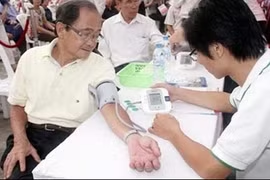
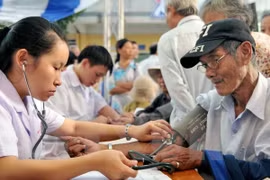
Screening examinations and management for high-blood pressure patients was deployed in 1,179 communes and wards nationwide, benefiting over 2 million people. Over 365,000 people were found to be suffering from the disease and received advice from medical units.

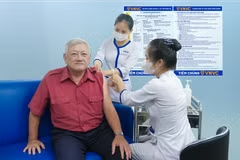
The expanded vaccination project ensured over 90 percent of children under one year old were fully vaccinated , meanwhile the rate of children between 1-14 who received the measles-rubella vaccine reached 98.2 percent.

Efforts to eliminate polio and neonatal tetanus were also promoted.

Positive results were also recorded in the National Target Programme on Food Safety, with food safety management agencies formed from the central to local level.

Reports delivered at the conference showed that the National Target Programme on Population and Family Planning contributed to improving the quality of service delivery. The service was provided for people in 5,700 disadvantaged communes with high birth rates.

Meanwhile, the National Target Programme on HIV/AIDS Prevention helped control the rate of HIV/AIDS injections in the community at less than 0.3 percent. The network of medial establishments for preventing HIV/AIDS nationwide has been strengthened, and the budget of localities for the work increased nearly threefold compared to 2013, after a project on ensuring finance for the field was approved by the Prime Minister.

According to Lien, a health and population target programme will be implemented between 2016-2020 with eight projects – focusing on preventing some dangerous infectious diseases and some common non-contagious diseases, expanding vaccination campaigns, ensuring blood safety and preventing hematological pathologies, promoting medical and population communication, and enhancing links between army and civil medical establishments, among others.

The programme will run across the country, with the aim of mobilising resources and involvement of agencies, organisations and the people, and arranging communication campaigns, and disease control and training activities.-VNA
VNA

See more

Male plastic surgery: Why masculine aesthetics require a different approach

Male plastic surgery: Why masculine aesthetics require a different approach

Plastic surgery has long been associated with procedures for women, but men also seek treatment for abdominal fat, enlarged breasts and age-related changes around the eyes and face. The American Society of Plastic Surgeons (ASPS) includes liposuction, gynecomastia surgery and eyelid surgery among procedures performed on male patients.

A speaker delivers presentations at the conference (Photo published by VNA)

Vietnam, Denmark expand cooperation in high-tech healthcare

Ambassador Nguyen Le Thanh called on Vietnamese and Danish partners to identify priority areas and promote research and training programmes, knowledge transfer and technology application in line with Politburo's Resolution No. 57-NQ/TW on breakthroughs in science – technology development, innovation and national digital transformation.

Ho Chi Minh City has favourable conditions for developing the ecosystem, including a large population, diverse healthcare needs and an extensive public and private medical network. (Illustrative photo: VNA)

Ho Chi Minh City develops multi-tier elderly care network amid population ageing

Dr. Huynh Minh Chin, Deputy Director of the department, said rising elderly care needs are putting pressure on traditional family-based care, as older people increasingly face multiple chronic illnesses, mobility problems, malnutrition, dementia and depression, requiring continuous support and closer coordination among hospitals, grassroots healthcare facilities, families and social support institutions.

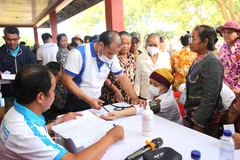
Local residents in Mondulkiri province, Cambodia, receive free medical check-ups and health consultation. (Photo: VNA)

Free medical examinations provided to remote communities in Cambodia

Vietnamese Ambassador Nguyen Minh Vu said the programme has been jointly organised by the embassy and the hospital annually in various Cambodian localities to provide healthcare support to disadvantaged households and contribute to the Cambodian Government’s efforts to improve public health. The initiative also reflects close cooperation in healthcare and the strong bonds between the people of Vietnam and Cambodia.

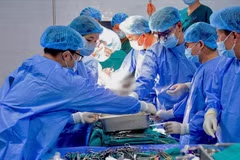
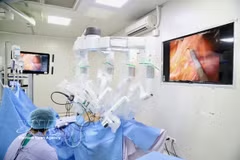
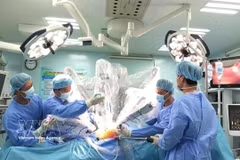
With the assistance of robotic-assisted laparoscopic surgery, doctors successfully perform a complex operation (Photo: VNA)

Vietnam advances towards high-quality, specialised healthcare

Recent developments in Hanoi and other localities highlight efforts to develop specialised treatment, standardise professional practices and apply artificial intelligence (AI) and advanced medical techniques, towards a more modern healthcare system.

Collecting a sample from a pediatric patient for influenza testing (Photo: VNA)

Ho Chi Minh City acute respiratory infections surge over 64%

According to the Ho Chi Minh City Centre for Disease Control (HCDC), influenza viruses are are among the fastest-rising pathogens, with 151 positive samples in a single week. Influenza A is the dominant strain, with A/H1N1pdm09 in 116 samples, or nearly 77%.