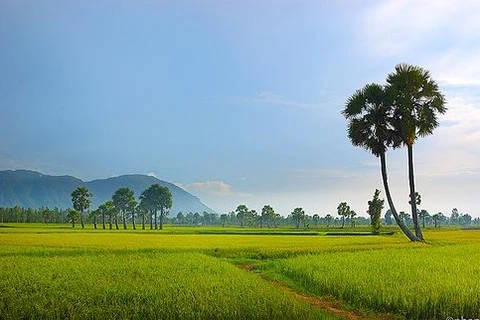
Rice harvest in the Mekong Delta province of An Giang (Photo: VNA)
 Hanoi (VNS/VNA) - Foreign investors looking for an investment destination in Vietnam would make a mistake if they did not consider the Mekong Delta in southern Vietnam.
Many investors lack information about the region and are unaware that the Delta is the third-largest industrial region in the country after the metropolitan areas of HCM City and Hanoi.
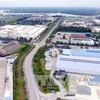
In recent years, many provinces have greatly improved their investment climate, partly due to substantial investments in transport infrastructure, which has increased access to the region.
Travel time from HCM City to CanTho, the major hub in the delta, is now three hours from six hours in 2010.
The Mekong Delta is the largest agricultural hub, accounting for 40 percent of national agricultural production.
Truong Quang Hoai Nam, Vice Chairman of the Can Tho People’s Committee, said the Mekong Delta supplies more than 90 percent of the nation’s rice and 50 percent of seafood, as well as other agro-forestry-fishery exports.
Rice is a major product with an output of 25.2 million tonnes a year. The region exports more than 6.5 million tonnes of rice every year.
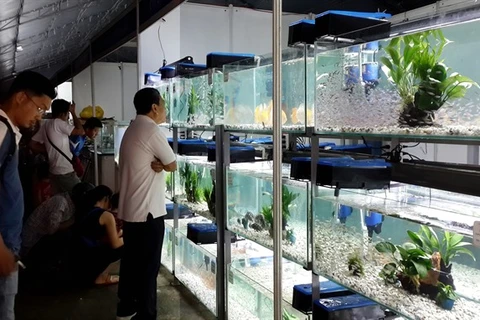
Aquaculture output is 3.62 million tonnes a year, or 57 percent of national production, while shrimp exports reached 3 billion USD and catfish 1.7 billion USD a year.
Fruit cultivation covers an area of more than 300,000 ha, year-round production of mango, coconut, dragon fruit, mangosteen, durian and longan.
The region has a fairly mild climate of an average of 27 Celsius, with a rainy season from May to October and a dry season from December to April.
In addition, the region has an abundant network of rivers and canals with many islets or orchards.
Despite its advantages, the Mekong Delta has only 6 percent of the country’s FDI projects and 5 percent of all registered capital.
The region is currently calling for investment in 50 projects in agriculture, with a projected total investment of 1.385 billion USD, according to VCCI Can Tho.
As of last year, FDI in the Delta had reached 13 percent of the country’s total FDI, a sharp rise from the 5 percent figure recorded for many years, according to the agency.
For the first nine months of the year, FDI reached 1.67 billion USD, accounting for 10.2 percent of the country’s total FDI.
As of October, the region had attracted 50 agricultural projects with total registered capital of 209.64 million USD.
Hong Kong is the biggest investor with five projects worth 67.93 million USD, followed by Taiwan with nine projects worth 41.98 million USD, Japan with five projects worth 30.02 million USD, and Australia with seven projects worth 19.85 million USD.
Two American projects are worth 11.96 million USD and one Israeli project worth 5.2 million USD.
Investment prospects
FDI in the Delta is now increasing at more than double the country’s national average, and is flowing toward a diverse range of projects, according to VCCI Can Tho.
The number of FDI projects in the region has increased by 73 percent since 2010, driving FDI investment growth by nearly 20 percent per year.
With a population of more than 17 million, the Delta has more residents than neighbouring countries like Cambodia or Laos, which can enhance purchasing power.
Moreover, labour costs in the Delta region are the lowest in the country.
Half of the region’s 10 million workers are employed in the agricultural sector, so there is potential to source labour for new factories and service centres.
The area is moving from quantity to quality in both agriculture and aquaculture, which has significantly increased demand for higher quality input materials, including agricultural equipment, seeds, fertilisers and pesticides.
Philipp Angst, managing director of Swiss Post Solutions Vietnam Ltd Com, said “With a total workforce of more than 10 million, the delta has large, widely untapped labour resources. Half of the workers are occupied in the low-paying agricultural sector. This holds tremendous potential for labour-intensive industries.”
FDI in the region is also becoming more diverse and flexible, and is expected to drive growth across a greater range of sectors, said Vo Hung Dung, director of VCCI Can Tho.
Takimoto Koji, chief representative of the Japan External Trade Organisation (JETRO), said the delta, with a location between Hong Kong and Singapore, has great potential to become a logistics centre in Asia.
“The region has not had enough foreign investment, but it has become more attractive to Japanese companies for its fertile land, low labour costs, improved transport infrastructure and well-developed industrial zones,” Koji said.
Most provinces in the region are ranked highly on the Vietnam Provincial Competitiveness Index (PCI), which is conducted regularly by VCCI and the US Agency for International Development (USAID).
Three provinces, Dong Thap, Long An and Kien Giang, have managed a top 10 ranking on the PCI.
In addition, the Government has offered incentives for foreign investors in preferred sectors and geographic areas.
The incentives include reduced corporate income tax rates, tax holidays, special enterprise zones, favourable permitting and licensing procedures, exemption from land rent, and other policies that reduce costs and complexities for foreign investors.
In the next 10 years, the region’s economy is expected to achieve a high growth rate, supported by rapid improvement of transport and electronics as well as low labour costs and an abundant food supply.
Challenges
Though it has potential, the Mekong Delta has limited options for heavy industry. Much of the region is alluvial land with sandy soil not suited for heavy industry.
Many provinces can only handle light manufacturing, and global warming risks might exacerbate this challenge.
Though most of the region is well-connected to HCM City and other areas in Asia, some provinces still lack strong transport links.
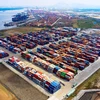
Besides, the port system remains weak, especially for container handling and large vessels.
Another issue is the shortage of skilled labour, particularly well-trained technicians and managers, who are hard to find in the region.
Climate risks pose another challenge. With an average elevation of one metre above sea level, the region is susceptible to rising sea levels and other risks from global warming.
Among other disadvantages, support services in the region are still weak.
Because the region is in the beginning stage of industrialisation, only a few local suppliers and service providers for industries other than agriculture and aquaculture are operating.
High-tech agriculture
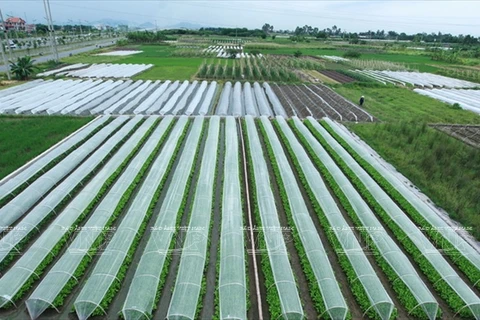
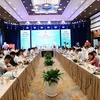
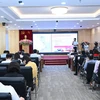
Speaking at a recent conference in Can Tho, Vo Hung Dung, Director of VCCI Can Tho, said the delta region had great demand for high-tech technologies for agriculture.
Dung, however, said the use of advanced technologies in agricultural production and processing to add value was still limited.
Besides, the rate of mechanisation in agriculture remains modest and is only 65 percent for rice harvesting.
“These factors have resulted in low productivity, value addition and competitiveness,” Dung said.
Every year, rice farmers in the region have incurred a loss of more than 3.2 trillion VND (143.32 million USD) during post-harvest due to a low rate of mechanisation, according to the Mekong Delta Rice Research Institute.
The Delta has set a goal of modern agriculture practices, including a large volume of high-quality products, with 3.5 percent growth per year, ensuring national food security in the short and long term.
Tu Minh Thien, head of the management authority for the HCM City High-Tech Agriculture Area, said the region would emphasise the use of high technology in businesses and cultivation areas.
In the next five years, the production value of high-tech agriculture would account for 30-35 percent of total agricultural production.
Thiện said it was necessary to establish high-tech agricultural zones, which would play a crucial role in sustainable development.
He also emphasised connectivity between bio-technology centres and high-tech agricultural zones, and improving the training of human resources in high-tech agriculture.
Policies for businesses to invest in high-tech agriculture and a high-tech agricultural forum where technical issues and market initiatives can be discussed are also needed in the Mekong Delta, Thien said.-VNA
VNA