Mentorship model needed to reduce COVID-19 cases and fatality rate in Hanoi

Hanoi should apply a model of medical mentorship in treating COVID-19, taking advantage of human resources and infrastructure of different treatment layers to reduce the number of serious cases and fatalities in the capital.
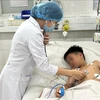
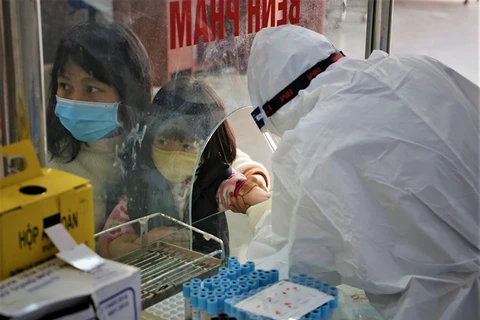
Mentorship model needed to reduce COVID-19 cases and fatality rate in Hanoi ảnh 1A COVID-19 patient in a serious condition receiving treatment in Hanoi. (Photo: tienphong.vn)
Hanoi (VNS/VNA) - Hanoi should apply a model of medical mentorship intreating COVID-19, taking advantage of human resources and infrastructure ofdifferent treatment layers to reduce the number of serious cases and fatalitiesin the capital.

That isaccording to Dr Nguyen Trung Cap, Deputy Director of the National Hospitalfor Tropical Diseases, a leading hospital in COVID treatment in thecountry. 

In recentdays, the capital city has reported an average of ten fatalities per day. 

Hanoi isapplying a three-layer COVID assessment level for treatment; asymptomatic,patients with light symptoms and severe cases.

About 93 percent of COVID-19 patients in Hanoi are asymptomatic or have light symptoms.Among those, more than 50,000 patients are being treated at home. Others arebeing treated at city/district-level healthcare centres.

The risingnumber of infections in the city has however resulted in more serious cases.

Dr Hoang Bui Hai,Deputy Director of the COVID-19 Treatment Hospital (Hanoi Medical UniversityHospital), said 40 to 50 percent of serious cases being treated with breathingmachines face a high risk of fatality.

According tothe health ministry, since April 29 when the fourth pandemic wave started, thecity has confirmed 324 deaths, accounting for 0.4 percent of infection cases.

Dr Cap saidthe treatment layer at the highest level of Hanoi has high-quality doctors andequipment, but a limited number of beds. The lower levels have a high number ofstaff and beds, but less skilful doctors and equipment.

The city needsto make best use of medical staff at the lower treatment layer and takeadvantage of experienced doctors and equipment at the high level, he told TienPhong (Vanguard) newspaper.

From two yearsof experience in various areas across Vietnam, Dr Cap said, “The model ofmedical mentorship which has been applied successfully in other localities willhelp Hanoi.”

He took ChiLinh City General Hospital in northern Hai Duong province as an example. Notall of the hospital’s staff had been trained in COVID-19 treatment when thepandemic broke out in Chi Linh in early 2021.

Thanks to thementorship of doctors from the National Hospital of Tropical Diseases viaonline consultations, after one week, local doctors in Hai Duong could performtheir tasks well.

The mentorshipmodel was also applied in northern Bac Ninh province in May and June 2021.

At first, allpatients needed to be examined online by doctors from the National Hospital ofTropical Diseases.

Two weekslater, some heads of departments of Bac Ninh province Hospital learned skillsand techniques to be able to conduct consultations in most COVID-19 cases inthe province. Doctors from the National Hospital of Tropical Diseases onlyparticipated in consulting a few complicated cases.

Dr Cap said,“It means doctors at the higher-level treatment layer can offer consultationsfrom a distance for patients at the lower level. The lower level layer can takeadvantage of healthcare staff, even those from other medical fields and medicalstudents, to participate in the treatment process with supervision from doctorsat the higher level.”

The mentorshipmodel needs the instruction of highly-skilled doctors. Each doctor fromnational hospitals will be in charge of assisting one area. Each doctor fromthe highest level will be responsible for instructing one doctor of the secondlayer. The doctor of the second layer will assist a clinic to monitor positivecases in the community, Cap said.

If the lowerlevel is unable to receive patients, the higher level must receive, superviseand offer treatment from a distance, he said.

He emphasisedthat the model needs strict supervision; everyone must follow the instructionsof doctors at the highest level.

Doctors at theprovincial level should instruct doctors at the district level. Doctors at thedistrict level must instruct commune-level medical staff, creating an expandednetwork and not leaving any patients behind. 

“The systemwill be smoothly operated even when the number of infection cases increasessharply,” he said.

The COVID-19mentorship model is being applied at five hospitals in Hanoi - Duc Giang GeneralHospital, Thanh Nhan Hospital, Saint Paul General Hospital, Dong Da GeneralHospital and Ha Dong General Hospital./.
VNA
See more

Assoc. Prof. Dr. Duong Duc Hung, Director of Viet Duc University Hospital, presents a token of appreciation in recognition of the noble gesture of the organ donor’s family. (Photo: baochinhphu.vn)

British teen’s organ donation saves three Vietnamese lives

A 19-year-old British tourist who died during a trip to Vietnam has saved the lives of three Vietnamese patients with end-stage organ failure, in a deeply moving act of compassion. The young woman is the first foreign national to donate organs in Vietnam.

A workshop at the One Health Summit, held in Lyon, France, from April 5 to 7, 2026. (Photo: VNA)

Vietnam backs global One Health commitments at Lyon summit

The MAE welcomed the French Government’s organisation of the One Health Summit, describing it as an important forum to advance global political commitments and strengthen international cooperation in preventing zoonotic diseases.

Ilustrative image (Photo: pngtree.com)

Vietnamese scientists unlock genetic insights into rare diseases

Prof. Dr. Nguyen Huy Hoang, Deputy Director of the Institute of Biology under the Vietnam Academy of Science and Technology, and his research team conducted a project titled “Genetic mutation analysis in Vietnamese patients with selected rare diseases using whole-exome sequencing technology.” The project, implemented from 2022 to 2024, aims to clarify the genetic causes of these diseases within the Vietnamese population.

Health workers and residents perform mass wellness exercises, promoting healthy lifestyles in the community. (Photo: VNA)

Ho Chi Minh City targets modern, inclusive healthcare system

On April 5 alone, 58 hospitals and health centres conducted screening programmes across 64 wards and communes, with a focus on outlying areas. Beyond early detection, residents receive consultations, long-term health monitoring guidance, and access to specialised services locally.

Vice Chairwoman of the National Assembly Nguyen Thi Thanh, Minister of Health Dao Hong Lan, and delegates attend the programme. (Photo: nhandan.vn)

Healthy lifestyles, disease prevention highlighted on national health day

Vice Chairwoman of the National Assembly Nguyen Thi Thanh emphasised the need for consistent and effective implementation of the resolution across the political system, with priorities including refining healthcare policies and institutions, strengthening preventive and grassroots healthcare networks, expanding population health management, promoting early detection, and improving school-based physical education and nutrition.

Politburo member, Secretary of the Party Central Committee and Chairman of the Commission for Information, Education and Mass Mobilisation Trinh Van Quyet (front row, fifth from left), together with delegates, participate in a walk after the launch of All People’s Health Day in Hanoi on April 5. (Photo: VNA)

All People’s Health Day promotes early disease prevention

The launch marked the first year the activity has been implemented in a coordinated manner nationwide. Members of the public were able to visit free screening areas, receive nutritional advice, participate in mass exercise performances, enjoy artistic programmes, and join a walk in response following the ceremony.

Volunteer young doctors are expected to provide free health screenings for around 10,000 residents (Photo: VNA)

Free cancer screening, health checks to benefit 10,000 people in Hanoi

Participants will receive comprehensive health checks through a streamlined one-stop process, including blood pressure measurement, height and weight assessment, BMI and cardiovascular risk evaluation, blood tests, general examinations and specialist consultations in internal medicine, paediatrics, obstetrics, ophthalmology, ENT, dentistry and oncology. Rapid blood glucose testing and biochemical screening will also be conducted to detect diabetes and metabolic disorders.

Dr Du Tuan Quy from the Children’s Hospital 1 in Ho Chi Minh City examines a patient with hand, foot and mouth disease. (Photo: VNA)

Over 25,000 hand, foot and mouth disease cases posted in 3 months

In the first three months, more than 25,000 cases of hand, foot and mouth disease have been recorded nationwide. Of the total cases, around 18,000, or nearly 72%, were concentrated in southern provinces. The disease has primarily affected children aged between one and five.

Early cancer screening at Da Nang Hospital. (Photo: VNA)

AI boosts early detection of non-communicable diseases

Deputy Minister of Health Nguyen Thi Lien Huong said NCDs pose a growing global challenge, accounting for over 70% of deaths worldwide, mainly from cardiovascular diseases, cancer, diabetes and chronic respiratory diseases. In Vietnam, the burden is rising rapidly, requiring urgent and sustained preventive strategies.

Most infections were reported among children under 10 years old, making up 99.3%, with those aged 1–5 accounting for the highest proportion (92.7%). (Illustrative photo: VNA)

Hand, foot and mouth cases increase five-fold in Q1

Most infections were reported among children under 10 years old, making up 99.3%, with those aged 1–5 accounting for the highest proportion (92.7%) due to close contact in kindergartens and limited hygiene practices.