More supply chains to shift to Vietnam, ASEAN

Southeast Asia, especially Vietnam, can expect to see more supply chains coming its way if it improves production technology and capacity, as well as regional cooperation, HSBC officials have said.
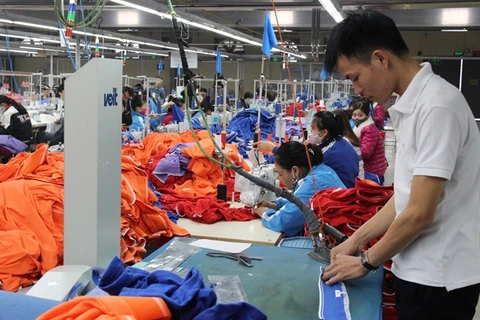
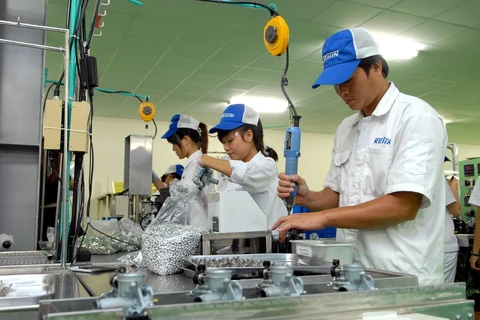
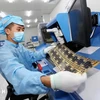
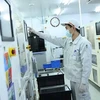
More supply chains to shift to Vietnam, ASEAN ảnh 1A worker checks CDs at Manutronic Vietnam Joint Stock Company. (Source: VNA)

HCM City (VNS/VNA) - Southeast Asia, especially Vietnam,can expect to see more supply chains coming its way if itimproves production technology and capacity, as well as regionalcooperation, HSBC officials have said.

Supply chains are shifting to Southeast Asia due to the region’s growingeconomies and consumer markets, especially with trade tensions and risingproduction costs affecting other markets, according to the bank.  

Pham Hong Hai, CEO of HSBC Vietnam, said: “The changes in global trade arecausing businesses to revisit their supply chain investment and capacitystrategies, but we have yet to see this convert into wide-scale shifts toSoutheast Asia, South Asia or other parts of the world. 
Rather than see a wide-scale shiftto ASEAN, multinationals due to trade tensions have multiple supply chainstrategies with a mixture of localisation, offshoring and re-shoring activityemerging, according to Hai. 

“Shifts in supply chains have been a multi-year phenomenon due to structuralchanges in production technology, labour costs, and emerging consumermarkets. Over the past decade, ASEAN and Vietnam have been perceived as astrong production option for multinationals given its role within existingsupply chains, growing consumer base, and strong trade and investment ties,” headded.

Countries where infrastructure and production networks are already in placesuch as Vietnam are likely to be the main beneficiaries of a shift inproduction capacity. 

The hot buttons that will matter for both large and small firms include howASEAN and Vietnam can deliver competitive production costs, and how technologyand innovation are being introduced to improve productivity.

At a government level, this will require educating international firmsabout regulatory frameworks, tax incentives, and free trade zones, along withdemonstrating improvements in ports and rail and other transportinfrastructure. 

It will also require ASEAN governments to demonstrate a pathway to longer-terminitiatives to remove the non-tariff barriers around the flow of goods acrossASEAN, the development of skilled labour; and intellectualproperty protection, cybersecurity, and movement of commercial data acrossborders.

ASEAN is the US’s fourth largest trading partner, with nearly 4,700 Americancompanies in the region. It is the top destination for US foreign directinvestment in Asia. 

A recent US Chamber of Commerce report found that 80 percent of USfirms in Southeast Asia are looking to increase investment in theregion over the next five years.

The EU is ASEAN’s second largest trading partner and largest source ofFDI. 

China continues to be ASEAN’s largest trading partner (15 percent of its totaltrade), while ASEAN is China’s third largest trading partner. – VNS/VNA
VNA
See more

Delegates at the seminar in Bangkok on June 17. (Photo: VNA)

Thanh Hoa seeks stronger cooperation with Thai businesses

Mai Xuan Liem, Permanent Vice Chairman of the Thanh Hoa People’s Committee, said Thailand is one of the province’s important export markets, with export turnover reaching more than 12 million USD in the first five months of 2026.

Delegates press the button to officially launch the Doan Hung Industrial Park – AMATA City Phu Tho project at the conference. (Photo: VNA)

Vietnam, Thailand strengthen investment ties, smart city cooperation

Thailand is currently Vietnam's largest trading partner within ASEAN, while Vietnam ranks as Thailand's sixth-largest trading partner globally. Bilateral trade reached 22.07 billion USD in 2025, with both sides aiming to increase the figure to 25 billion USD in the coming years. Thailand also has 805 valid investment projects in Vietnam with a combined registered capital of 15.4 billion USD.

Deputy Prime Minister Nguyen Van Thang speaks at the meeting with ministries and sectors in Hanoi on June 17 to review public investment disbursement and address bottlenecks affecting ODA projects. (Photo: VNA)

Deputy PM requests faster disbursement of ODA-funded projects

As of June 15, the disbursement rate for public investment funded by external sources had reached only 9.99% of the assigned plan. Although the figure was higher than in the same period last year, it remained well below the national average. Notably, one out of eight ministries and central agencies and 13 localities had yet to disburse any allocated capital.

Sorting green-skinned pomelos for export at the processing facility of Vina T&T Group in Vinh Long province. (Photo: VNA)

Vietnamese fruits strengthen foothold in China

The expansion of fruit trade has been supported by the implementation of the Regional Comprehensive Economic Partnership (RCEP) and ongoing efforts to upgrade the China – ASEAN Free Trade Area.

Production line for camera modules and electronic components at the factory of the Korean-invested MCNEX VINA Co., Ltd, located in Phuc Son Industrial Park, Ninh Binh province. (Photo: VNA)

High-tech FDI attraction set as strategic priority: official

The resolution sets out a number of specific targets for foreign investment attraction during the 2026–2030 period. Annual registered FDI is targeted at between 40 billion USD and 50 billion USD, while realised capital is expected to reach approximately 30–40 billion USD per year.

Production of electronic components at DBG Technology Vietnam Co., Ltd. in Yen Binh Industrial Park, Thai Nguyen province. (Photo: VNA)

Vietnam’s trade surplus with EU expands amid economic headwinds

Trade between Vietnam and the EU maintained momentum during the January–May period, supported by the EU – Vietnam Free Trade Agreement (EVFTA) and sustained demand for key Vietnamese exports, even as the EU grappled with inflationary pressures and sluggish consumer spending.

Containers are unloaded at Nghi Son International Port in Nghi Son ward, Thanh Hoa province. (Photo: VNA)

Vietnam eyes to shape national maritime industrial ecosystem

These advantages provide a strong foundation for the development of the marine economy and logistics services. As a result, the marine economy has been identified as a national strategic priority, with the coordinated development of maritime transport, seaports and shipbuilding serving as a key pillar in shaping a sustainable national maritime industrial ecosystem.

The road to the VSIP Can Tho Industrial Park connecting with National Highway 80 is under construction. (Photo; VNA)

Vietnam draws harder line on FDI quality under new resolution

The Ministry of Finance’s Foreign Investment Agency reported that total registered FDI neared 25 billion USD in the first five months of this year, a jump of almost 35% from a year earlier, with new project registrations driving the bulk of the expansion.