More than 800 new realty firms set up in two months

The real estate sector saw 840 new enterprises established in the first two months of this year, 5.3 percent of the country’s total new firms during the period.
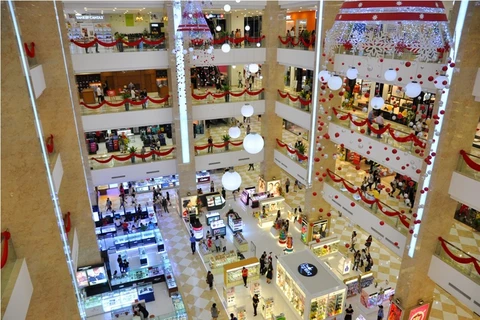
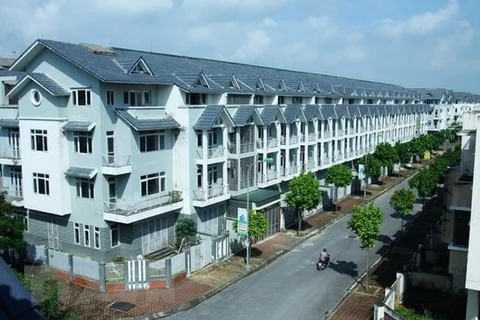
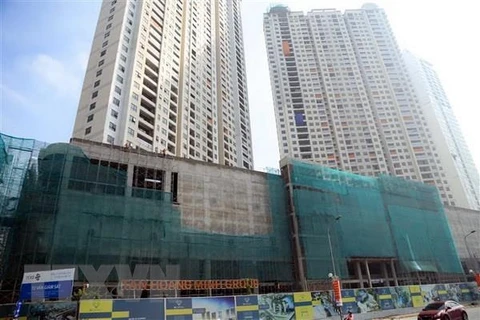
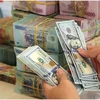
More than 800 new realty firms set up in two months ảnh 1Illustrative photo (Source: VNA)

Hanoi (VNA) – The real estatesector saw 840 new enterprises established in the first two months of this year,5.3 percent of the country’s total new firms during the period.

Economic growth coupled with high demand forproperty products has drawn capital into the Vietnamese real estate market.

Matthew Powell, director of property companySavills Hanoi, said the market is on foreign investors’ radar.

He added that many of Savills Hanoi’scustomers, particularly those from Japan, the Republic of Korea (RoK), China,Hong Kong and Singapore, have sought information on investment in Vietnam.

He anticipated the market would record morenew transactions this year.

In 2018, foreign direct investment (FDI)poured into property projects exceeded 6.5 billion USD, 21.3 percent of the totalFDI. The figure pushed real estate to the second place in the ranking ofbiggest FDI earners in Vietnam. Most of the capital came from Japan, followedby the RoK, Singapore and Hong Kong.

According to insiders, while foreigncompanies enter the market by buying projects that have already operated forquick profits, domestic firms focus on merger and acquisition deals to developmore projects serving housing, production and investment demand.     

The thriving sector has also attractedseveral companies from other sectors. This has led to a high number ofregistered projects but a low construction completion rate due to weakfinancial and management capacity of contractors. Other problems include fraudand soaring land prices.-VNA  

VNA

See more

The southern area of Khanh Hoa province holds significant potential for developing wind power projects. (Photo: VNA)

Vietnam tested by rising global energy risks

Energy security today extends beyond supply stability to include adaptability and technological self-reliance in clean energy. With proactive integration and sustained investment in renewables, Vietnam is well positioned to turn external pressures into an opportunity to drive a greener, more resilient economic transformation

Online shopping is a common habit among office workers. (Photo: VNA)

E-commerce boom shadowed by surge in counterfeit goods

What appears to be a convenient digital marketplace is, in many cases, riddled with sophisticated traps. With a single click, trust can quickly be exchanged for fake or substandard products, online newspaper vietnamplus.vn reported.

Border Guard officers in Dong Thap inspect and verify fishing vessels before they depart from port. (Photo: VNA)

Dong Thap steps up digital vessel management, strengthens traceability

The Mekong Delta province of Dong Thap has rolled out a plan to implement recommendations from the European Commission on tackling illegal, unreported and unregulated (IUU) fishing, aiming to fully fix shortcomings and contribute to the removal of the “yellow card” warning in 2026.

Tran Phu petrol station in Nghia Lo ward, Quang Ngai supplies E10 petrol to local residents. (Photo: VNA)

Dung Quat biofuel plant set for full-capacity operations in April

BSR-BF Director Pham Van Vuong said the company is looking to expand into new areas such as biodiesel, sustainable aviation fuel (SAF), microalgae, and afforestation, opening up broader growth prospects and strengthening its position in the green energy value chain.

Emma McDonald, Australian Senior Trade and Investment Commissioner, speaks at the conference on April 14. (Photo: VNA)

Vietnam, Australia boost cooperation in fintech

Australian companies have strengths in regtech, data governance, cybersecurity, payment infrastructure, and digital assets—areas that align with Vietnam’s priorities. Their experience in highly regulated environments could help Vietnam address challenges such as financial fraud, cybercrime, and security risks.

Booths of Vietnamese cooperatives and enterprises at the Halal Expo 2025 exhibition in Türkiye. (Photo: VNA)

Türkiye seen as promising market for Vietnam’s Halal products

With a large Muslim population, Türkiye serves as both a major consumer market and a well-developed processing hub for such products. Meanwhile, Vietnam is gradually establishing its capacity to supply Halal goods, particularly in processed foods, agricultural produce, beverages, tourism services and logistics.

A view of Da Nang city (Photo: VNA)

Da Nang charts mega merger for global eco-city vision

Da Nang has set a target of having at least five financial technology (FinTech) businesses with revenues of over 1 trillion VND (40 million USD) yearly, while the Free Trade Zone would contribute 17.9% to the city’s gross regional domestic product (GRDP).

A VinFast electric motorbike showroom. (Photo: vinfastecoxe.vn)

Fuel hikes push electric motorbike sales

Electric motorcycle sales by Honda Vietnam, Yamaha Motor Vietnam, Piaggio Vietnam, SYM Vietnam and Suzuki Vietnam, rose by 8.3% year-on-year to 729,121 units.