Mortgage requirements stand between small companies and bank loans

Small- and medium-sized enterprises (SMEs) are unable to borrow from banks because they do not have property to mortgage, Tran Viet Anh, Vice Chairman of the HCM City Business Association, has said.
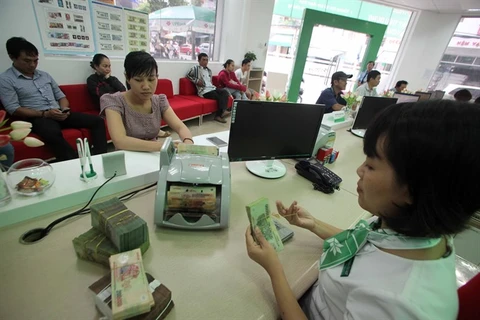
Mortgage requirements stand between small companies and bank loans ảnh 1Small enterprises complain at a conference in HCM City that it is difficult for them to get bank loans because of stiff mortgage conditions.(Photo: VNA)

HCM City (VNS/VNA) - Small- and medium-sizedenterprises (SMEs) are unable to borrow from banks because they do not haveproperty to mortgage, Tran Viet Anh, Vice Chairman of the HCM City Business Association,has said.

He was speaking at a conference held to bring togetherenterprises and banks in Ho Chi Minh City this week, where many SMEs in thecity complained about their difficulty in getting bank loans.

Nguyen Van Hau, financial manager of Dai Dung Company,said in fact the enterprises need to mortgage a lot of assets to borrow becausebanks value properties at a fraction of their market price.

“If an enterprise want to borrow 100 billion VND, itmust have properties worth 300-400 billion VND,” Hau said.

Most manufacturing companies tended to rent or buylands in industrial parks, but banks did not accept them as collateralsince they are not granted land use right certificates, he said.

Lu Nguyen Xuan Vu of Xuan Nguyen Group, a companyoperating in the agricultural sector, said firms in the sector mainly havefarmlands, and they are valued far lower than others.

Agricultural firms find it even harder to get bankloans than those in other sectors, he added.

Anh from the HCM City Business Association said banksshould increase the rate of unsecured loans for SMEs.

Dao Minh Tu, Deputy Governor of the State Bank of Vietnam,said the banks and businesses should work together to find a way out.

The central bank would consider relaxing lendingrequirements so that SMEs can get easier access to bank loans, he promised.

It would also increase loans for production andbusiness activities, especially in priority sectors, simplify lendingprocedures and diversify banking products, he said.

Meanwhile, banks should offer lower interest rates andshare businesses’ risks, Tu said.

A report from the SBV shows that credit to SMEs hasedged up this year.

In the first quarter, loans outstanding to SMEsincreased by 2.8 percent to 1.31 trillion VND (56.2 million USD),accounting for 18 percent of total loans.-VNS/VNA
VNA
See more

Saigon Marina IFC, an emerging landmark, reflects Ho Chi Minh City’s pioneering spirit.

Saigon Marina IFC – The light of Ho Chi Minh City’s new icon

Saigon Marina IFC, an emerging landmark, reflects Ho Chi Minh City’s pioneering spirit. Designed to become an International Financial Centre, this new architectural icon along the Saigon River is envisioned not only as a premium commercial complex, but as a central platform supporting financial institutions, international investors and cross-border capital flows in the years ahead.

Shoppers at a supermarket in Hung Yen (Photo: VNA)

Retailers see tax compliance, AI as key to survival in 2026 survey

The annual survey, conducted at the end of 2025 among retail and food and beverage (F&B) sellers nationwide, found that businesses are shifting their focus from rapid growth to operational efficiency, cost control and legal compliance amid increasingly stringent regulatory standards.

Visitors shop at Glorious Spring Fair 2026 (Photo: VNA)

Spring Fair 2026 opens broader prospects for Vietnam–UAE trade cooperation

For Vietnam, the UAE serves not only as a consumer market but also as a gateway to the Middle East and North Africa. Vietnamese agricultural products such as cashew nuts, pepper, cinnamon and rice have steadily gained market share, while aquatic products, including tra fish and tuna, are increasingly present in the UAE’s hospitality sector.

Bao Viet Bank's employee counts Vietnamese banknotes at a transaction counter in Hanoi. (Photo: VNA)

Credit quota reform, tighter capital rules may widen gap among banks

Yuanta Vietnam Securities estimates that to achieve GDP growth above 10%, credit growth would need to exceed 16%. This suggests bank credit is no longer expected to be the main growth driver, with greater reliance on fiscal policy, public investment and capital markets.

Commercial Counsellor Do Viet Phuong, Head of the Vietnam Trade Office in Cambodia. (Photo: VNA)

Spring Fair 2026 offers ample room to deepen Vietnam–Cambodia trade ties

Cambodia holds substantial potential for cooperation in agro-processing and exports, especially in key products such as rice, cashew nuts and rubber. In recent years, the country’s cultivation area and agricultural output have grown steadily, providing a stable raw material base for processing industries.

Vietnam is projected to have approximately 2.4 million SMEs, accounting for over 98% of the country’s total enterprises. (Photo: cafef.vn)

Banks offer diverse solutions to support SMEs

With an increasingly significant role in the economy, the small and medium-sized enterprise (SME) sector is becoming a key segment in the credit growth strategies of many banks and the banks have been taking diverse solutions to support the enterprises.

Workers process coconuts for export at Vina T&T Group. (Photo: nhandan.vn)

Agricultural exports reliant on securing raw material supply

According to Secretary General of the Vietnam Pepper and Spice Association Le Viet Anh, pepper remained Vietnam’s leading spice export in 2025, with shipments exceeding 247,000 tonnes, accounting for 59.3% of total spice export volume. Export revenue reached 1.66 billion USD, out of total spice exports of 2.1 billion USD.