Mozambique wants to learn from VN’s cashew development experience

Mozambique wants to learn from Vietnam experience in developing the cashew industry, Director of the Mozambique National Cashew Institute (INCAJU) IlidioAfonso Jose Bande said at a recent workshop.
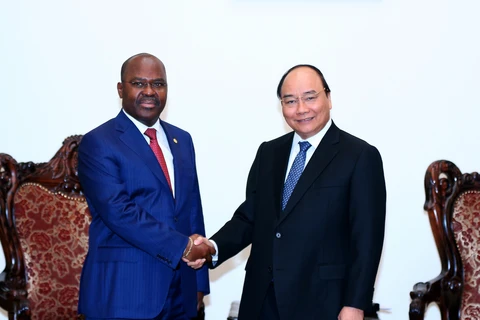
Mozambique wants to learn from VN’s cashew development experience ảnh 1The workshop on bilateral cooperation in the cashew industry on December 19-20 (Photo: VNA)

Maputo (VNA) – Mozambique wants to learn fromVietnam experience in developing the cashew industry, Director of theMozambique National Cashew Institute (INCAJU) IlidioAfonso Jose Bande said at arecent workshop.

The workshop on bilateral cooperation in thecashew industry was held on December 19-20 by the Vietnamese Embassy inMozambique, INCAJU, and Mozambique’s Ministry of Agriculture and Food Securityand Cashew Industry Association (AICAJU).

It also drew representatives from AICAJU memberbusinesses, cashew growing provinces such as Gaza, Nampula, Zambezia and CaboDelgado, along with Vietnamese entrepreneurs.

The INCAJU Director said cashew plays animportant role in Mozambique’s agricultural development and food securitystrategy. He expressed admiration at the considerable development of Vietnam’scashew industry.

Mozambique wants Vietnam to transfer technologyand help train personnel in the field, he said, calling on Vietnamesebusinesses to grow and invest in cashew processing lines to help his countryboost exports.

Briefing participants about Vietnam’s cashewindustry, Vietnamese Ambassador to Mozambique Nguyen Van Trung emphasised thatafter only more than 15 years, Vietnam has become the No. 1 cashew nut exporterin the world with lots of experience and advanced techniques in planting,harvesting and processing cashew.

More and more Vietnamese enterprises areinterested in the cashew industry in Mozambique and seek partnership andinvestment opportunities there, he noted.

He asked Vietnamese firms to point out obstaclesto their business in the African nation and asked local authorised agencies totackle those problems and facilitate their operations, thereby contributing tothe local cashew industry’s expansion.

During the time of the Portuguese colonialism,Mozambique was the biggest cashew grower and exporter in Africa with an outputof over 200,000 tonnes per year between 1973 and 1975.

Its Government has approved a master plan forthe cashew industry development until 2020, aiming to turn cashew into one ofthe key exports in the near future.

However, the country is facing certaindifficulties as a lack of modern planting and processing technologies andcashew products’ low quality. Its annual cashew output now is just about100,000 tonnes with productivity of under 1 tonnes per hectare. Less than 50percent of the output is shipped abroad.

During the workshop, Vietnamese and Mozambiquecashew companies discussed the local legal framework for raw cashew shipment,cooperation in cashew planting, and investment in processing.

Participants also visited some cashew factoriesand had a working session with Mozambique’s Ministry of Industry and Trade tosolve issues facing Vietnamese firms in exporting raw cashew to Vietnam.-VNA
VNA

See more

Marnufacturing garments for export at Hung Yen Jute and Garment Joint Stock Company. (Photo: VNA)

GDP expands 8.18%, with new growth drivers taking shape

According to the National Statistics Office under the Ministry of Finance, GDP expanded by 8.39% in the second quarter, up from 8.14% a year earlier. Growth for the first six months reached 8.18%, exceeding the 7.63% recorded in the same period of 2025. The performance reflected broad-based contributions from both the supply and demand sides of the economy.

Production line at Honda Vietnam's manufacturing facility in Dong Van II Industrial Park, Ninh Binh province. (Photo: VNA)

Vietnamese economy sustains momentum on strong industrial production

The National Statistics Office (NSO) under the Ministry of Finance reported that the manufacturing and processing sector remained the principal driver of economic growth, accounting for 33.07% of the economy's total value-added growth during the first six months of the year.

Investors conduct transactions at Bao Viet Securities' headquarters in Hanoi. (Photo: VNA)

Vietnam eyes 205.6 billion USD in stock market funding for 2026–2030

Addressing a seminar on restructuring capital mobilisation channels hosted by the Finance and Investment newspaper on July 15, Bui Hoang Hai, Vice Chairman of the State Securities Commission of Vietnam (SSC), said the domestic economy continues to face considerable external challenges in 2026, including the effects from the Middle East conflict.

Workers process farm produce at the Coastal Fisheries Development Company (Cofidec) in Ho Chi Minh City. (Photo: VNA)

Vietnam remains ASEAN’s fastest-growing economy in first half of 2026: experts

Economists at United Overseas Bank (UOB), a Singapore-based multinational bank, said Vietnam’s gross domestic product (GDP) expanded by 8.39% in the second quarter of 2026, from 7.94% in the first quarter. As a result, economic growth for the first half of the year reached 8.18%, keeping Vietnam at the top among ASEAN economies.

The interface of Vietnam's foreign supplier portal for tax registration, declaration and payment by overseas suppliers. (Photo: dientuungdung.vn)

Foreign digital service providers pay nearly 480 million USD in taxes

According to the Department of Taxation, 259 overseas suppliers have registered, declared and paid taxes through the portal. Tax revenue from the group reached 78.1% of the full-year target, surging 119% from a year earlier and making foreign suppliers the fastest-growing source of tax revenue in Vietnam's digital economy.

Ca Mau companies and households use rooftop solar to cut expenses. (Photo: VNA)

Vietnam raises rooftop solar sales cap to 50%, widens direct power deals

Rooftop solar power is entering a new phase of development with a more solid foundation. When integrated with energy storage systems and direct power purchase mechanisms, it not only contributes to supplementing distributed energy sources and reducing pressure on the national power system, but also serves as a driving force for green growth, enhances the competitiveness of the economy, and ensures energy security.

Production of electrical wiring harnesses at Bandai Vietnam Co., Ltd. in the Left Bank Industrial Park, Phu Tho province. (Photo: VNA)

Record FDI Inflows signal strong investor confidence, but absorptive capacity remains key

Vietnam's competitive advantages are evolving. Rather than relying primarily on low labour costs and tax incentives, the country's future competitiveness will increasingly depend on structural and long-term factors, including transparent institutions, policy predictability and an investment environment capable of supporting long-term strategic investors.

Vietnamese Ambassador to the RoK Vu Ho (first, left) and other participants in the conference in Seoul on July 14 (Photo: VNA)

Vietnam, RoK strengthen investment links at Seoul conference

Vietnamese Ambassador to the RoK Vu Ho said bilateral relations are currently enjoying the best conditions, underpinned by what he described as the three key factors of “favourable timing, geographical advantages, and strong public support”.

Electricity generation is monitored at the plant of the Hai Phong Thermal Power Joint Stock Company. (Photo: VNA)

Energy security “shield” must be built in layers: Expert

In an interview recently granted to the Vietnam News Agency, Dr Nguyen Van Tu, General Director of the Vietnam Petroleum Institute (VPI), said petroleum reserves are a critical line of defence, but a genuine energy security “shield” must be built in layers.

Reducing emissions is not only essential for tackling climate change but also brings tangible benefits to farmers and businesses. (Photo: VNA)

Vietnam steps up low-emission farming to support green growth

Vietnam is among the world's leading producers and exporters of agricultural products, including rice, coffee and a wide range of fruits. However, key export markets such as the US, the European Union (EU) and Japan are tightening sustainability requirements for agricultural products, making the transition to low-emission farming increasingly important.