New Minister proposes measures to develop agriculture

Newly-elected Minister of Agriculture and Rural Development Nguyen Xuan Cuong has suggested measures to develop agriculture in the context of global integration.
New Minister proposes measures to develop agriculture ảnh 1Newly-elected Minister of Agriculture and Rural Development Nguyen Xuan Cuong (Photo: VNA)

Hanoi (VNA) – Newly-elected Minister of Agriculture and Rural Development Nguyen Xuan Cuong has suggested measures to develop agriculture in the context of global integration.

He said the agricultural sector needs to restructure and continue new-style rural construction and economic development.

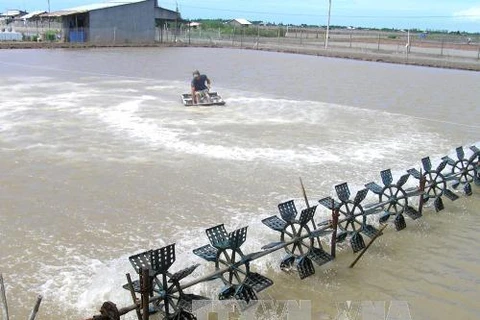
It is crucial to boost production, especially in such fields as seafood, animal husbandry, and forestry to make up losses that the cultivation sector suffered in the first six months of this year due to serious drought and saltwater intrusion, he said.

It is also essential to protect and develop forests in the north and Central Highlands and mangrove forests in coastal areas, he said, adding that facilitating trade, providing market information, expanding markets, and boosting exports are equally important.

The agricultural sector should focus on restructuring while reviewing policies to encourage production and attract businesses to invest in rural areas, he said, emphasising the need to promote businesses’ role in taking care of farmers’ interests.

He recommended develop new cooperatives in addition to enhancing the application of science and biotechnology into manufacturing activities.

Special attention should be paid to the farm produce consumption market at home and abroad, he noted.

The Minister pointed to major shortcomings in agriculture such as backward technical infrastructure in seafood, forestry, logistics, and distribution networks; loose management of food safety and hygiene; and increasing water, land, and air pollution.

Small-scale production along with climate change and natural disasters and challenges posed byinternational integration are among the difficulties that the agricultural sector is facing, he noted.

Complicated global developments also affect farm exports and investment, he said.

He cited that the agricultural sector recorded negative growth of 0.18 percent in the first half of 2016. The income of farmers is estimated at 24.6 million VND (1,107 USD) per capita, much lower than the country’s average level of 45.7 million VND (2,056 USD). The rate of rural households living under the poverty line is 9.3 percent, higher than the nationwide average of 4.5 percent.

To cope with the shortcomings, the Ministry of Agriculture and Rural Development has proposed the Government put forth policies to develop a safe agro-forestry-fisheries production value chain and encourage businesses to connect with households and cooperatives to build a safe farm produce supply chain in line with global criteria, he added.-VNA
VNA

See more

VNA General Director Vu Viet Trang (second from right) and Permanent Vice Chairman of the Vietnam Journalists Association Nguyen Duc Loi (fourth from right) present the A Prize to the winners. (Photo: VNA)

VNA Press Awards 2025 inspire professional commitment, innovation in digital era

A notable feature of this edition is the significant rise in both the number and diversity of entries across all categories. These figures reflect not only growing engagement but also a more coordinated and professional approach among editorial departments and domestic and overseas bureaus, forming a consistent and multi-dimensional flow of information.

Glenn Mathews and his wife hand over the diary of Vietnamese martyr Vo Van Cong to Minister Counsellor Nghiem Xuan Hoa, representing the Embassy of Vietnam in Australia. (Photo: VNA)

Australian veteran’s son returns diary of Vietnamese martyr

Entries in the diary show that Vo Van Cong was born in 1944 in the former Phuoc Tho commune, Nhon Trach district, Bien Hoa province, now Dong Nai province. He joined the revolutionary movement in April 1961 and was admitted to the Communist Party of Vietnam in May 1962.

A number of youth union members at the Vietnam Academy of Social Sciences visit the exhibition space showcasing books and materials on culture. (Photo: VNA)

Book week underscores role of knowledge in policymaking

The highlight is a series of activities on April 21, including a book and document exhibition on culture, the launch of a special publication titled “Special scientific information for leadership” and initiatives promoting reading culture, including a book donation programme and a book review contest.

Hanoi has over 1,100 libraries and numerous cultural and educational spaces in the community. (Photo: VNA)

Spreading value of books, building foundations of learning society

Each weekend in Hanoi, the “Reading with Children” Club brings together students to practise reading, explore language, and express ideas creatively. According to founder of the club Nguyen Thuy Anh, the club encourages children to reflect, retell stories, and connect books with personal experiences, making reading more vivid and meaningful.

Automated ticketing system is used on the urban railway Cat Linh-Ha Dong line in Hanoi. (Photo: VNA)

Digital transformation powers Hanoi metro expansion

Beyond convenience, stable fares and the elimination of fuel, parking and maintenance costs have made urban rail increasingly attractive. The growing preference for metro travel is also contributing to a greener, more modern urban lifestyle.

Delegates cut the ribbon to inaugurate the operation of electric bus route No. 43. (Photo: VNA)

Hanoi accelerates shift to green buses, targets 100% by 2030

In the 2027–2030 period, the city will accelerate the transition towards the complete phase-out of fossil fuel-powered buses. The share of electric and green energy-fueled buses is projected to reach 79–89% by 2029 and 100% by 2030.

At the second session of the Ho Chi Minh City People’s Council (Photo: VNA)

Ho Chi Minh City greenlights central square, administrative centre in Thu Thiem

The new central city square and administrative centre will create a modern, centralised political-administrative complex for Ho Chi Minh City, designed to house around 8,000 officials, civil servants, and employees. It will also handle daily traffic of 1,500- 2,000 citizens and business representatives through a unified one-stop-shop administrative service system.

A working session at the job fair (Photo: VNA)

Vietnamese students flock to Seoul Job Fair 2026

The second annual Job Fair 2026 was held for Vietnamese students in the Republic of Korea. Organisers pitched it as a straight-up bridge between eager students and bosses hungry for young talent who can actually handle multicultural workplaces.