New regulations to remove bottlenecks for OV real estate investment

The newly approved Land Law, Housing Law, and Law on Real Estate Business, which will take effect from 2025, are expected to create more favourable conditions for Overseas Vietnamese (OVs) in owning and trading real estate, according to experts.
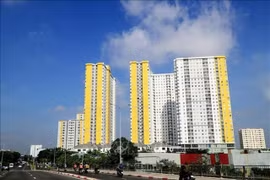
New regulations to remove bottlenecks for OV real estate investment ảnh 1Illustrative image (Source: baodautu.vn)

Hanoi (VNA) – The newly approved Land Law, Housing Law, and Law on Real Estate Business, which will take effect from 2025, are expected to create more favourable conditions for Overseas Vietnamese (OVs) in owning and trading real estate, according to experts.

The laws provide a uniform approach to issues related to land, housing and real estate, ensuring the rights of OVs with the Vietnamese nationality to own and trade real property like Vietnamese citizens residing inside the country, evidencing  the country’s policy of taking OVs as an inseparable part of the nation.

Under the newly-adopted Land Law, Vietnamese citizens residing abroad can enjoy full rights related to land, not only those to residential land, like their fellow residents inside the country.

They are allowed to build houses and invest in construction projects for sale, lease, lease purchase, and invest in technical infrastructure in real estate projects to transfer, lease, and sublease the right to use land with technical infrastructure.

Currently, OVs are allowed to own houses in Vietnam, but can only receive transfer of residential land use rights through purchase, lease purchase, inheritance, and donation of housing attached to land use rights, or only receive residential land use rights in housing development projects.

The regulations have prevented them from transferring, donating, and inheriting land outside housing development projects, and from enjoying the right to build and own houses on land outside housing development projects.

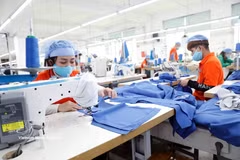
New regulations to remove bottlenecks for OV real estate investment ảnh 2Illustrative image (Source: VNA)

Lawyer Nguyen Van Hau, Vice Chairman of the Ho Chi Minh Bar Association, said that with the new regulations, it will be easier for OVs to own real estate in the country.

He elaborated that previously, although regulations allowed OVs to buy real estate in Vietnam, many had to authorise their relatives to be the owner of the property. Because of concerns about complicated procedures and regulations, many overseas Vietnamese hesitated to buy real estate in the country, he added.

This amendment has created equality between domestic individuals and OVs in terms of investing and undertaking ventures in the real estate business. When buying a house and having the rights like domestic citizens, they will transfer remittances to invest and buy a house in Vietnam. Thus, the real estate market will see great demand from OV individuals for high-end housing in the market now, Hai stated.

Last year, more than 19 billion USD in remittances flowed into Vietnam, a similar figure to 2022. It is forecast that in 2024, remittances will increase by about 20% compared to 2023.

Since 2012, the amount of remittances sent to Vietnam has reached over 10 billion USD per year, of which about a quarter is poured into real estate.

Mai Hai, a real estate broker, said that the populous market and high profits are considered attractive for remittance to pour into Vietnamese real estate.

He noted that the rate of OVs buying houses in Vietnam is increasing, adding that Vietnam’s rental profit is also quite attractive at 5-7%, higher than developed markets like Australia or the US.

According to the Business Association of Overseas Vietnamese, in the future, the amount of remittances will be abundant because the Vietnamese community abroad is increasing in both quantity and living areas.

The number of Vietnamese people living abroad, which was about 2.7 million in 2004, has now tripled to about 7 million in 109 countries and territories around the world.

About 80% of overseas Vietnamese live and work in developed countries such as the US, Australia, Canada, and France, and more than half a million work through labour export programmes, or study abroad./.

VNA

See more

Vietnamese Commercial Counsellor in Israel Le Thai Hoa speaks at a business-matching workshop with Israeli importers. (Photo: VNA published)

Israeli businesses seek Vietnamese suppliers

two-way trade between Vietnam and Israel reached nearly 3.5 billion USD in the first 10 months of 2026, up 12.7% year on year. Vietnam's exports to Israel totalled 997.1 million USD, surging 41.4%. If market conditions remain stable, bilateral trade is projected to reach around 4.4 billion USD for the whole year, with Vietnam's exports estimated at about 1.3 billion USD.

Ambassador Pham Hung Tam (second from right) and Australian Minister for Trade and Tourism Don Farrell (centre). (Photo: VNA)

Vietnam urges Australia to resume imports of fresh pomelos soon

The Ambassador noted that two-way trade turnover in the first 10 months of 2026 had expanded by around 20% year on year. During the same period, Vietnam's tourism sector welcomed around 543,000 visitors from Australia, according to figures from the Ministry of Culture, Sports and Tourism.

Participants in the working session between the State Audit Office of Vietnam and the State Control Committee of Belarus (Photo: VNA)

Vietnam step up state audit cooperation with Russia, Belarus

The State Audit Office of Vietnam and the Accounts Chamber of Russia signed an MoU on cooperation and expressed their wish to further expand collaboration at both bilateral and multilateral levels, focusing on the role and impact of supreme audit institutions on macroeconomic policies, digital transformation and the application of information technology to public auditing.

Prof. Tran Dang Xuan from Hiroshima University speaks at the event (Photo: VNA)

Vietnam's Japan-based academic network pitches research-to-market links

The Vietnamese Academic Network in Japan (VANJ)’s recent 7th annual conference linked more than 200 Vietnamese, Japanese and international scientists, experts, businesses and research students to push research cooperation, technology transfer and quality workforce development.

VietinBank’s LDR is around 92.8%, according to estimates by the ACB Securities Company based on data as of June 30. (Photo: VNA)

Banks with sufficient funding base to benefit from new safety ratio policy

The new policy, which will take effect early next month, raises the loan-to-deposit ratio (LDR) cap to 95% from the current 85%, while starting a phased transition towards Basel III liquidity standards, including by introducing a liquidity coverage ratio (LCR) and net stable funding ratio (NSFR).

The daily reference exchange rate is set at 25,652 VND/USD on November 17. (Photo: VNA)

Reference exchange rate edges higher

With the current trading band of +/- 5%, the ceiling rate applicable for commercial banks during the day is 26,935 VND/USD, and the floor rate 24,369 VND/USD.

Manufacturing materials for solar cell production at JA Solar Vietnam Co., Ltd., a Hong Kong (China)-invested enterprise in the Quang Chau Industrial Park, Bac Ninh city (Photo: VNA)

Vietnam, China widen economic, trade cooperation space

General Secretary of the Communist Party of Vietnam Central Committee and President To Lam’s trip to China for the 33rd APEC Economic Leaders’ Week and bilateral engagements is expected to add new momentum, including deeper economic connectivity, broader trade, investment and supply chain links, and a more balanced, substantive economic relationship that matches both sides’ potential.

The sidewalks on Hung Vuong street in Quang Tri province are under renovation. (Photo: VNA)

Quang Tri approves 103 priority projects for investment during 2026–2030

The 103 projects are categorised into seven fields, comprising energy; logistics; tourism, services, and trade; green and high-tech agriculture; industry, industrial zones, and production infrastructure; urban development and commercial housing; and healthcare, wellness, and resort services.

Workers make clothes for export to the Japanese market at Hung Viet Garment Company in Hung Yen province (Photo: VNA)

Vietnam’s textile-garment firms striving to achieve export targets, sustain employment

To achieve the annual target, textile and garment businesses are jointly implementing several core tasks, including diversifying export markets and partners, developing the supporting industries for raw materials and accessories to establish integrated supply chains, investing in technological innovation linked to AI, stepping up high-quality workforce training, promoting green transformation based on circular economy models, and building brands in both domestic and international markets.

Minister of Public Security General Luong Tam Quang (R) receives Choo Hyeong Wook, President and CEO of the Republic of Korea’s SK Innovation in Hanoi on November 16. (Photo: VNA)

Vietnam promotes international cooperation in energy, high technology

Minister of Public Security General Luong Tam Quang called on the RoK's SK Innovation to share experience and work with Vietnamese partners in developing clean and renewable energy, hydrogen, liquefied natural gas, energy storage technologies and carbon emission reduction solutions.

Delegates pose for a photo at the Chile-Vietnam Business Forum in Hanoi on November 16 (Photo: VNA)

Vietnam, Chile seek to expand trade ties

Chilean President José Antonio Kast pointed to potential for cooperation in agriculture and food, and called for stronger technical cooperation, better market access and closer links in innovation, technology, services and sustainable development.

Production of footwear for export at Lefaso Tra Vinh Industrial Investment and Production Joint Stock Company, Tra Cu commune, Vinh Long province (Illustrative image. Source: VNA)

VEFTA implementation requires exporters to restructure supply chains: Experts

Under VEFTA, tariff reductions to zero will be meaningless for Vietnam’s key export sectors, including textiles and garments, footwear, and agricultural and aquatic products, if goods are found to contain banned chemicals, violate rules of origin or lack transparency regarding their carbon footprints.