Nutritional deficiency badly affects Vietnamese children: UNICEF

One in every three Vietnamese children under the age of five is either malnourished or overweight as a result of poor diets and a food system that is failing them, heard a ceremony in Hanoi on October 16 to release the UNICEF’s State of the World’s Children 2019 report.
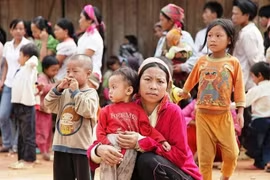
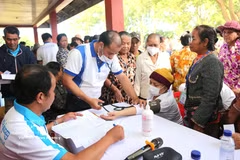
Nutritional deficiency badly affects Vietnamese children: UNICEF ảnh 1One in every three Vietnamese children under the age of five is either malnourished or overweight as a result of poor diets and a food system that is failing them. (Illustrative image. Source: VNA)

Hanoi (VNA)
– One in every three Vietnamesechildren under the age of five is either malnourished or overweight as a resultof poor diets and a food system that is failing them, heard a ceremony in Hanoion October 16 to release the UNICEF’s State of the World’s Children 2019report.

The report provides a comprehensive assessment of 21st-centurychild malnutrition in all its forms. It describes a triple burden of malnutrition,namely undernutrition, hidden hunger caused by a lack of essential nutrients,and overweight among children under the age of five.

The report warns that poor eating and feeding practicesstart from the earliest days of a child’s life. This finding was highlighted bya landscape analysis carried out by the Vietnam National Institute of Nutritionin 2019 on complementary feeding and maternal nutrition as part of the RegionalInitiative for Sustained Improvements in Nutrition and Growth (RISING). The analysisshowed that complementary feeding practices and maternal nutrition in Vietnamare largely inadequate and inappropriate, contributing to the burden ofmalnutrition.

In Vietnam, inadequate maternal diets lead to underweightand overweight women who are more likely to have low birth weight babies. Meanwhile,inadequate diets during the complementary feeding phase, when the first foodsare introduced to young children aged between 6 months and 2 years, are commonin the country.

According to the 2015 national nutrition surveillance, 18percent of the children do not have a diet that is sufficiently diverse and 36percent are not fed frequently enough.

Speaking at the event, Deputy Prime Minister Vu Duc Dam saidmalnutrition among Vietnamese, particularly children, remains at a high levelcompared to other nations in the region.

He added that there is 57 percent of the local populationeating a diet that lacks of vegetables and nutrition but contains high sodium andstarch intake.

The official tasked the Ministry of Health with boostingmeasures to tackle the issue, particularly at alarming areas like the northernmountainous and Central Highlands regions as well as working with relevantagencies to improve the diets of women and young children.

On the occasion, Dam, UNICEF representatives, and otherdelegates signed a commitment to improving the diets of women and youngchildren during the complementary feeding period./.

VNA

See more

Male plastic surgery: Why masculine aesthetics require a different approach

Male plastic surgery: Why masculine aesthetics require a different approach

Plastic surgery has long been associated with procedures for women, but men also seek treatment for abdominal fat, enlarged breasts and age-related changes around the eyes and face. The American Society of Plastic Surgeons (ASPS) includes liposuction, gynecomastia surgery and eyelid surgery among procedures performed on male patients.

A speaker delivers presentations at the conference (Photo published by VNA)

Vietnam, Denmark expand cooperation in high-tech healthcare

Ambassador Nguyen Le Thanh called on Vietnamese and Danish partners to identify priority areas and promote research and training programmes, knowledge transfer and technology application in line with Politburo's Resolution No. 57-NQ/TW on breakthroughs in science – technology development, innovation and national digital transformation.

Ho Chi Minh City has favourable conditions for developing the ecosystem, including a large population, diverse healthcare needs and an extensive public and private medical network. (Illustrative photo: VNA)

Ho Chi Minh City develops multi-tier elderly care network amid population ageing

Dr. Huynh Minh Chin, Deputy Director of the department, said rising elderly care needs are putting pressure on traditional family-based care, as older people increasingly face multiple chronic illnesses, mobility problems, malnutrition, dementia and depression, requiring continuous support and closer coordination among hospitals, grassroots healthcare facilities, families and social support institutions.

Local residents in Mondulkiri province, Cambodia, receive free medical check-ups and health consultation. (Photo: VNA)

Free medical examinations provided to remote communities in Cambodia

Vietnamese Ambassador Nguyen Minh Vu said the programme has been jointly organised by the embassy and the hospital annually in various Cambodian localities to provide healthcare support to disadvantaged households and contribute to the Cambodian Government’s efforts to improve public health. The initiative also reflects close cooperation in healthcare and the strong bonds between the people of Vietnam and Cambodia.

With the assistance of robotic-assisted laparoscopic surgery, doctors successfully perform a complex operation (Photo: VNA)

Vietnam advances towards high-quality, specialised healthcare

Recent developments in Hanoi and other localities highlight efforts to develop specialised treatment, standardise professional practices and apply artificial intelligence (AI) and advanced medical techniques, towards a more modern healthcare system.

Collecting a sample from a pediatric patient for influenza testing (Photo: VNA)

Ho Chi Minh City acute respiratory infections surge over 64%

According to the Ho Chi Minh City Centre for Disease Control (HCDC), influenza viruses are are among the fastest-rising pathogens, with 151 positive samples in a single week. Influenza A is the dominant strain, with A/H1N1pdm09 in 116 samples, or nearly 77%.