Organ trafficking in Vietnam driven by high demand, low rate of donation: experts

The number of human organ trafficking crimes has risen with increasingly sophisticated tricks and techniques, triggered by high demand and low rate of donation from dead brain donors, according to local authorities.
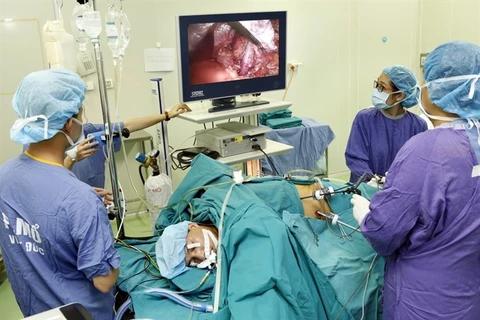
Organ trafficking in Vietnam driven by high demand, low rate of donation: experts ảnh 1

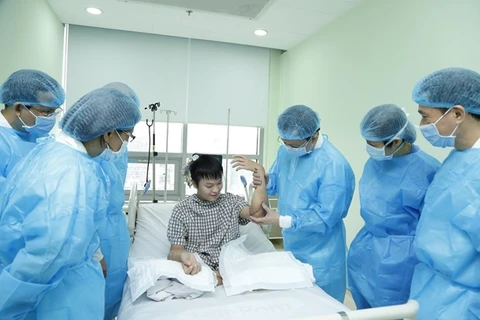
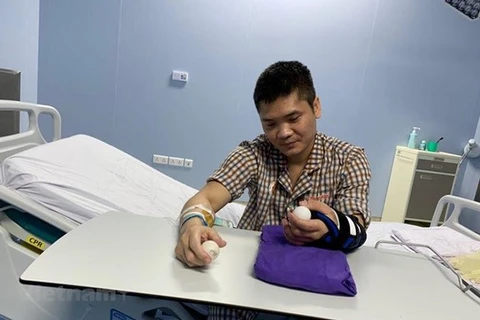
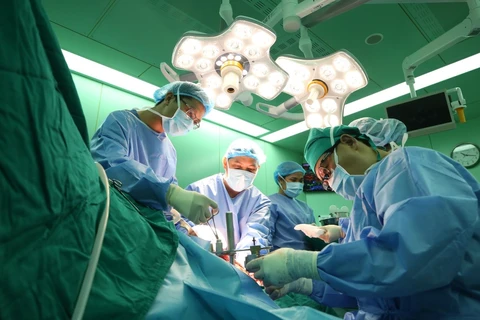
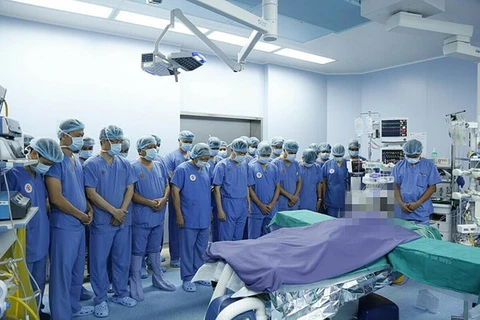
Doctors at Cho Ray Hospital in Ho Chi Minh City perform an organ transplantation. The hospital cooperate with another one to transplant two corneal, two kidneys, a heart and a liver donated by a 25-year-old woman for six people. (Photo: VNA)

Hanoi (VNS/VNA) - The number of human organtrafficking crimes has risen with increasingly sophisticated tricks andtechniques, triggered by high demand and low rate of donation from dead braindonors, according to local authorities.

According to Senior Colonel Dinh Van Trinh, Deputy Head ofDivision 5, Criminal Police Department under the Ministry of Public Security,the criminals are organised with each individual in charge of different tasksin the procedures, including approaching, getting to know buyers and sellers,negotiating, faking the documents, in order to legalise their criminal acts inthe name of humanitarian, not-for-profit purpose.

They approach people who want to buy body organs at hospitals orlook for buyers and sellers via social network platforms, then set the pricesand legalise their acts with fake documents in order to send the buyers/sellersto hospitals to have organs removed and transplanted, Trinh said at aconference on organ donation registration and the prevention of human organ andtissue trafficking held on February 6.

"Many brokers had been victims of this type of crime beforeand are aware of the high demand and profits. They collided and connected withother individuals to develop a ring," Trinh said at the event which washeld by the Ministry of Health and Vietnam Health Economics Association.

"Benefits mostly go to brokers. They charge people in need ofkidney 800 million VND to 1 billion VND (33,800-42,200 USD) a case but theseller gets 200-250 million VND only. Sellers do not want to reveal theiridentity, making it hard to identify brokers.”

According to Deputy Minister of Health Tran Van Thuan, after morethan 15 years of implementation, many provisions of the Law on donation,removal and transplantation of human tissues and organs andthe donation and recovery of cadavers have revealed shortcomings.Many are no longer consistent with practice, including regulations onregistration of donations and the issue of prevention and combat of humantissue and organ trafficking.

He noted that the demand for tissue and organ transplants in Vietnamwas huge with dozen of thousands of cases in need of kidney and/or livertransplants and thousands in need of transplantation of other organs andtissues.

"More than 90% of donated organs transplanted in Vietnam arefrom living donors. There have been illegal acts involved in the traffickingand brokering of trafficking of organs and tissues, leaving serious socialconsequences. It is imperative to improve the legal frameworks and havesolutions to prevent and combat the trafficking of organs and tissues in Vietnam,"he said.

He suggested we offer both online and offline registration to makeit more convenient for those who want to donate.

As part of the efforts to combat organ trafficking, he said, itwas important to strengthen communication work to raise public awareness of themeaning of organ donation while having a mechanism to avoid direct contactbetween the donor and organ recipient to ensure transparency in an organdonation activity.

At the conference, many experts recommended amending the Law ondonation, removal and transplantation of human tissues andorgans and the donation and recovery of cadavers.

Amendments include adding the organ donor designationto driver licences or identity cards.

Nguyen Hoang Phuc, Deputy Director of the Vietnam NationalCoordinating Center for Human Organ Transplantation, said when people doidentity card or apply for a driving licence, they will be asked whetherto agree to become an organ donor.

This will help to increase the number of organ donors and help tolimit the illegal trafficking of organs from living donors.

Tran Ngoc Sinh, Vice Chairman and General Secretary of the VietnamOrgan Transplant Association, suggested Vietnam join the Declaration ofIstanbul, which has been made in 2008 to address the urgent and growingproblems posed by unethical activities involving organ trafficking andtrafficking in persons for the purpose of organ removal.

The declaration has been endorsed by more than 135 national andinternational medical societies and governmental bodies involved in organtransplantation.

The Declaration clarifies the issues of transplanttourism, trafficking and commercialism and provides ethicalguidelines for practice in organ donation and transplantation

“Endorsing the Declaration will help to ensure Vietnam complieswith standards and does not tolerate tissue and organ trafficking,” Sinhsaid.

A total of 63,552 people have registered to be organ donors in Vietnam.As many as 7,297 transplants have been performed in Vietnam for eight types oforgans, of which more than 6,000 were kidney transplants./.
VNA
See more

The September 11 launch of the national programme for 2026–2030 on strengthening child protection and preventing and minimising illegal child labour (Photo: VNA)

National programme aims to strengthen child protection, reduce illegal child labour

The programme aims to ensure all children live in safe and healthy environments, minimise child abuse nationwide, and create opportunities for children suffering violence, sexual abuse or illegal child labour, those at risk of violence, exploitation or neglect, as well as the ones with other special circumstances, to integrate into society and develop comprehensively.

Harnessing overseas Vietnamese resources in new era

Harnessing overseas Vietnamese resources in new era

After more than two decades of implementing Politburo Resolution No. 36-NQ/TW, dated March 26, 2004, on overseas Vietnamese affairs, the Politburo adopted Resolution No. 23-NQ/TW on the same matter on August 2, 2026. The resolution ushers in a new phase with a more comprehensive approach, focusing on creating mechanisms to unlock and make effective use of the vast potential of the Vietnamese community abroad.

Nguyen Huy Ngoc, Vice Chairman of the Phu Tho provincial People’s Committee, former Director of the provincial Department of Health and the provincial General Hospital (Photo: the Ministry of Public Security)

Phu Tho province's official prosecuted for bribery

According to the Ministry of Public Security, its Police Investigation Agency for Corruption, Economic and Smuggling Crimes (C03) is investigating a case involving violations of accounting regulations causing serious consequences, smuggling and receiving bribes at Viet My Medical Investment JSC and related agencies and localities.

A jobseeker applies at Hue city's employment service centre. (Photo: VNA)

Vietnam’s hiring outlook to see strong growth in Q4

In Vietnam, among 285 businesses surveyed, 52% expected to increase hiring in Q4, 16% planned to reduce hiring, while 32% intended to maintain their current workforce levels, according to the latest ManpowerGroup Employment Outlook Survey.

Gildas Tréguier, Secretary-General of the France-Vietnam Health Federation (Photo published by VNA)

‘Small bricks’ help strengthen Vietnam-France ties

Dr. Gildas Tréguier, Secretary-General of the France-Vietnam Health Federation (FSFV), said the visit comes as Vietnam is opening further to the world and entering a new stage of development, creating greater demand for experience sharing and closer cooperation with international partners, including France. After nearly 40 years of involvement in medical cooperation programmes with Vietnam, he said bilateral ties have been built not only through major events and government-level agreements, but also through the contributions of generations of people.

Cultural activities are held at the 2026 Vietnamese Language Summer Camp in Klinok village on the outskirts of Minsk, Belarus. (Photo: VNA)

Vietnamese language preserved across globe

In the new context, Politburo Resolution No. 23-NQ/TW, dated August 2, 2026, continues to place the preservation of the Vietnamese language within the strategic vision of mobilising resources from the Vietnamese community abroad and promoting Vietnamese cultural values around the world.

Overseas Vietnamese teachers participating in the 2026 training course on Vietnamese language teaching methods (Photo published VNA)

Leveraging overseas Vietnamese resources for Vietnam-France ties

As Vietnam enters a new era of prosperous and harmonious development, top leader To Lam's official visit to France will significantly contribute to the special dynamics of bilateral relations while fostering shared commitments to international peace, security, and stability.

Ambassador Nguyen Huong Tra briefs representatives of the Vietnamese communities in Belgium and Luxembourg on the country's situation. (Photo: VNA)

Overseas Vietnamese ready to contribute to national transformation

Affirming that overseas Vietnamese are an integral part of the nation and partners in its development and creation, Vietnamese Ambassador to Belgium and Head of the Vietnamese Mission to the European Union (EU) Nguyen Huong Tra pledged to listen to them openly and responsibly, and convey their recommendations to authorities at home.

The operation to remove the bomb is carried out cautiously and meticulously by military forces. (Photo: VNA)

Phu Tho: 200kg bomb safely relocated, detonated

According to a report by the Phu Tho Military Command, local residents spotted the bomb on August 31 in the Da River after the river water receded, exposing it beneath mud and soil on the riverbed. The bomb remained intact, including its fuse, and was located about 300m from a residential area.