Pandemic makes 85 percent of Vietnamese consumers more likely to use digital banking in future

Around 85 percent of Vietnamese banking consumers are more likely to use online and digital banking services compared to 18 months ago, according to a new report from SaaS cloud banking platform Mambu.
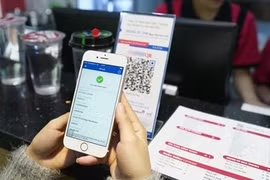
Pandemic makes 85 percent of Vietnamese consumers more likely to use digital banking in future ảnh 1Illustrative image (Photo: VNA)
Hanoi (VNS/VNA) - Around 85 percent of Vietnamese bankingconsumers are more likely to use online and digital banking services comparedto 18 months ago, according to a new report from SaaS cloud banking platformMambu.

The 'Financial tribes you need to know' report reveals that nearly two thirds(61 percent) of consumers globally have made greater use of digital bankingservices over the last 18 months and two in five (41 percent) have startedusing digital banking services for the very first time because of the pandemic.In Vietnam, these numbers are higher, at 70 percent and 54 percentrespectively.

The report, which is the latest in Mambu’s ‘Disruption Diaries’ series,surveyed 4,500 consumers globally, including Vietnamese consumers (accountingfor 11 percent) and identifies five emerging financial “tribes'' that banksneed to know about in a post-pandemic world.

These key consumer groups include techcelerators, ethical bankers, conveniencecravers, covidpreneurs and neo asset hoarders.

Techcelerators are recent converts to the world of digital banking who haveadopted digital services amid physical branch closures. Vietnam was most likelyto identify with techcelerators, with 33 percent of respondents showing thetraits of this group.

Ethical bankers are young, purpose-driven savers that want to make a positiveimpact in the world. Some 76 percent of Vietnamese consumers agreed that theyare willing to pay a premium for financial services if a cut goes towardshelping the environment or local communities – the highest percentage of allsurveyed markets.

Convenience cravers are one-stop shoppers who want all-in-one services at theirfingertips, and at no extra cost.

Covidpreneurs are entrepreneurs who have set up their own business during thepandemic, in need of easy-to-use and reliable business banking services.Fourteen percent Vietnamese respondents belong to this group.

Meanwhile, neo asset hoarders are new asset owners who want to use financialservices to buy, trade and hold assets. This group is the smallest, but rapidlygrowing tribe globally.

Eugene Danilkis, CEO at Mambu, said: “Each tribe tells us something significantabout the way consumer behaviour is adapting and what banks must do to stayahead of the curve. Traditional audience segmentation in financial services isbroken. The one-size-fits-all model, in which customers are divided based onhow much they earn, or simple demographics, is redundant in a world of openfinance.”

“If banks want to survive, they must think about how to affiliate themselveswith the new groups within society and appeal to them with products andexperiences that meet their shared values and user needs. Globally we have over50 million end users on our Mambu platform which demonstrates the growingdemand for new and digitally-enabled financial products."

Pham Quang Minh, CEO of Mambu Vietnam, said: “Digital transformation in bankinghas accelerated in Vietnam to adapt to changing customer behaviours in the newera. It is shown in our report that 87 percent of local banking customersagreed with the importance of online and digital banking services in a bank orfinancial institution.

"Most of them (over 80 percent of respondents) prefer to save or investrather than spending money – the highest rates of all surveyed markets, andmore than 74 percent are willing to pay a premium for financial services thatsave their time and offer greater flexibility.

"Approximately 90 percent of respondents use online and digital bankingservices mostly to pay bills, transfer money and check account balances. Thesestatistics will help banks to capture the habits and behaviours of customers inorder to create more effective online services and products that can attractcustomers.”/.
VNA

See more

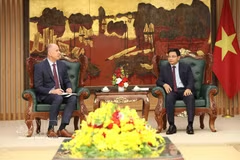
Deputy Prime Minister Nguyen Van Thang meets with Martin Sommer, head of the IMF’s Article IV consultation mission team to Vietnam, in Hanoi on November 13, 2026. (Photo: VNA)

IMF sees positive growth prospects for Vietnam, urges cautious monetary policy

Martin Sommer, head of the IMF’s Article IV consultation mission team to Vietnam, noted that inflation risks in Vietnam remain under control, but several factors could add to price pressures. He therefore called for cautious monetary policy management and readiness to respond promptly if inflationary pressures increased.

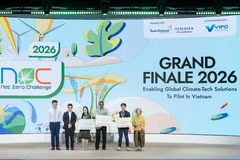
Representatives of the three first-prize-winning startups receive their awards at the event. (Photo: SGGP)

Seven green-tech startups secure 770,000 USD at Net Zero Challenge 2026

In its fourth year, the competition attracted more than 1,100 applications from 80 countries and territories, making it the most competitive edition since its launch in 2023. Nine finalists presented solutions in three categories, namely renewable energy and carbon removal; food systems and sustainable agriculture; and circular economy and waste management.

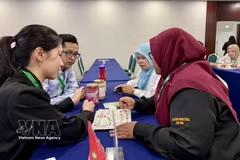
Vietnamese and Malaysian businesses connect at the event (Photo: VNA)

Vietnam, Malaysia connect businesses to boost bilateral trade cooperation

It centred on a business-to-business (B2B) matchmaking session, bringing Vietnamese and Malaysian companies together to discuss import-export needs, seek partners and explore cooperation. Vietnamese businesses aimed to connect with Malaysian importers, distributors and retailers, while expanding access for their products to Malaysia and other markets.

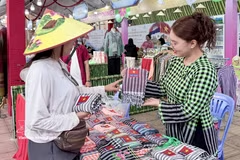
Visitors browse traditional Southern Vietnamese checked scarves on display at the Vietnam-Cambodia Trade Fair. (Photo: VNA)

Vietnam-Cambodia trade fair opens in An Giang

The fair features 150 booths representing 200 businesses, cooperatives, household businesses and production and trading establishments from both countries. The exhibition space is arranged into 10 zones showcasing products from Vietnamese localities and three zones featuring Cambodian products, creating opportunities for businesses from the two countries to promote their products, seek partners and expand markets.

An overview of the press conference to announce the organisation of the second Vietnam International Rice Festival - Can Tho 2026. (Photo: VNA)

Festival to chart new course for rice industry

The second Vietnam International Rice Festival - Can Tho 2026 will take place from November 22 to 25, showcasing the achievements and potential of Vietnam’s rice industry while promoting Can Tho’s image, cultural identity and people, as well as the distinctive river culture of the Mekong Delta.

Japanese business representatives review Ho Chi Minh City’s investment project portfolio at the conference. (Photo: VNA)

Vietnam remains attractive destination for Japanese businesses

Fukai Akihiko, President and Representative Director at Gunma Bank and head of a business delegation from Japan’s Gunma prefecture, said cooperation between Gunma and Vietnam has continued to expand in recent years. Around 15,000 Vietnamese people currently live in Gunma, forming the largest foreign community in the prefecture.

A panoramic view of the site designated for the Ninh Thuan 1 nuclear power plant in Phuoc Dinh commune, Khanh Hoa province. (Photo published by VNA)

Vietnam to access MBIR reactor research capabilities, gradually master nuclear technology

As Vietnam develops its nuclear science and technology and prepares the necessary conditions in terms of human resources, research capacity, safety systems and technical infrastructure, participation in international research programmes and access to MBIR will enable the country to conduct experiments supporting its programme for the peaceful use of atomic energy.