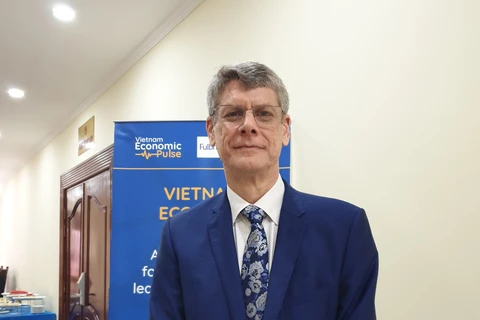
Minister of Planning and Investment Nguyen Chi Dung provides more information about the issues mentioned by legislators (Photo: VNA)
 Hanoi (VNA) – Minister of Planning and Investment Nguyen Chi Dung said the COVID-19 response and socio-economic development amid the pandemic have left a number of precious lessons that need to be learnt from so as to secure safer and more sustainable development in the future.
Precious lessons gained
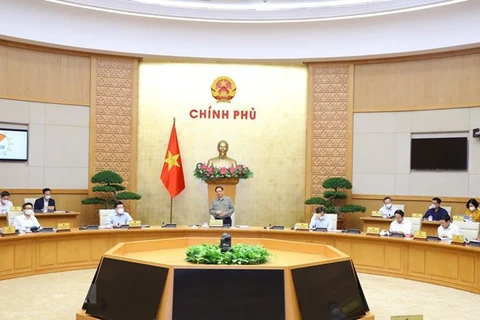
Speaking at the ongoing second session of the 15th National Assembly, Minister Dung pointed out countless socio-economic difficulties and challenges in 2021. He noted that the fourth wave of COVID-19 infections, with the highly contagious and dangerous Delta variant, has spread to major industrial parks and export processing zones in many localities.
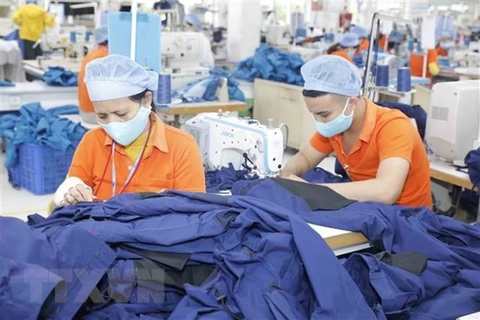
Facing that fact, the Government has applied unprecedented and stronger anti-pandemic measures to protect people’s lives. That has led to severe impacts on people’s daily lives, production and business activities, and subsequently economic growth. The resilience of enterprises and people, especially low-income earners, has been undermined considerably.
The Government has achieved eight of the 12 targets set by the National Assembly and failed to obtain the four remainders, according to Dung.
With the goal of safely and flexibly adapting to and effectively controlling COVID-19, the Government has recently issued Resolution No 128. This is a sound, timely, and important decision that suits the reality of the situation, he affirmed, voicing his belief that this resolution will create a critical foundation for fast economic recovery in the remaining months and in 2022.
However, he admitted that the recent pandemic combat and socio-economic development have provided many precious lessons that need to be learnt from so as to secure safer and more sustainable development in the future.
The minister noted that the healthcare system, particularly preventive medicine, remains small and weak, resulting in a slow response to the rapid developments of the pandemic. This has affected people’s health, economic activities, employment, and daily life.
There remain problems in state agencies’ capacity. Actions taken by different localities have been inconsistent, which has disrupted supply, production, and consumption chains.
Though the pandemic has basically been brought under control nationwide, Dung warned that the number of infections may still increase in the initial period after the economic reopening, especially in some localities with low vaccine coverage.
Given the current context, he urged ministries, sectors, and localities to seriously carry out the Government’s Resolution No 128. They should maintain the viewpoint of safely and flexibly adapting to and effectively controlling COVID-19. However, they should not be anxious about the pandemic while staying vigilant.
Speaking about Resolution No 128’s effect after nearly one month of enforcement, he said the socio-economic situation improved in October with many highlights, thereby consolidating people, enterprises, and investors’ confidence in the recovery of the Vietnamese economy.
Regulations on public investment to be amended
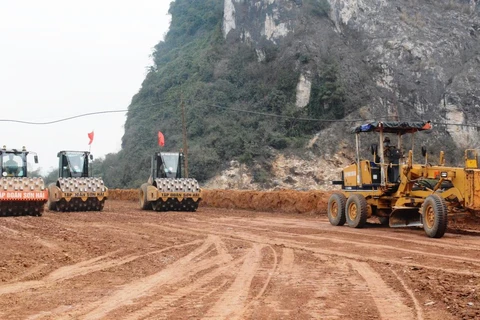
Regarding the disbursement of public investment, Minister Dung said that the Government had assigned public investment-related targets before December 31, 2020. Ministries, sectors, and localities were responsible for allocating public funding for each programme and project. This was done in accordance with the Law on Public Investment and the National Assembly’s resolution on the 2021 central budget allocation
He pointed out several causes of the sluggish disbursement, including improper preparations for many projects, slow site clearance, and limited capacity of contractors.
In particular, 2021 was the first year to implement the medium-term public investment plan for 2021 - 2025 and the 2019 Public Investment Law, so agencies and localities have focused on the transition projects and the preparation for new ones to be carried out next year. Besides, impacts of the COVID-19 pandemic, including social distancing, have also affected disbursement progress and boosted material prices, according to the official.
He added the Government is working to overhaul 10 laws, including those with regulations on public investment, so as to speed up the disbursement of public funding in the time ahead./.