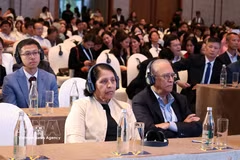
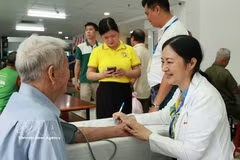
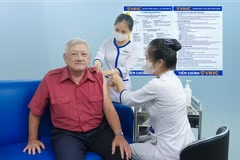
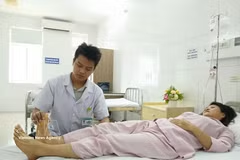
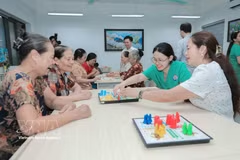
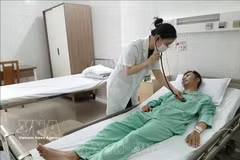
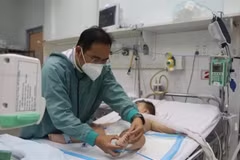
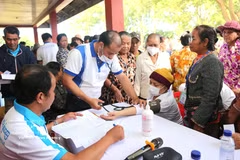
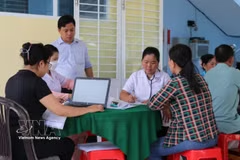
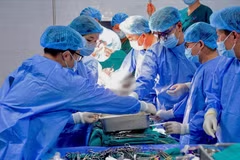
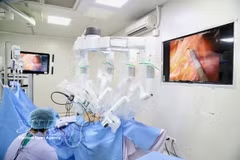
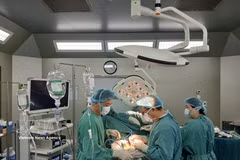
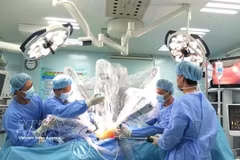
Grassroots health plays an important role in epidemic prevention. (Photo: Vietnamplus)
Hanoi (VNA) - According to health experts, the COVID-19 pandemic is an extremely high-dose "test", forcing the health sector and communities to reflect in an effort to make good decisions appropriate to the new situation.
More than ever, this is considered a time to supplement and perfect mechanisms and policies. It is also a time to begin a methodical investment strategy to create a strong grassroots health network both in terms of human resources and facilities, becoming a reliable support system in taking care of people's health.
"Pump" 14,000 billion VND to restore the health industry
The year 2022 is the third year that Vietnam has to deal with the COVID-19 pandemic. Assessing epidemic prevention and control, Prime Minister Pham Minh Chinh said that the strong outbreak of the COVID-19 epidemic in 2021 has revealed the weaknesses of grassroots and preventive health systems. However, the healthcare sector remained calm and brave in those difficult times.
According to the Prime Minister, preventive and grassroots healthcare is a weakness that needs to be handled as soon as possible. The National Assembly and Government have launched a medical rehabilitation program worth 14,000 billion VND. The head of the Government requested the Ministry of Health to come up with a roadmap and solutions for each month and each quarter to be able to complete this program after 2 years. The Prime Minister also requested the health sector and related units to review policies and regimes to attract human resources in epidemic prevention and treatment.
 Prime Minister Pham Minh Chinh encourages volunteers to fight the epidemic in Thanh Phu commune, Vinh Cuu district, Dong Nai province in August 2021. (Photo: Vietnamplus)
According to a report from the Ministry of Health, in recent years, the grassroots health workforce has increased in both quantity and quality. Some 187,000 people make up the workforce, accounting for 40% of the total number of health workers. The district level is 115,000 people (24.5%), and those for the commune level is 72,000 people (15.5%).
Changing the "face" of grassroots health care network
Minister of Health Nguyen Thanh Long acknowledged that so far, more than 20% of commune-level health stations have not been built or repaired as required.
Following the direction of the Prime Minister, the Ministry of Health is urgently preparing a project to strengthen the capacity and ability of the grassroots health system to cope with epidemics.
At the 3rd session of the 15th National Assembly taking place in Hanoi, Minister of Health Nguyen Thanh Long said that in the draft law on Medical Examination and Treatment (amended), grassroots health is given special interest. All possible solutions will be used to improve the quality of grassroots healthcare, including sending doctors from the central level to the grassroots.
The grassroots health network has made an important contribution to the prevention of diseases and epidemics. In many localities, commune health stations have really become the "extended arms" of district healthcare, promoting the “frontline” role in primary health care and health counseling for people.
Initially, the determination of the Ministry of Health brought about changes. Doctor Trinh Ngoc Han - Director of Nhu Xuan District General Hospital (Thanh Hoa province) said that after half a year receiving a doctor specializing in surgery, the hospital has seen many positive changes. Patients no longer have to be transferred to a higher level, and they can have surgery at the grassroots hospital.
Currently, the risk of an infectious disease returning is very great. It is necessary to avoid the situation where the disease is in the early stages but the fight against lacks current technology. The time has come for improvements along with a long-term strategy to avoid a large-scale health crisis./.