PEPFAR – 20-year journey of supporting people living with HIV in Vietnam

The US President's Emergency Plan for AIDS Relief (PEPFAR) programme in Vietnam has maintained an impressive 99% viral suppression rate in its 11 focus provinces in the Northern Economic Zone and the Ho Chi Minh City Metropolitan Region.
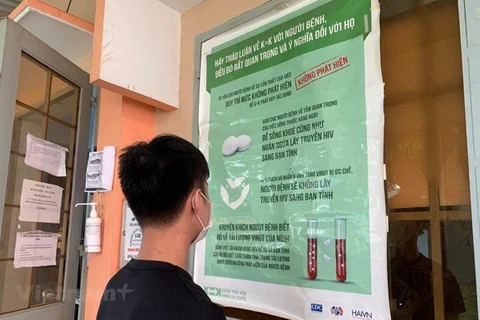
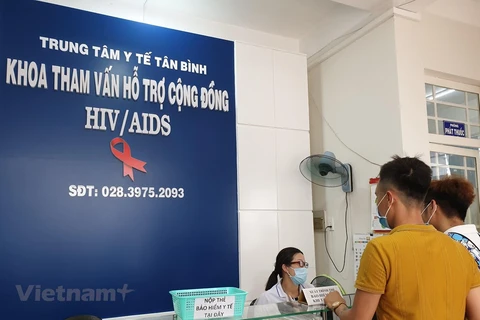
PEPFAR – 20-year journey of supporting people living with HIV in Vietnam ảnh 1At a services centre for people living with HIV. (Photo: VietnamPlus)

Hanoi (VNA) - The US President's Emergency Plan for AIDS Relief (PEPFAR) programme in Vietnam has maintained an impressive 99% viral suppression rate in its 11 focus provinces in the Northern Economic Zone and the Ho Chi Minh City Metropolitan Region.

With support from PEPFAR, Vietnam has made significant progress since 2014 in taking ownership and leading its HIV response efforts. Today, more than 70% of the estimated 240,000 people living with HIV (PLWH) in the country receive antiretroviral (ARV) drugs through health insurance funded by domestic resources, said US Ambassador Marc E. Knapper at the 20th anniversary of PEPFAR in Hanoi on May 9.

Impressive viral suppression rate

A year after the US government launched the PEPFAR in 2003, Vietnam became the first and only country in Asia to receive the focused PEPFAR funding, the ambassador said, noting that 10 years later, the US was the largest donor to Vietnam’s national HIV response, contributing 46% to the overall HIV budget, with additional funding from the Global Fund and other partners.

“Together, PEPFAR and Global Fund resources directly supported 90% of Vietnam’s procurement of life-saving antiretroviral (ARV) drugs to treat clients, giving people living with HIV a renewed chance to not only survive but to thrive,” Knapper said.

From 2021 to 2022, PEPFAR provided critical technical assistance to support access to ARV treatment for 8,727 new patients, and helped maintain ARV medication for at least 89,000 people currently undergoing treatment.

Beyond treating people with HIV/AIDS, Vietnam has focused on combination prevention, which allows clients to access comprehensive prevention services, including HIV counseling and testing, pre-exposure prophylaxis (PrEP) services, and strategic communication designed to educate populations most at-risk, such as young men who have sex with men, and transgender women, he said.

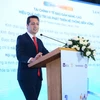
PEPFAR – 20-year journey of supporting people living with HIV in Vietnam ảnh 2US Ambassador Marc E. Knapper’s speaks at the event. (Photo: VietnamPlus)

According to the diplomat, the Vietnam programme has also adapted strategies to bring services closer to the clients. Before 2014, all HIV services in Vietnam were offered in the public sector and by healthcare workers. Today, there are more than 40 private clinics serving PLWH, the majority of them led by key populations in the communities.

PEPFAR Global Ambassador Dr John N.Nkengasong said Vietnam was truly a global example of sustainability and domestic resource mobilisation through the health insurance programme in the prevention and control of HIV/AIDS.

Vietnam had been very responsive in adapting to innovations and scientific advances to comprehensively implement measures, he stressed.

Over the last 10 years, the Government of Vietnam has taken seriously the responsibility for funding and administrating many components of its HIV response, including paying for all HIV treatment services and drugs in a way that addresses the need of people living with HIV.

“We appreciate the Government’s policy and financial leadership to accomplish this commendable goal,” Ambassador Nkengasong said.

Additionally, Vietnam has been very quick in adapting innovations and scientific advances to implement a comprehensive response. The recent and rapid expansion of PrEP services is a major achievement, he continued.

PrEP officially started in Vietnam in 2020. After three years, the number of PrEP users has reached 67,000, with 51,000 PrEP users as of 2022. Vietnam ranks second in the Asia-Pacific region in the number of PrEP users, behind Australia with about 57,000 net users as of 2022.

Calling for further PEPFAR priority solutions

In her remarks, Minister of Health Dao Hong Lan said Vietnam’s HIV/AIDS prevention and control work had gained many important achievements over more than 30 years.

The country had gradually controlled the HIV/AIDS epidemic on all three criteria, namely reducing the number of newly detected HIV infections, reducing the number of people progressing to AIDS stage, and reducing the number of AIDS-related deaths.

She affirmed that PEPFAR has been among the largest sponsor of HIV/AIDS prevention and control programmes in Vietnam in recent years, helping the country gradually control HIV/AIDS and maintain the community infection rate below 0.3%.

PEPFAR – 20-year journey of supporting people living with HIV in Vietnam ảnh 3Health Minister Dao Hong Lan speaks at the ceremony. (Photo: VietnamPlus)

PEPFAR is currently supporting 11 key cities and provinces with 45.2% of the country's living HIV-infected population.

Lan expressed her desire for PEPFAR to continue supporting the Ministry of Health with some priority solutions, particularly in supporting the supply of HIV testing and medication in emergency situations, given the current difficulties the healthcare sector is facing in terms of procurement and supply of medicines and medical supplies.

Other priorities would include expanding counselling and testing models, expanding the localities benefiting from the public health response strategy to have sufficient evidence for appropriate interventions.

Furthermore, in the context of the increasing trend of HIV infections in the homosexual and transgender groups, Lan suggested that PEPFAR support a comprehensive strategy to intervene in reducing the risk of HIV infection in these groups.

"Together with the support of PEPFAR, the Vietnamese government commits to continue building sustainable financial mechanisms for the transfer of HIV/AIDS prevention and control services, enhancing the participation of the private sector and social organisations in investing and providing HIV/AIDS prevention and control services to ensure effective use of mobilised resources," she said./.

VNA

See more

Vietnamese Ambassador to Laos Nguyen Minh Tam extends greetings to leaders and staff of the Hanoi – Vientiane General Hospital on the occasion of the 71st anniversary of the Vietnamese Doctors’ Day on February 27. (Photo: VNA)

Vietnamese doctors in Laos help foster bilateral solidarity

Commending the Hanoi – Vientiane General Hospital’s 13-year development, Ambassador Nguyen Minh Tam noted that prioritising conscience and virtue has helped it build a strong reputation among Lao citizens, the Vietnamese community and international friends in Laos.

Organ transplantation at the University Medical Centre Ho Chi Minh City (Photo: the University Medical Centre Ho Chi Minh City)

Professional excellence, dedication define Vietnam’s healthcare system

When patients pull through from the brink of death, when their vital signs stabilise and transplanted hearts begin beating strongly in new bodies, the joy shared by the entire medical team is overwhelming. And when the country welcomes the New Year, saving lives takes on an even more profound significance — offering patients and their families a new spring of hope.

At Phu Rieng communal medical station in Dong Nai province (Photo: VNA)

Vietnam fosters maternal and child healthcare, advances toward 2035 goals

The under-five mortality rate in Vietnam in 2025 was estimated at below 16 per 1,000 live births, more than three times lower than the 1990 level. The infant mortality rate (under one year) declined fourfold to below 11 per 1,000, while the neonatal mortality rate dropped fivefold, from 44 per 1,000 in 1990 to 8.8 per 1,000 in 2025.

Medicine support programmes provide significant benefits to patients throughout their course of treatment. (Photo: VNA)

Over 6,000 patients receive free medicines

The schemes focus primarily on cancer, rare diseases and severe chronic conditions, areas where treatment costs are high and often require expensive biological and originator drugs.

A lung transplant surgery at the National Lung Hospital (Photo: VNA)

Vietnam reaches new height in organ transplantation

From demanding cross-country transplants to highly specialised procedures nearing regional and international standards, the sector has created new chances of survival for thousands of patients. However, persistent bottlenecks in organ donation and the legal framework highlight the urgent need to further perfect the national donation–transplantation system. In the era of advanced medicine, progress is measured not only by surgical mastery, but also by the ability to turn loss into hope and sustain life.

The DAV asks pharmacy producers and distributors to increase medicine supply capacity during Tet to meet increasing demand (Photo: VNA)

Measures rolled out to ensure adequate medicine supply during Tet

Accordingly, provincial and municipal health departments are required to direct hospitals, centres for disease control and health care facilities to urgently develop plans and carry out medicine procurement to ensure sufficient supply, absolutely avoiding shortages. Medicines must meet quality standards and be sold at reasonable prices, with no sudden price increases allowed.

Military doctors conduct ultrasound examinations for residents in Dong Dang town, Cao Loc district, Lang Son province. (Photo: VNA)

Resolution 72 opens path to a modern, sustainable healthcare system

To build a resilient healthcare system capable of meeting the challenges of ageing, emerging diseases and rising expectations for quality care, Vietnam must continue to strengthen primary and preventive care, invest in human resources, accelerate digitalisation and big data development, and refine healthcare financing mechanisms.

Vietnam steps up Nipah virus prevention at border gates (Photo: suckhoedoisong.vn)

Vietnam tightens Nipah virus prevention at border gates

Local authorities have been instructed to strengthen disease prevention and control measures at border gates, medical facilities and in the community, stay updated with global disease information, and closely monitor inbound travellers.

Nipah virus infection is designated a Group A infectious disease, with reported fatality rates of between 40 and 75%. (Photo: moh.gov.vn)

Health sector steps up preparedness against Nipah virus disease

Nipah virus infection is designated a Group A infectious disease, with reported fatality rates of between 40 and 75%. At present, no vaccine or specific antiviral treatment is available. The virus is mainly transmitted from animals to humans or through contact with contaminated food and objects, and can also spread between people via direct contact with bodily fluids and secretions of infected patients.

Member of the Party Central Committee and Minister of Health Dao Hong Lan (Photo: VNA)

Health minister highlights comprehensive, people-centred healthcare orientation

Member of the Party Central Committee and Minister of Health Dao Hong Lan said the Politburo's Resolution No. 72 provides a breakthrough orientation for the protection, care and improvement of the people’s health. It places the people’s health at the centre of all healthcare policies and services, while aiming to address long-standing bottlenecks in the health sector that have yet to be fundamentally resolved.

Elderly people do morning exercises in the Hoan Kiem Lake area in Hanoi. (Photo: VNA)

Strategic roadmap for healthier future

As Vietnam’s population ages rapidly, Dr Angela Pratt, WHO Representative in Vietnam, identified two strategic priorities: strengthening primary healthcare and developing a formal long-term care system. These measures are essential not only for healthy ageing, but also as long-term investments with wide-ranging socio-economic returns.