Deputy Minister of Industry and Trade Do Thang Hai (Source: Internet)
 Hanoi (VNA) – The petrol management of the Ministry of Industry and Trade (MoIT) and Ministry of Finance has seen positive results. This has been voted as one of 10 outstanding events of the two ministries. MoIT's Deputy Minister Do Thang Hai talked to the media about the issue.
* On September 3th 2014, the Government promulgated the Decree No 83/2014/ND-CP on petrol trading. The decree took effect on November 1, 2014. The domestic petrol market has seen positive changes after one year of implementation of the decree. What are your comments on the issue?
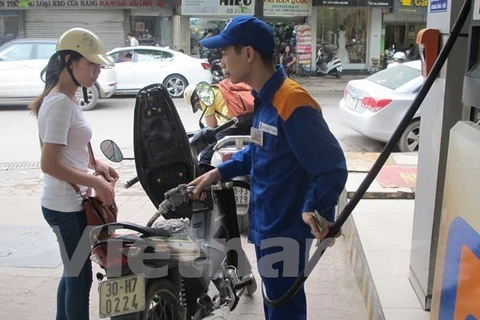
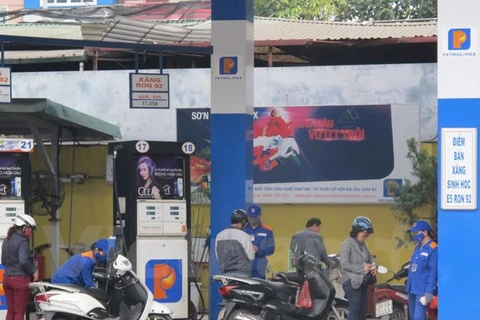
The local petrol market has seen positive changes as trading has been basically operated under the market mechanism under the State management. Petrol traders have had more freedom in their trading while following legal regulations. Retail petrol prices have been adjusted flexibly to reflect fluctuations in the world market. The adjustment has facilitated businesses and people's lives.
With the adjustment of every fortnight, domestic retail petrol prices have been followed closely by the market and State management. In 2015, there were 23 adjustments which were suitable with the country's socio-economic development. There were more decreases than increases, thus reducing input costs for businesses and production and improving people's living conditions. Specifically, petrol prices had 12 decreases and six increases while five times they were unchanged. The General Statistics Office said that the reduction of petrol prices by 25 percent last year made prices of housing and building materials as well as transport lower than the previous year. These contributed to the country's decreasing inflation rate.
In the Tet (Lunar New Year) holiday 2015, the two ministries asked petrol traders to keep the retail price unchanged despite the increase in the world market. The stable petrol price prevented the prices of essential goods in the holiday from surging and this curbed inflation.
The information on petrol price management last year was published on the ministries' websites to ensure transparency.
The competitiveness of the market has also been improved. There are 69 petrol traders in the market, thus increasing competitiveness and bringing the prices to suitable levels.
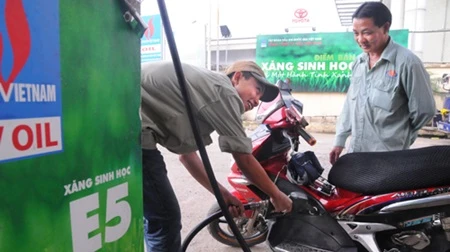
Decreasing petrol prices in 2015 both inside and outside the local market made petrol consumption higher. It was estimated that local petrol consumption last year reached around 17.5 million cu.m, posting a 12 percent to 15 percent increase from 2014. However, the petrol supply has been ensured for production and consumption demand.
After one year of implementation, the decree has been proved to be effective in petrol management. The distribution system has been closely managed while petrol prices followed market's fluctuations.
* So, what are the shortcomings of the decree in its implementation? What are the reasons? How could we overcome the shortcomings?
We need time to evaluate the decree's advantages and shortcomings as it has been implemented for only 26 months. In the first quarter of this year, the two ministries will organise a conference to review the decree's implementation with participation of businesses, agencies and associations. The conference would report to the Prime Minister and relevant agencies to implement changes to suit with the abilities of petrol traders, State management agencies and people's income.
* Do you have an evaluation on the petrol management of the two ministries?
It must be confirmed that the cooperation of the two ministries in petrol management has been close and effective as well as following the Government's instruction.
Management has received positive comments from the Government, ministries, enterprises and people. The two ministries will cooperate with relevant units to ensure the effectiveness of the petrol management.
* The Vietnam National Petroleum Group (Petrolimex) has a vital role in the petrol market. What is the responsibility of Petrolimex in ensuring petrol supply and maintaining energy security?
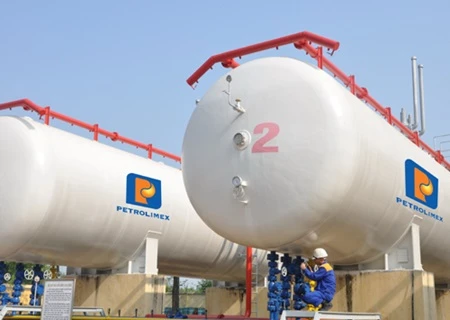
Petrolimex has been a petrol trader with its retail stations in all the country's 63 localities. The group accounts for 46 percent to 50 percent of total petrol consumption in Vietnam. Petrolimex has always paid attention to ensure energy security. Specifically, it has to supply petrol to remote and mountainous areas. It has been the only trader serving petrol demand in difficult areas.
Petrolimex has enhanced transparency in petrol trading by publishing retail prices, a price stabilisation fund and a financial report on its website.-VNA