Petrolimex fulfilling its role in energy supply

The Vietnam National Petroleum Group (Petrolimex) has met the majority of the goals set for the 2015-2020 period, paying nearly 188 trillion VND (about 8.036 billion USD) to the State budget while exhibiting strong performance in ensuring energy security, meeting demand for petroleum, and contributing to social welfare activities.
Petrolimex fulfilling its role in energy supply ảnh 1The headquarters of Petrolimex in Hanoi (Photo: VNA)

 Hanoi (VNA) - The Vietnam National Petroleum Group (Petrolimex) has met the majority of thegoals set for the 2015-2020 period, paying nearly 188 trillion VND (about 8.036 billion USD) to the Statebudget while exhibiting strong performance in ensuring energy security, meetingdemand for petroleum, and contributing to social welfare activities.


Over the past five years, the grouphas maintained a key role in petroleum trading, doing its part in meeting energyneeds for socio-economic development as well as national security and defence.

Sales grew 6.9 percent each year on averageover the last five years, while revenue grew 8.1 percent, assets 5.4 percent,and pre-tax profit 11 percent.

Petrolimex is one of the largest contributorsto the State budget in the country, forwarding more than 37.6 trillion VND eachyear. The company employs 26,000 workers, whose incomes rise 8 percent each year.

Along with petroleum, the company hasposted success in other fields of endeavour, which make up 45-50 percent of itstotal profits.

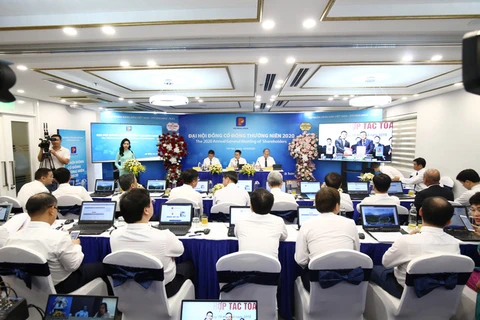
In the 2017-2020 period, Petrolimex wasamong the 50 best listed companies in Vietnam each year.

It has ensured the security of nearly60 percent of national petroleum reserves.

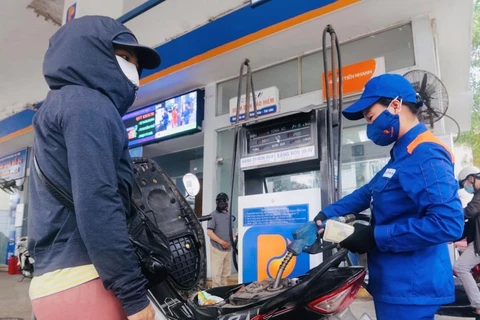
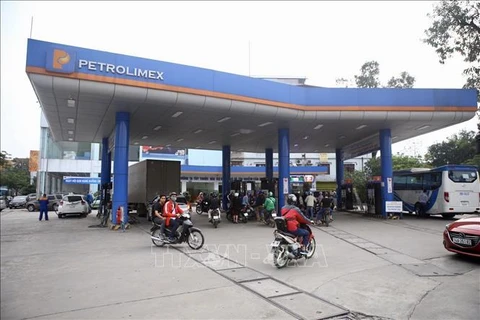
As a State-owned enterprisewith a key role to play in the domestic petroleum market and with a network ofpetrol stations spanning all the 63 cities and provinces throughout the country, Petrolimexhas long been providing all types of fuel in service of national security and meetingdemand among the population, even in particularly difficult periods. The companycurrently has a network of nearly 2,600 petrol stations and more than 2,500 franchiseestablishments.

Meanwhile, it goes to significant effort every single yearto transport petroleum to mountainous areas where no other companies have petrolstations, earning only a modest profit from doing so.

Regarding social welfare activities, it has come togetherwith localities around the country to explore the needs of the vulnerable in societyand to design suitable support activities and programmes for them.

The company has to date focused on sustainableactivities such as improving the living conditions of the needy, boosting the qualityof health care and education, and taking care of policy beneficiaries and the less-fortunatein general.

Petrolimex and its member companies set aside morethan 300 billion VND to be spent on social welfare activities around thecountry in the 2015-2020 period.

For example, over the last 10 years its staff haveraised nearly 80 billion VND in cash and gifts for the needy in Dong Vandistrict in the northern mountainous province of Ha Giang, to help them escapefrom poverty and near-poverty, contributing to ensuring social welfare in the provinceand the region more broadly.

The company has also become an official and active memberof the National Fund for Vietnamese Children, the Vu A Dinh Scholarships, andthe Fund for the Poor run by the Vietnam Fatherland Front Central Committee. Eachand every year, representatives from Petrolimex have visited and presentedgifts to war invalids and others who rendered their services to the countryand now live in nursing centres.

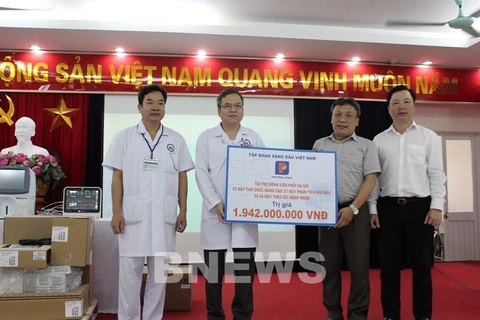
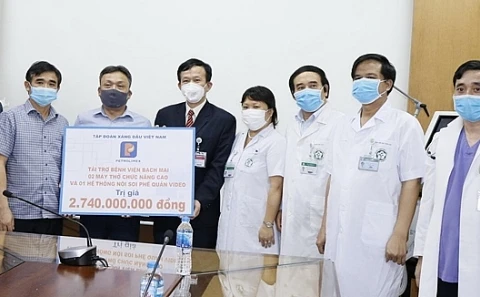
Of particular note, immediately after COVID-19 was firstfound in Vietnam, the company donated more than 14.1 billion VND to support preventionand control efforts.

To ensure it continues to perform its role as theleading energy company in Vietnam, Petrolimex will maintain its focus on meetingall of its business targets while completing all of its social welfareactivities at the same time.

For the 2020-2025 period, the Party Organisation at Petrolimexwill strive to continue to enhance its leadership capacity./.
VNA

See more

Thanks to digital transformation among local officials, Tam Dao commune of Phu Tho province has achieved an almost 100% on-time rate for processing administrative applications, helping improve public services for residents. (Photo: VNA)

Institutional reform fuels private sector's growth in Phu Tho province

The private sector is increasingly emerging as a key growth engine of the economy. To unleash its potential and ensure sustainable development, the northern province of Phu Tho is stepping up institutional and administrative reforms to cut costs, shorten procedures, and build a more transparent, business-friendly investment climate.

Hoa Phat Wharf inside the Dung Quat Economic Zone (Photo: VNA)

Dung Quat EZ, Quang Ngai IPs draw nearly 19.4 bln USD

The Dung Quat Economic Zone and Quang Ngai industrial parks have so far attracted 441 projects worth around 19.4 billion USD, according to the Dung Quat Economic Zone and Quang Ngai Industrial Parks Authority (DEZA).

The Kim Long Motor Hue factory (Photo: VNA)

Hue courts capital to turn industrial zones into growth engine

The economic and industrial zones in Hue city host more than 200 active investment projects worth over 152 trillion VND (5.84 billion USD), with 139 already operational. Since the start of 2026, they have generated about 32 trillion VND, contributed 4.2 trillion VND to the state budget and brought in 730 million USD in exports, while employing more than 46,000 workers.

Processing cashew nuts for export at Nguyen Thong Co., Ltd. in Dak Lak province. (Photo: VNA)

Vietnam’s exports to New Zealand post strong growth

According to the Customs Department, two-way trade reached 844 million USD in the first half of 2026, of which Vietnam’s exports to New Zealand totaled 399.7 million USD, up 18.8% year-on-year, while imports stood at 444 million USD.

Starting from September 2026, agricultural products from the Mekong Delta are expected to be transported directly from Cai Cui Port to Guangxi, China. (Photo: VNA)

Investing in logistics to boost agricultural production and exports

Logistics is increasingly becoming a major bottleneck for exports as transport costs rise and requirements for data management, low emissions and supply chain transparency become more stringent, requiring coordinated investment in logistics infrastructure, data infrastructure and transport capacity.

Harvesting rice in the Mekong Delta (Photo: VNA)

Vietnam seen as gateway for Canadian farm produce to ASEAN

As Canada steps up trade diversification and seeks to reduce its dependence on the North American market, Vietnam could serve both as a market for Canadian goods and a base for Canadian businesses to build production capacity and expand operations in the region.

Illustrative image (Photo: VNA)

Turkish cooperatives open sourcing channel for Vietnamese businesses

The Vietnam Trade Office recommended that Vietnamese businesses in agriculture and food actively study cooperative networks in different localities in Türkiye and consider them an additional channel for accessing raw materials, processing partners, and distribution networks.

Delegates at the signing ceremony (Photo: VNA)

VPI, Beicip-Franlab Asia deepen oil, gas cooperation

Under the MoU, VPI and Beicip-Franlab Asia will undertake advanced studies in geology, geophysics, and reservoir engineering to support exploration, field development, and oil and gas resource assessment.

A visitor explores Vietnamese coffee at the expo. (Photo: VNA)

Vietnam pushes coffee, farm produce at Hong Kong food expo

After nearly 200 years, especially since the Doi Moi (renewal) began in 1986, Vietnamese coffee is now exported to more than 100 countries and territories and supports about 2.6 million jobs. Vietnam remains the world’s second largest coffee exporter, holding roughly 19-21% of the global market, and is the top producer of Robusta coffee.

Delegates at the event (Photo: VNA)

Da Nang hosts 2026 International Logistics Forum

Co-hosted by the Ministry of Industry and Trade and the Da Nang People’s Committee, the forum put modern logistics, strategic infrastructure, digital transformation, green growth and international connectivity at the centre of discussions.

Prime Minister Le Minh Hung speaks at the working session. (Photo: VNA)

Monetary policy must ensure macro stability, support growth: PM

The SBV was required to keep policy interest rates steady and add liquidity so lenders can access cheaper funding. It must manage the exchange rate in line with market developments, coordinate monetary tools, and intervene to stabilise the foreign exchange market, while maintaining close oversight of gold. Lenders must continue cutting costs, stabilising lending rates, and delivering substantive reductions.