Philippine typhoon, southwest monsoon death toll top 33

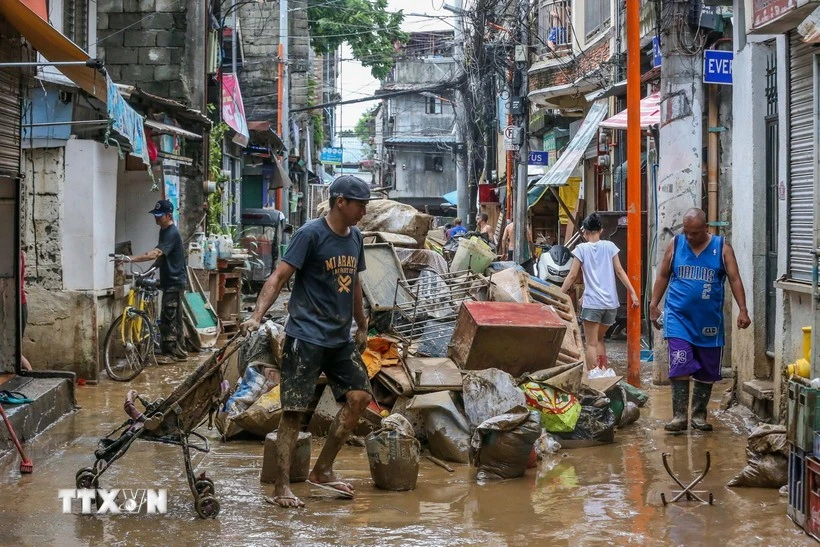
The death toll from the severe flooding and landslides triggered by the southwest monsoon enhanced by Typhoon Gaemi has risen to 33, the Philippine police said on July 26.

Flooding in Marikina, Philippines (Photo: Xinhua)

Hanoi (VNA) – The death toll from the severe flooding and landslides triggered by the southwest monsoon enhanced by Typhoon Gaemi has risen to 33, the Philippine police said on July 26.

Eleven people died in the Philippine capital region, Manila and 12 in the Calabarzon region, and 10 from Central Luzon, including the crew of an oil tanker that sunk off Bataan province on July 25.

Gaemi, the third storm to hit the Philippines this year, left the country on July 25 morning, leaving a trail of destruction as it barreled through towns and villages. The typhoon forced hundreds of thousands of villages to abandon communities prone to flood and landslides, toppled trees and electrical posts, and ripped off tin roofs.

Landslides and flash floods are common across the Philippines during the rainy season, especially when a typhoon hits. In 2013, the Philippines was hit by super typhoon Haiyan, which claimed over 7,000 lives.

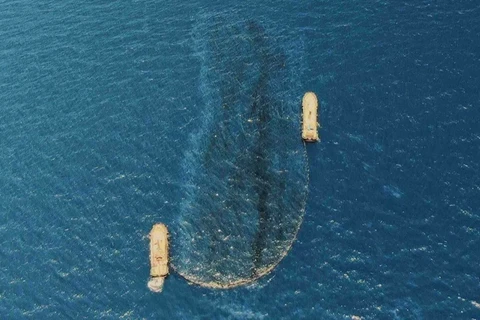
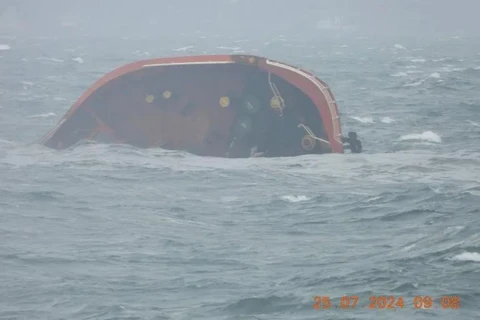
Meanwhile, the Philippine Coast Guard plans to deploy oil dispersal and floating barriers a day after a tanker carrying 1.4 million litres of industrial fuel sank off Manila.

An oil slick stretching several kilometres has been detected in the waterway, which thousands of fishermen and tourism operators rely on for their livelihoods. But Coast Guard spokesman Rear Admiral Armando Balilo told a briefing on July 25 that it appeared diesel fuel used to power the tanker had leaked and, so far, not the industrial fuel oil cargo.

The Coast Guard has set a target of seven days to offload the cargo and prevent what Balilo warned would be the worst oil spill in Philippine history if it were to leak./.

VNA

See more

Fitch downgrades Philippines’ outlook to ‘negative’. (Illustrative photo: Reuters)

Fitch downgrades Philippines’ outlook to ‘negative’

The Outlook revision reflects rising risks to the Philippines' strong medium-term growth prospects from recent disruptions to public investment, exacerbated in the near-term by elevated exposure to the ongoing global energy shock.

The Singapore Maritime Technology & Research Roadmap is aimed at advancing the sector’s efficiency and sustainability. (Photo: businesstimes.com.sg)

Singapore unveils new roadmap to boost innovation in maritime sector

The Singapore Maritime Technology & Research Roadmap is aimed at advancing the sector’s efficiency and sustainability. It highlights priorities – including digital technologies, decarbonisation and operational integration – to boost resilience, productivity and innovation in Singapore’s maritime ecosystem. It also addresses structural issues such as manpower, land and sea space limitations.

Malaysia considers establishing strategic petroleum reserve

Malaysia considers establishing strategic petroleum reserve

Malaysia, which was previously a net exporter, has now become a net importer due to declining domestic production and rising consumption, with demand estimated at around 800,000 barrels per day compared to production of about 400,000 barrels per day.

Indonesia to halt diesel imports from July

Indonesia to halt diesel imports from July

The move is part of the Indonesian Government’s efforts to strengthen national energy independence by utilising palm oil as an alternative fuel, said Agriculture Minister Andi Amran Sulaiman.

Malaysia’s growing microplastics crisis is largely self-inflicted, driven by domestic waste, weak recycling practices and everyday plastic use, said experts. (Photo: New Straits Times)

Malaysia seeks solutions to microplastic crisis

Microplastics originating from domestic waste and wastewater are increasingly entering the food chain, posing serious threats to seafood safety and the livelihoods of coastal communities.

The new mass emergency alert system SG Alert, which will be used during emergencies such as major fires, chemical or terror incidents, seen on an Apple and Android device on Apr 17, 2026. (Photo: CNA)

Singapore launches new national emergency alert system

SG Alert in Singapore uses cell broadcast technology, enabling alerts to be delivered within seconds without requiring mobile data or collecting personal information. Unlike conventional SMS, which may be delayed during network congestion or depend on internet connectivity, the system ensures fast and reliable message delivery. Alerts can be sent islandwide or targeted to specific affected areas.