Place of birth annotation to be added to new passports issued for Vietnamese in Czech

The Vietnamese Embassy in the Czech Republic on August 2 announced it will issue new passports with an annotation on the holders’ place of birth added inside.
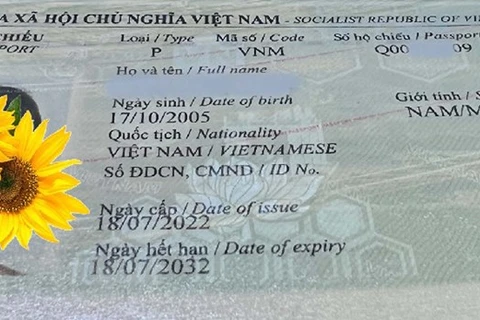
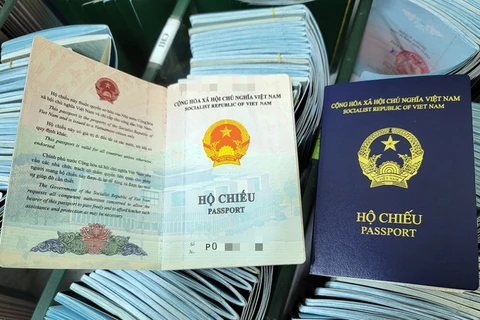
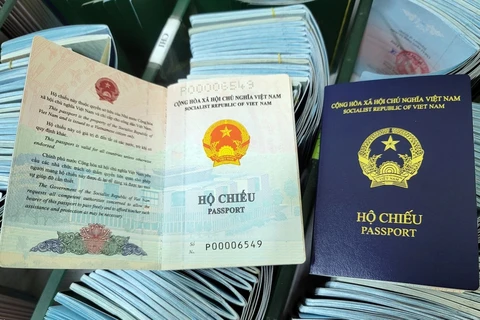
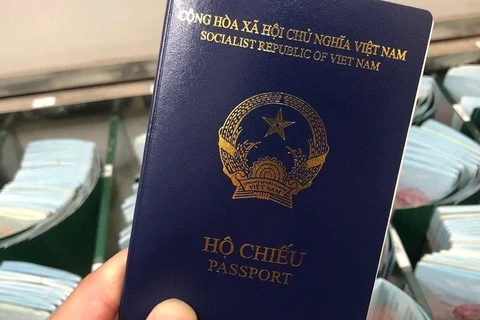
Place of birth annotation to be added to new passports issued for Vietnamese in Czech ảnh 1Illustrative image. (Photo: thanhnien.vn)
Prague (VNA) – The Vietnamese Embassy in the CzechRepublic on August 2 announced it will issue new passports with anannotation on the holders’ place of birth added inside.

The move came after the Czech Embassy in Hanoi sent anofficial note to the Ministry of Foreign Affairs’ Consular Department the sameday, rejecting to recognise Vietnam’s new passports.

“Vietnam’s new passports, which were issued from July 1,2022, do not meet technical standards of the International Civil AviationOrganisation (ICAO),” the Czech Embassy announced in a statement on itsofficial website.

“Therefore, the Czech Republic agrees with other EuropeanUnion (EU) member countries to halt the recognition of its validity,” it saidbut did not specify the standards as prescribed by the ICAO that Vietnam’s newpassports have not met.

In an announcement released later the same day, theVietnamese Embassy in Czech said it began to issue passports in new designwhich has navy-blue covers from July 1, 2022, in replacement of the old green-covered ones.

The embassy is actively coordinating with Vietnameseauthorities in working with the Czech side to address the issue, it noted, adding that itwill add an annotation on the place of birth on Page 4 of the new passports tofacilitate the Vietnamese holders to apply for visa extension or other publicadministrative services in Czech.

Holders of passports issued before August 2 can visit theembassy for annotations to be added, it said.

The Czech Republic is among the three European countries having denied therecognition of Vietnam’s new passports. The others are Germany and Spain.

In separate announcements, both Embassies of Germany andSpain in Vietnam said the reason for the non-recognition of the new navyblue-coloured passports is that they do not have a place of birth(province/city) listed.

This can make it difficult for the German side to identifythe specific locality where Vietnamese citizens were born, especially in thecase of minors where ID number has not been granted, the Embassy of Germanysaid on July 27.

It noted the Vietnamese holders of the new passports whohave already received visas to Germany should refrain from travelling sincethey will be denied entry at the border.

The Embassy of Spain in Vietnam described the place of birthof passport holders as an important information for personal identification,which is also required for processing Schengen visa applications./.
VNA
See more

Prof. George Toloraya, Director of the Centre for Russian Strategy in Asia at the Institute of Economics of the Russian Academy of Sciences. (Photo published by VNA)

Vietnam enters new development era: Russian scholar

Prof. George Toloraya noted that the 14th Party Congress represents a pivotal shift from Vietnam’s role as a “factory of the world” toward its ambition to become a high-tech powerhouse, with development quality reaching a higher level.

Participants pose for a group photo at the ceremony to mark the 76th founding anniversary of the diplomatic relations between Vietnam and China in Chongqing. (Photo: VNA)

Chongqing ceremony marks 76th anniversary of Vietnam – China ties

Consul General Bui Nguyen Long noted that the fruitful bilateral ties over the past 76 years have clearly demonstrated that the unceasing enhancement and development of Vietnam – China relations is fully consistent with the shared aspirations and long-term fundamental interests of the two peoples.

Delegates at the 14th National Party Congress vote on the list of candidates to the 14th Party Central Committee. (Photo: VNA)

14th National Party Congress: Enduring strength of people-centred path

Kyril Whittaker, a UK-based Vietnam specialist, that Vietnam’s 40-year Renewal (Doi Moi) process has succeeded thanks to three closely intertwined factors - a scientific and practical approach to reform, the Communist Party of Vietnam’s leadership role, and the principle of placing the people at the heart of all policies.

Party General Secretary To Lam speaks at an international press conference announcing the results of the 14th National Party Congress on the afternoon of January 23. (Photo: VNA)

Renewing mindset, setting development vision through 2045: Party General Secretary To Lam

The political report integrates three previously separate documents - the political report, the socio-economic report and the review of Party building - into a single, unified and comprehensive one, with clearer priorities. Designed to be concise, easy to understand, remember and implement, this integration stands out as a key hallmark of the Congress.

Communist Party of Vietnam General Secretary To Lam (right) and General Secretary of the Central Committee of the Lao People’s Revolutionary Party and President of Laos Thongloun Sisoulith during his visit to Vietnam on September 10, 2024 (Photo: VNA)

Top Lao leader to pay state visit to Vietnam

General Secretary of the Central Committee of the Lao People’s Revolutionary Party and President of Laos Thongloun Sisoulith and his spouse will pay a state visit to Vietnam from January 26 to 27.

The article titled “The 14th National Congress of the Communist Party of Vietnam and the Advance toward a New Era,” published on aladaainternacional.com, the website of the Latin American Center for Studies on Asia and Africa. (Photo: VNA)

14th National Party Congress: Vietnam’s strategic shift in new era

Vietnam now stands at the threshold of a new development era, driven by strong aspirations and substantial potential. The 14th Party Congress is, therefore, of decisive importance for the country’s future transformations, particularly amid an international environment marked by uncertainty and volatility. While this phase may be among the most complex of the renewal process, it also presents a critical opportunity for Vietnam to break through and evolve from an “Asian tiger” into a regional “dragon.”

Delegates vote to approve the Resolution of the 14th National Party Congress (Photo: VNA)

14th National Party Congress adopts Resolution

For the 2026–2030 period, key targets for Vietnam include average annual GDP growth of at least 10%; per-capita GDP of about 8,500 USD by 2030; manufacturing and processing accounting for roughly 28% of GDP; the digital economy contributing around 30% of GDP.