PM launches HCM City centre for fourth industrial revolution

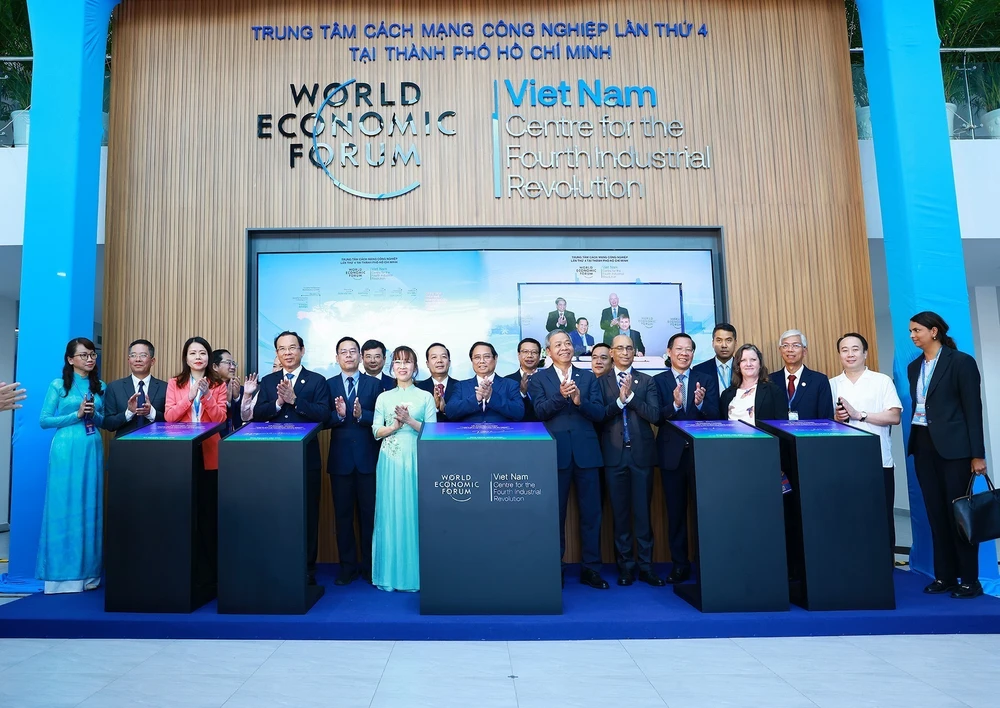
Prime Minister Pham Minh Chinh inaugurated the Centre for the Fourth Industrial Revolution (C4IR) of Ho Chi Minh City at the Saigon Hi-Tech Park in Thu Duc city on September 25 as part of the HCM City Economic Forum 2024.

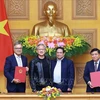
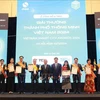
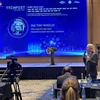
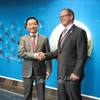
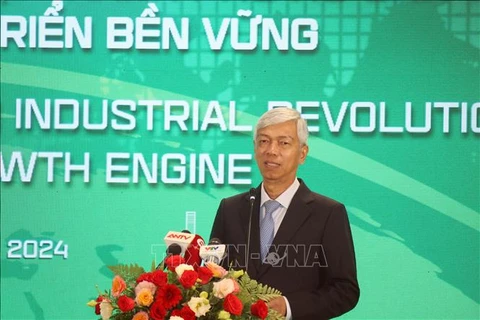
Prime Minister Pham Minh Chinh at the launching ceremony of the Centre for the Fourth Industrial Revolution (C4IR) in Ho Chi Minh City on September 25 (Photo: VNA)

HCM City (VNA) – Prime Minister Pham Minh Chinh inaugurated the Centre for the Fourth Industrial Revolution (C4IR) in Ho Chi Minh City at the Saigon Hi-Tech Park in Thu Duc city on September 25 as part of the HCM City Economic Forum 2024.

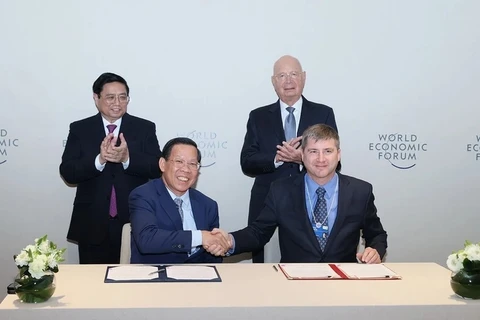
The HCM City C4IR, part of an agreement between Vietnam and the WEF, is one of the 19 C4IRs of the World Economic Forum (WEF) and the second one in Southeast Asia. It operates in the form of a public-private partnership, with founders including large-scale enterprises in Vietnam and HCM City.

Along with making proposals on solutions and policy recommendations in prioritised areas in line with national and international trends, the centre is expected to support the mobilisation of resources, assisting the Government and businesses in applying new technologies.

At a later working session with leaders of ministries, sectors, HCM City and the C4IR founding member enterprises on the operational orientations of the centre, PM Chinh affirmed that the centre is the outcome of the Party and State’s policy on the Fourth Industrial Revolution, meeting the country’s development requirements in the new period.

It reflects Vietnam’s deep and extensive integration and joining with the world in promoting the development of science, technology and innovation, while showing the pioneering role of HMC City in this field.

At the same time, it demonstrates the mettle, brainpower, pride and aspiration of Vietnam in the Fourth Industrial Revolution, and affirms the close ties between the WEF, the Government leader stated.

The Government leader clarified the responsibility of the Government, ministries and sectors in providing policy guideline and building institutions for the centre's development, and asked HCM City to ensure infrastructure and mechanisms serving the smooth operations of the centre.

He suggested that C4IR founders continue to invest in the centre to create better financial conditions for operations, developing its infrastructure and attracting more talents.

PM Chinh requested the centre to promote the spirit of self-reliance, self-improvement and creativity based on its functions, tasks, and following the motto of "pioneering, cooperation, connection, digitalisation, greening, substantiality, effectiveness, spill-over effects, for the country, and for the people".

Representatives of ministries, sectors and enterprises held that in order for the centre to operate effectively, it is necessary to give it superior policies and mechanisms, along with investment in human resource training and facilities, especially modern digital infrastructure.

Viettel Vice Chairman Dao Xuan Vu proposed the establishment of a national steering committee on Fourth Industrial Revolution to work with relevant steering committees to build necessary policies and strategies, while investing in digital infrastructure.

President of Sovico Group Nguyen Thi Phuong Thao pledged to accompany the centre, the Saigon Hi-Tech Park and HCM City in making full use of achievements of the Fourth Industrial Revolution, and support startups to rise.

Kiva Allgood, head of the Centre for Advanced Manufacturing and Supply Chain and member of the Executive Committee at the World Economic Forum, committed to accompanying and supporting the centre in its development. WEF will give guidelines and provide professional support to the centre, connecting it with other centres in the system in the region and around the world, she said, stressing that Vietnam needs to implement unique solutions and make bold commitment to greener and more digital development because those are the two best ingredients to make the world a better place./.
VNA

See more

Illustrative photo: AFP

AI Law takes effect, anchors national governance framework

Taken together, the new AI Law and its implementation roadmap not only complete Vietnam’s legal architecture for AI, but also lay a structured foundation for risk management, innovation and ecosystem development, aiming to ensure coherent and effective enforcement in the years ahead.

Viettel Networks and Ericsson sign their cooperation agreement on the sidelines of the Mobile World Congress 2026. (MWC 2026)

Viettel Networks, Ericsson partner to advance autonomous telecom networks

Under a newly signed cooperation agreement, Ericsson will provide network automation platforms and artificial intelligence (AI) technologies while working with Viettel to conduct real-world trials. The collaboration marks a new step forward, combining Viettel’s large-scale network operation expertise with Ericsson’s strengths in automation solutions and advanced technologies.

Prime Minister Pham Minh Chinh speaks with students at Hanoi University of Science and Technology (Photo: VNA)

Resolution 57: Developing high-quality sci-tech human resources key to master strategic technologies

After one year of implementing Resolution No. 57-NQ/TW of the Politburo, alongside notable achievements, the Central Steering Committee for science and technology development, innovation, and digital transformation has identified persistent shortcomings and bottlenecks requiring urgent attention - most notably a shortage of high-quality human resources in strategic technology fields.

The Saigon Hi-Tech Park (Photo: VNA)

Vietnam advances toward mastering UAV technology

Products are already making their way into the US market, but this is not merely a story of applying new technology in practice, but a gradual process of mastering core details and affirming international capabilities in the UAV industry, one of Vietnam’s strategic high-tech sectors.

Tran Quang Hung, Chairman of the Board of Directors of HIC, presents the company’s operating model at the launch event. (Photo: hanoimoi.vn)

Hanoi’s innovation centre to drive digital transformation, creative industries

HIC is envisioned as a central “brain” connecting data, resources, policies, technology and culture to address urban development challenges, operate the national innovation ecosystem, promote a sustainable digital economy and digital society, improve the quality of life for local residents, and foster creative industries, particularly cultural industries linked to Hanoi’s identity.

Participants pose for a group photo at the International Conference on Advanced Microscopy for Life Sciences and Materials held in Gia Lai on February 25. (Photo: ICISE)

International conference spotlights advanced microscopy in life sciences, materials

The microscopy user community in Vietnam remains fragmented, lacking a common platform for sharing technical expertise, research experience and collaboration opportunities. This limited connectivity has, to some extent, curtailed the full potential of microscopy technologies in advancing scientific progress and industrial applications at home and abroad.

With just a smartphone, travellers can search for and book a variety of travel services for their journey. (Photo: VNA)

Digital transformation – a lever for building a smart tourism ecosystem

In recent years, digital transformation has become a common feature in socio-economic development strategies. For tourism – a multi-sector, experience-driven industry closely tied to information – digitalisation is no longer a trend but an inevitable requirement to enhance competitiveness and ensure sustainable development.