PM orders strengthening 2024 credit management

Prime Minister Pham Minh Chinh on November 27 ordered the Governor of the State Bank of Vietnam (SBV) to outline solutions aimed at improving credit management for 2024 in the face of evolving global economic challenges.

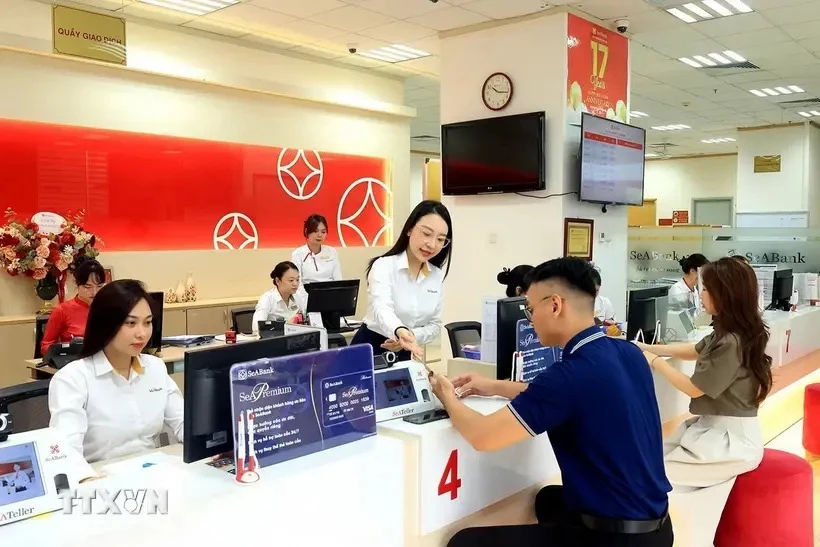
Illustrative image (Photo: VNA)

Hanoi (VNA) – Prime Minister Pham Minh Chinh on November 27 ordered the Governor of the State Bank of Vietnam (SBV) to outline solutions aimed at improving credit management for 2024 in the face of evolving global economic challenges.

In his urgent directive, the PM asked the central bank to work closely with relevant agencies to monitor global and regional developments, including financial and monetary policies of major economies, ensuring that Vietnam can respond swiftly and effectively to any changes in the global economic climate.

Monetary policy management should be proactive, flexible, timely, and effective, ensuring close and harmonious coordination with a reasonable expansionary fiscal policy, with focuses and targets, and other macroeconomic policies, he said.

The directive underscored the need for drastic measures to manage interest and exchange rates, credit growth, and money supply while also reducing lending rates. The ultimate goal is to facilitate a quick recovery for citizens and businesses hit by Typhoon No. 3, restore production and business activities, stimulate economic growth, and maintain macroeconomic stability.

To achieve these goals, the bank must remove obstacles for citizens and businesses by lowering lending rates, creating jobs, and ensuring livelihoods. This aligns with the principle of harmonised benefits and shared risks, aiming for a 15% credit growth target for 2024.

It was also assigned to funnel credit into production, trade, and priority areas that drive economic growth, including digital transformation, green transition, climate change response, circular economy, sharing economy, sci-tech and innovation. At the same time, it is also essential to closely control credit in high-risk sectors to ensure safe and effective credit operations.

The credit institutions must ensure transparency and openness in offering preferential credit packages that are tailored to the unique needs of various sectors, particularly social and worker housing, forestry, and aquaculture. Furthermore, they were encouraged to raise their social responsibility and business ethics in support of citizens and enterprises in difficult times.

In a firm stance against financial misconducts, the Government leader requested the timely and strict handling of any violations, alongside effective measures to address non-performing loans.

Deputy Prime Minister Ho Duc Phoc was assigned to directly oversee the SBV and relevant agencies in performing the tasks outlined in this directive./.
VNA

See more

Ben Thanh Market in Ho Chi Minh City attracts a large numbers of domestic and international visitor.( Photo: VNA)

Vietnam targets 50 million international visitors by 2030

The Ministry of Culture, Sports and Tourism has outlined three scenarios for 2027–2030. Under the high-growth scenario, international arrivals would rise 15–18 percent annually to reach 45–50 million, while domestic tourism would reach around 160 million trips. Total tourism revenue is projected at 80–90 billion USD.

Factories and production facilities in the Chu Lai Open Economic Zone, Da Nang city, are equipped with modern production lines. (Photo: VNA)

Ready-built factories gain from new manufacturing FDI wave

Ready-built factories attracted 73% of new manufacturing FDI in northern Vietnam over the past two quarters, as foreign investment continued to surge at the region's industrial hubs during the first eight months of 2026. The trend points to growing demand for premises that can be put into operation quickly.

Vietnamese durian industry pivots from volume to value

Vietnamese durian industry pivots from volume to value

Durian has morphed from a high-value crop into a strategic Vietnamese export. But as output climbs and importing markets tighten rules on quality, food safety and traceability, the industry must pivot from volume growth to sustainable value chains, better quality and diversified markets.

A display area for Mid-Autumn Festival cakes at a supermarket (Photo: VNA)

Mid-Autumn Festival cake market heats up at affordable end

Industry insiders say competition is no longer just about the cake itself. Product quality, packaging, brand reputation, delivery services and personalisation are increasingly shaping consumer choices in a market crowded with both domestic and foreign players.

Minister of Foreign Affairs Le Hoai Trung (Photo published by VNA)

Vietnam, India set 25 billion USD trade goal

Vietnam and India agreed to make better use of complementary strengths, ease market access difficulties and facilitate business activities toward achieving the 25 billion USD bilateral trade target.

Delegates at the meeting between Vietnamese businesses operating in Cambodia and the Council for the Development of Cambodia (CDC) on September 14. (Photo: VNA)

Vietnamese businesses seek to expand investment in Cambodia

Vietnam currently has 223 investment projects in Cambodia with total registered capital of nearly 3.4 billion USD. Vietnamese companies operate in agriculture, particularly large-scale farming, finance and banking, telecommunications, aviation, processing, trade and services.

Children visit President Ho Chi Minh's hometown and learn about his childhood. (Photo: VNA)

Vietnam's tourism sector faces labour shortage

A 2026 survey by Hoteljob.vn found that nearly 90% of tourism businesses planned to recruit. In Ho Chi Minh City alone, 89.7% of businesses were hiring, while 71.8% said recruitment was difficult or very difficult. The biggest shortages were among frontline workers, particularly in housekeeping, engineering, food service, front-office operations, and kitchens.

Octopus processing for export at Huy Nam Company in An Giang province. (Photo: VNA)

New opportunities for Vietnam’s seafood exports

The Vietnam-EFTA Free Trade Agreement brings together two groups of highly complementary economies. EFTA members Switzerland, Norway, Iceland and Liechtenstein have strengths in technology, innovation, finance, clean energy and sustainable development, while Vietnam is one of Asia’s most dynamic economies and is emerging as a major regional manufacturing, trade and investment hub.

The saponin content of Lai Chau ginseng can reach as high as 23.85% in its natural state, a remarkably high level compared to many other ginseng species. (Photo: baolaichau.vn)

Lai Chau ginseng development gains momentum

Blessed with rare and distinctive ecological values, the northern mountainous province of Lai Chau is stepping up efforts to conserve and develop its native ginseng, with the medicinal plant expected to play a growing role in the forest-based economy and local livelihoods.

The Vietnamese delegation poses for a group photo at the third meeting of the Vietnam-Canada Joint Economic Committee (Photo: VNA)

Vietnam, Canada broaden economic cooperation beyond trade

Vietnam is currently Canada’s largest trading partner in ASEAN. Building on the Comprehensive and Progressive Agreement for Trans-Pacific Partnership (CPTPP), the two countries are expanding bilateral economic ties into higher value-added areas such as clean energy, critical minerals, advanced technology, manufacturing and value-chain linkages.