Policy on security in online banking service provision drafted

The State Bank of Vietnam (SBV) has finalised a draft circular on safety and security in providing online services in the banking industry.

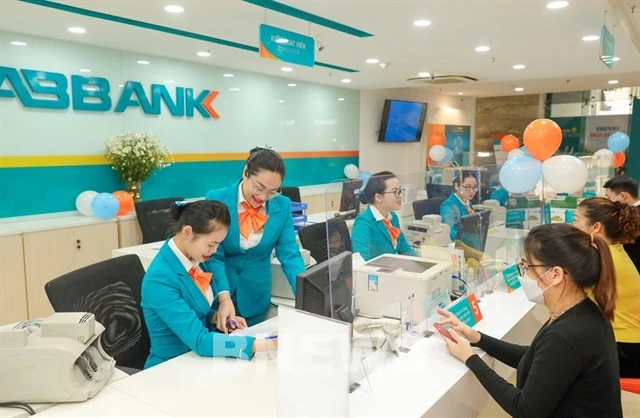
Customers make transaction at an ABBank office. The draft circular requires banks to carry out annual security and confidentiality inspections and assessments of the online banking system. (Photo: cafef.vn)

Hanoi (VNS/VNA) - The State Bank of Vietnam (SBV) has finalised a draft circular on safety and security in providing online services in the banking industry.

Under the draft circular, the online banking system must comply with the Government’s current regulations on ensuring the information system security at Grade 3 or higher.

According to the Law on Cyberinformation Security 2015, classification of information systems by security grade means the determination of information security grades of information systems in an ascending order from 1 to 5.

Grade 3 means that when an information system is sabotaged, it will seriously harm production, public interests and social order and safety or will harm national defence and security.

According to the draft circular, the online banking system must also ensure the confidentiality and integrity of customer information and the availability to provide services continuously.

Customer transactions must be assessed for minimum risk according to each customer group, transaction type and transaction limit to enable the provision of appropriate forms of transaction authentication for customers.

The draft circular requires banks to carry out annual security and confidentiality inspections and assessments of the online banking system.

In addition, banks must regularly identify potential risks and determine the causes of the risks in providing online banking services to promptly take measures to prevent, control and handle those risks.

Information technology infrastructure and equipment that are used to provide online banking services must have copyright and origin. For equipment that is nearing the end of its product life cycle and will no longer be supported by the manufacturer, banks must have an upgrade and replacement plan according to the manufacturer's announcement to ensure the equipment to be installed with new software versions.

Besides having firewalls and monitoring and warning systems against unusual behaviour, banks must also establish a mechanism to detect and prevent intrusions and network attacks on their online banking system, according to the circular drafts.

According to Tran Quang Hung, Deputy Director of the Ministry of Information and Communications’ Information Security Department information security in the banking system plays an important role.

With a large amount of bank and customer data, the security of customer information in particular and banking data in general is mandatory for all credit institutions. Therefore, banks need to be equipped with modern technology and constantly strengthen their capacity as well as invest in security.

Sharing that view, Phan Viet Linh, Director of CDNetworks Vietnam, said the speed of digital transformation in the finance and banking sector in Vietnam was accelerating.

At the same time, banks often face attacks from high-tech criminals attempting to steal customer data to conduct property appropriation fraud. Therefore, banks must strengthen defence measures to ensure safety and security in their systems./.

VNA

See more

Tran Ngoc Quan, Trade Counsellor and head of the Vietnam Trade Office in Belgium and the EU (Photo: VNA)

Belgian firms suggested to expand presence in Vietnamese market

Entering 2026 – the first year of implementing the Vietnam – EU Comprehensive Strategic Partnership, the Vietnam Trade Office in Belgium and the EU views this as a pivotal time to inject new momentum into trade ties, said Trade Counsellor Tran Ngoc Quan.

Saigon Marina IFC, an emerging landmark, reflects Ho Chi Minh City’s pioneering spirit.

Saigon Marina IFC – The light of Ho Chi Minh City’s new icon

Saigon Marina IFC, an emerging landmark, reflects Ho Chi Minh City’s pioneering spirit. Designed to become an International Financial Centre, this new architectural icon along the Saigon River is envisioned not only as a premium commercial complex, but as a central platform supporting financial institutions, international investors and cross-border capital flows in the years ahead.

Shoppers at a supermarket in Hung Yen (Photo: VNA)

Retailers see tax compliance, AI as key to survival in 2026 survey

The annual survey, conducted at the end of 2025 among retail and food and beverage (F&B) sellers nationwide, found that businesses are shifting their focus from rapid growth to operational efficiency, cost control and legal compliance amid increasingly stringent regulatory standards.

Visitors shop at Glorious Spring Fair 2026 (Photo: VNA)

Spring Fair 2026 opens broader prospects for Vietnam–UAE trade cooperation

For Vietnam, the UAE serves not only as a consumer market but also as a gateway to the Middle East and North Africa. Vietnamese agricultural products such as cashew nuts, pepper, cinnamon and rice have steadily gained market share, while aquatic products, including tra fish and tuna, are increasingly present in the UAE’s hospitality sector.

Bao Viet Bank's employee counts Vietnamese banknotes at a transaction counter in Hanoi. (Photo: VNA)

Credit quota reform, tighter capital rules may widen gap among banks

Yuanta Vietnam Securities estimates that to achieve GDP growth above 10%, credit growth would need to exceed 16%. This suggests bank credit is no longer expected to be the main growth driver, with greater reliance on fiscal policy, public investment and capital markets.

Commercial Counsellor Do Viet Phuong, Head of the Vietnam Trade Office in Cambodia. (Photo: VNA)

Spring Fair 2026 offers ample room to deepen Vietnam–Cambodia trade ties

Cambodia holds substantial potential for cooperation in agro-processing and exports, especially in key products such as rice, cashew nuts and rubber. In recent years, the country’s cultivation area and agricultural output have grown steadily, providing a stable raw material base for processing industries.

Vietnam is projected to have approximately 2.4 million SMEs, accounting for over 98% of the country’s total enterprises. (Photo: cafef.vn)

Banks offer diverse solutions to support SMEs

With an increasingly significant role in the economy, the small and medium-sized enterprise (SME) sector is becoming a key segment in the credit growth strategies of many banks and the banks have been taking diverse solutions to support the enterprises.