Positive signs for Vietnam's wood exports amidst challenges

Vietnam’s wood industry has recorded positive signs with significant increases in the export of key products despite ongoing global economic uncertainties, according to the Q3 meeting on wood processing and export held in the southern province of Binh Duong on August 9.

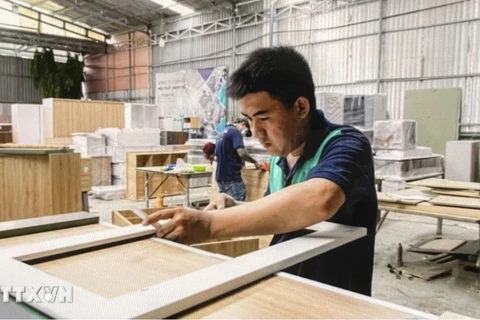
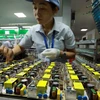
Processing wood for export (Photo: VNA)

Binh Duong (VNA) – Vietnam’s wood industry has recorded positive signs with significant increases in the export of key products despite ongoing global economic uncertainties, according to the Q3 meeting on wood processing and export held in the southern province of Binh Duong on August 9.

Tran Quang Bao, Director of the Ministry of Agriculture and Rural Development’s Department of Forestry, reported that Vietnam's wood and forestry sector achieved a positive outcome between January and July, with export revenue reaching 9.36 billion USD, accounting for 61.5% of the yearly target. Notably, the value of wood chip and woodwork product exports surged nearly 38% and over 20% compared to the same period last year.

However, the export goal of 15.2 billion USD for the year remains challenging due to global economic fluctuations and escalating political conflicts, he said. Additionally, rising shipping costs and delayed tax refunds are adding pressure to the industry.

go.PNG
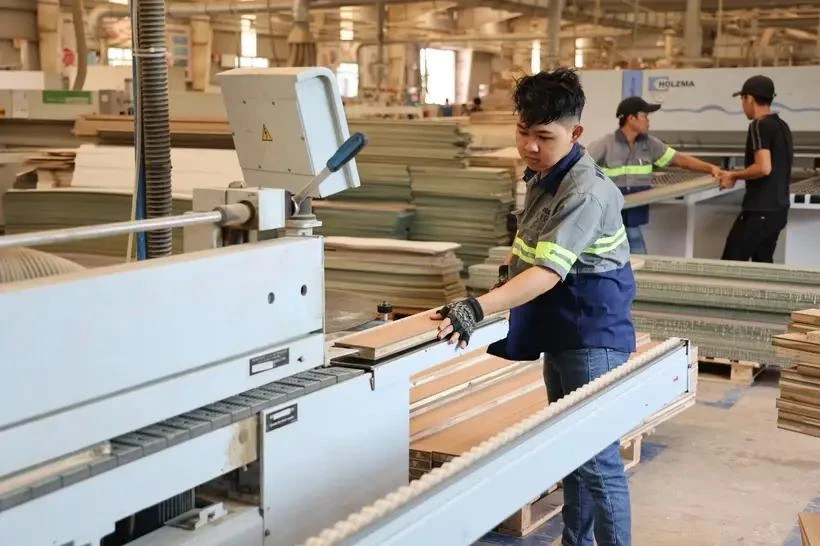
A worker check a product for export at a wood factory in the southern province of Binh Duong. (Photo: VNA)

Do Xuan Lap, Chairman of the Vietnam Timber & Forest Products Association (VIFORES), gave insights into difficulties facing the sector in its major markets. The US, which represents over 54% of Vietnam's wood export value, has experienced several changes in trade policies. Vietnamese exporters are having to cope with multiple anti-dumping lawsuits, with the US initiating three cases related to the wood industry. Furthermore, it has yet to recognise Vietnam as a market economy, leading to continued discrimination in anti-dumping investigations, thereby adversely impacting costs and profit margins.

Concerning the European Union (EU) market, the new EU Deforestation Regulation (EUDR) is expected to take effect in December this year, posing significant challenges for exporters who must comply with strict regulations on product origin and environmental factors.

Similarly, Northeast Asian markets, including the Republic of Korea (RoK) and Japan, have introduced new measures that increase costs and risks for Vietnamese exporters. The RoK has decided to continue imposing anti-dumping duties on Vietnamese plywood, while Japan is implementing a carbon credit trading system that requires strict compliance with emission regulations for wood products.

To weather these challenges, Lap suggested the industry focus on enhancing competitiveness through the five main pillars of technical skills, production technology, emission reduction, management, and trade promotion and internal monitoring standards.

Trieu Van Luc, Deputy Director of the Department of Forestry, outlined key tasks and solutions for the remainder of 2024. These include refining and effectively implementing existing policies, as well as spurring various economic sectors into engagement in the development of plantations, wood processing, and forestry. Additionally, increasing promotional activities such as trade fairs and investment promotions to showcase products and expand market opportunities is crucial.

The official also stressed the importance of combating trade frauds by several exporters. He said the replication of successful partnerships between wood processors and plantation households not only ensures the legality of wood sources but also adds value, reduces production costs, and enhances the competitiveness of the sector.

Vietnam's wood industry has firmly established itself on the international market, with an annual export value exceeding 10 billion USD. This positions Vietnam as the fifth-largest exporter of wood and wooden products in the world, second in Asia, and first in Southeast Asia./.
VNA

See more

Visitors explore Quang Tri province’s OCOP products (Photo: VNA)

Quang Tri links OCOP products with tourism to expand farm produce markets

The central province currently has 160 OCOP products developed by cooperatives, cooperative groups and businesses, including two five-star and 31 four-star products. These locally distinctive products are gradually becoming "ambassadors" showcasing Quang Tri’s culture and identity to domestic and international visitors.

Work starts on Hanoi’s Red River Landscape Boulevard Axis project on December 19, 2025. (Photo: VNA)

Hanoi approves nearly 28-bln-USD Red River landscape boulevard project

Covering more than 11,400 hectares and requiring an estimated 736.96 trillion VND (nearly 28 billion USD), the project is expected to reshape urban development along both banks of the Red River over the coming decades while improving transport connectivity and public spaces in the capital.

Deputy Prime Minister Nguyen Van Thang and delegates perform the ground-breaking ceremony for the Northwest Dien Bien Phu New Urban Area, Resort and Sports Complex project. (Photo: VNA)

Vingroup launches largest-ever urban development project in Dien Bien

Under the master plan, the project will span more than 228.5ha and accommodate around 12,000 residents. It is designed under a “city within a city” model integrating residential areas, commercial and service facilities, resorts, schools, healthcare services, public spaces and sports infrastructure.

Deputy Prime Minister Nguyen Van Thang and delegates press the button to launch construction of the Dien Bien Phu cultural-historical tourism and cable car complex project in Dien Bien province on May 10, 2026. (Photo: VNA)

Dien Bien Phu cultural-historical tourism, cable car complex project launched

The project aims to effectively tap the area’s natural landscapes, geographical advantages and distinctive historical value, while creating a high-quality tourism product with strong competitiveness. It is also intended to preserve, honour and promote the value of the Dien Bien Phu Victory special national historical relic site.

Politburo member Nguyen Duy Ngoc (third, right), who is Standing Deputy Head of the Central Steering Committee for Science-Technology Development, Innovation and Digital Transformation, holds a working session with the Colombo Port City Management Board. (Photo: VNA)

Vietnam studies Colombo smart port city model

Ngoc praised Sri Lanka’s orientations in developing seaport infrastructure, digital infrastructure, digital economy and international service centres, describing them as valuable references for Vietnam in developing strategic infrastructure, innovation centres, smart urban areas and digital economy ecosystems.

Tan Cang – Cat Lai Port in Ho Chi Minh City (Photo: VNA)

MoIT issues decision recognising Vietnam Logistics Day

The move is aimed at raising awareness across government agencies, businesses and the wider public of the vital role logistics services play in socio-economic development, international integration and strengthening national competitiveness.