There is great potential for applying the Public-Private Partnership (PPP) model in environmental protection, but this has not happened because a proper legal framework is missing, experts say.
"There are many bad things happening to the environment and we need a proper mechanism so that we can mobilise all resources to deal with them," said Ho Cong Hoa, an economist with the Central Institute for Economic Management (CIEM).
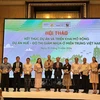
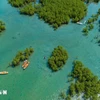
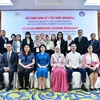
Speaking at a meeting held in Hanoi last week on ways to promote PPP in protecting the marine and coastal environment, he said Vietnam faced many challenges in protecting its natural resources and coastal environment, including pollution from the mainland (wastewater and solid waste), over-exploitation of resources, destruction of mangrove forests and coral reefs, climate change, rise in water levels and land erosion.
"At present, the Government has been investing and operating on its own as it copes with all these problems, but it is hampered by scarce resources, reduced ODA, increased public debt, and inefficient operations," he added.
In 2012, over 31,226 tonnes of solid waste was generated everyday and by 2025, the figure is expected to double. The money needed to treat this waste will also increase sharply, from 30 trillion VND (1.5 billion USD) in 2012 to 83.5 trillion VND (4 billion USD) in 2025.
Hoa said the answer to this problem was the PPP model, with relevant authorities cooperating with private partners to provide public services under contracts, sharing responsibility, risks and benefits.
Non-government organisations (NGOs), other sponsors and the larger community also played an important role in successful implementation of PPP projects, he said.
The model would help increase the number of projects in environmental protection, reduce risks and reduce financial pressure on the Government, he said.
"The most important thing is to minimise monopoly in providing public services," Hoa said.
However, he also said that despite the potential, actual application of PPP in environmental protection would face several hurdles.
Transaction costs and legal expenditure would be very high, and it might take many years to strike a deal. The success of contract negotiations would depend on the capabilities of relevant authorities. And in case the private partner goes bankrupt, political problems would arise.
Hoa said it was important that the difference between PPP and privatisation was understood clearly.
Vu Quynh Le, Deputy Head of the Ministry of Planning and Investment's Bidding Department, agreed with Hoa, saying that both increased awareness of PPP was necessary both within the Government and among the general public.
She said efficient and frequent communication was an important factor in deciding the success of PPP projects.
Stephen Raggett, PPP advisor to the Ministry of Planning and Investment, said the model was a proven procurement option for public infrastructure, allowing the private sector to innovate in the delivery of public services and manage more of the project risks involved in construction, operation, and financing.
He said the model would also bring in "a lot of benefits," including: more transparency in planning, procurement, and service delivery as well as rigorous project preparation and consideration of lifecycle costs/demand. It would encourage innovation and maximise the value of infrastructure assets, increase sources of investment capital while enabling efficient allocation of project risks.
Compared with other service delivery options, PPPs can provide clearer accountability and enforcement of standards, greater compliance with regulations, remove conflicts of interest and facilitate access to international technical and management expertise, he added.
"But the private sector has to be able to manage or mitigate project risks," the expert stressed.
Coastal defence projects would require significant capital and maintenance expenditures, but economic benefits could be difficult to obtain, he noted.
For extreme weather events, "output specification may be linked to flood/tide return period," and the government would need to take risks "beyond the specified design period," he said.
"The Government of Vietnam is committed to effective use of PPP and willing to learn from international experience but issues of tariffs and regulation will need to be addressed," Raggett said.
He also stressed the need to develop a domestic supplier base and financial markets, as well as "clear opportunities for private investment."-VNA
"There are many bad things happening to the environment and we need a proper mechanism so that we can mobilise all resources to deal with them," said Ho Cong Hoa, an economist with the Central Institute for Economic Management (CIEM).
Speaking at a meeting held in Hanoi last week on ways to promote PPP in protecting the marine and coastal environment, he said Vietnam faced many challenges in protecting its natural resources and coastal environment, including pollution from the mainland (wastewater and solid waste), over-exploitation of resources, destruction of mangrove forests and coral reefs, climate change, rise in water levels and land erosion.
"At present, the Government has been investing and operating on its own as it copes with all these problems, but it is hampered by scarce resources, reduced ODA, increased public debt, and inefficient operations," he added.
In 2012, over 31,226 tonnes of solid waste was generated everyday and by 2025, the figure is expected to double. The money needed to treat this waste will also increase sharply, from 30 trillion VND (1.5 billion USD) in 2012 to 83.5 trillion VND (4 billion USD) in 2025.
Hoa said the answer to this problem was the PPP model, with relevant authorities cooperating with private partners to provide public services under contracts, sharing responsibility, risks and benefits.
Non-government organisations (NGOs), other sponsors and the larger community also played an important role in successful implementation of PPP projects, he said.
The model would help increase the number of projects in environmental protection, reduce risks and reduce financial pressure on the Government, he said.
"The most important thing is to minimise monopoly in providing public services," Hoa said.
However, he also said that despite the potential, actual application of PPP in environmental protection would face several hurdles.
Transaction costs and legal expenditure would be very high, and it might take many years to strike a deal. The success of contract negotiations would depend on the capabilities of relevant authorities. And in case the private partner goes bankrupt, political problems would arise.
Hoa said it was important that the difference between PPP and privatisation was understood clearly.
Vu Quynh Le, Deputy Head of the Ministry of Planning and Investment's Bidding Department, agreed with Hoa, saying that both increased awareness of PPP was necessary both within the Government and among the general public.
She said efficient and frequent communication was an important factor in deciding the success of PPP projects.
Stephen Raggett, PPP advisor to the Ministry of Planning and Investment, said the model was a proven procurement option for public infrastructure, allowing the private sector to innovate in the delivery of public services and manage more of the project risks involved in construction, operation, and financing.
He said the model would also bring in "a lot of benefits," including: more transparency in planning, procurement, and service delivery as well as rigorous project preparation and consideration of lifecycle costs/demand. It would encourage innovation and maximise the value of infrastructure assets, increase sources of investment capital while enabling efficient allocation of project risks.
Compared with other service delivery options, PPPs can provide clearer accountability and enforcement of standards, greater compliance with regulations, remove conflicts of interest and facilitate access to international technical and management expertise, he added.
"But the private sector has to be able to manage or mitigate project risks," the expert stressed.
Coastal defence projects would require significant capital and maintenance expenditures, but economic benefits could be difficult to obtain, he noted.
For extreme weather events, "output specification may be linked to flood/tide return period," and the government would need to take risks "beyond the specified design period," he said.
"The Government of Vietnam is committed to effective use of PPP and willing to learn from international experience but issues of tariffs and regulation will need to be addressed," Raggett said.
He also stressed the need to develop a domestic supplier base and financial markets, as well as "clear opportunities for private investment."-VNA