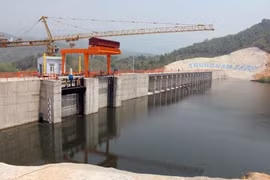
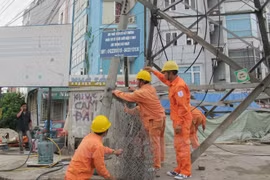
The Ministry of Industry and Trade suggests allowing EVN to increase power tariffs every three months by a range of 3 percent to 5 percent. The maximum rise per year is 20 percent. (Photo: www.evn.com.vn)
Hanoi (VNA) - A proposal to allow Electricity of Vietnam (EVN) to set retail prices has been criticised for granting excessive power to the national utility as well as the Ministry of Industry and Trade (MoIT).
The draft proposal prepared by MoIT will allow EVN to increase prices every three months by three to 5 percent with a cap of 20 percent per year.
It also suggests that the MoIT is allowed to oversee price hikes of 5-10 percent every three months up to 40 percent a year.
The draft proposal on adjusting retail power prices, released in February to collect feedback from relevant agencies and the public, is intended to replace Decision 69/2013/QD-TT.
Decision 69 stipulates that the minimum interval between two electricity price hikes is six months, and the increase of between 7-10 percent must be approved by the ministry. The ministry can take decisions on retail power price hikes of up to 20 percent.
Under the new proposal, if input costs reduce, EVN would have the right to decrease power tariffs correspondingly, with such decisions overseen by the ministries of Finance and Trade and Industry.
The draft says the selling price would be based on market mechanisms, including power purchase contracts.
Too much power
The proposal has drawn flak from the Vietnam Chamber of Commerce and Industry (VCCI).
VCCI noted that Vietnam’s annual inflation has never exceeded 20 percent since 1995, so there was no reason that EVN or MoIT is given so much leeway over power prices, to levels far higher than normal price fluctuations.
However, the chamber agreed with the proposal reducing the interval between two price adjustments from six to three months, saying it was “suitable” with the current situation.
It suggested that the ministry autonomously manages price increases of 3-5 percent, but be required to get the Prime Minister’s approval for higher hikes in retail prices.
Rational proposals
For its part, MoIT said that it had cooperated with relevant ministries to review implementation of Decision 69 over the last two years.
It said the Decision had made power tariff adjustments more transparent, but the interval of six months did not allow for timely adjustments based on changes in prices of basic inputs.
MoIT also said increases of more than seven per cent was considered too high, having the potential to adversely impact macro-economic stability and social security.
The new draft intended to address such shortcomings, MoIT said, adding that it has already collected opinions from different ministries and sectors.
The draft had been posted on the ministry’s website since February to collect feedback from consumers, including big ones like the Cement Corporation and Steel Corporation.
It said allowing EVN to hike prices by three to five percent was in line with the Electricity Law and previous regulations on managing power prices under market mechanisms.
The draft also gives it the right to supervise the price adjustments and direct EVN to reduce or stop power hikes if deemed necessary, the ministry said.
It said it would check electricity production and trading costs on the basis of independently audited financial reports that the EVN submits every year.
The MoIT said it would publish results of such checks on its own website and that of the Electricity Regulatory Authority of Vietnam. These would include transmission, distribution and management costs, and EVN’s profit and loss statements.
It said the draft, which has gathered feedback from various ministries, agencies and the public, would be submitted to the PM for approval, but did not specify a time frame.-VNA