Public-Private Partnership law offers little benefit to public projects

The Law on Public-Private Partnership (PPP) has been up and running for over one year and a half, but it has made no difference to domestic investment so far, according to experts.
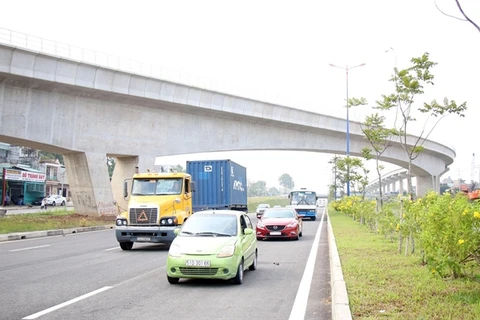
Public-Private Partnership law offers little benefit to public projects ảnh 1A Vietnamese highway. The country aims to build 9,000km of highways by 2050 and one third of the construction costs are expected to be financed by private money. (Photo baochinhphu.vn)
Hanoi (VNS/VNA)- The Law on Public-Private Partnership (PPP) has been up and running for overone year and a half, but it has made no difference to domestic investment sofar, according to experts.

Duong Dang Hue, a legaladviser at the Vietnam Association of Road Traffic Investors, is concerned thatthe number of PPP-based projects have been declining since the Law on PPP tookeffect in early 2021.

He underscored fourreasons why the law gave no boost to private involvement in public projects.

First, the law is toosimplistic, inadequate to regulate many major issues arising from PPPcontracts. Without adequate legal grounds, private investors become discouragedand are unwilling to enter into arrangements.

Second, the law fails toclearly define private investors rights to the facilities in the projects. Theabsence of a clear-cut definition of rights makes investors uncertain abouttheir ownership of the facilities, putting them off.

Third is the right torun the facilities for profits that private investors seek once they put theirmoney into PPP-based projects.

Although the right hasbeen implicitly stated in various legal documents, it is frequently violated inreality, further disheartening investors.

The absence of amechanism to incentivise private investments in minor facilities along publichighways, such as petrol stations and motels, is the fourth reason for lowprivate presence in the public projects scene.

Nguyen Minh Duc, an expertat the Legal Department under the Vietnam Chamber of Commerce and Industry,estimated that Vietnam needs around 900 trillion VND (38 billion USD) between2021 and 2030 to reach its goal of 9,000km of highways and 30,000km of nationalroads by 2050.

The Government expectspublic money to meet two-thirds of the financial need and private investment dothe rest. Unfortunately, almost no private money flowed into publicinfrastructure in 2021 and 2022.

“Low private involvementindicates that the goal of 300 trillion VND of private investments ininfrastructure in the next 10 years is not easy,” he said.

He also revealed thatmany public projects initially expected to kick off under PPP were later fundedsolely by public money as they received a lukewarm reception from privateinvestors.

Nguyen Trong Hiep, Directorof the HPVN Law LTD., underscored the need to revise the Law on PPP toencourage the participation of the private sector in public projects.

He said the Governmenthad to establish a well-developed risk-sharing mechanism to give privateinvestors decent profits to reward for the risks they bear in PPP-basedprojects.

A good risk-returntradeoff would act as a financial incentive for the investors to put theirmoney into public infrastructure.

He also said a disputesettlement mechanism should be put in place to deal with public-privatedisagreements and quickly resolve minor disputes.

He called fortransparency when the contracts are put out to tender to ensure best investorswin the bids. Inspection should be frequently carried out to preventfavouritism.

Nguyen Hong Chung, Chairmanof the DVL VENTURES, urged the Government to change its management mindset,establish institutions promoting PPP and found a national fund for PPPdevelopment.

He said it was time tochange the relationship between the State and the private sector to keep upwith the times./.


VNA

See more

Illustrative image (Photo: VNA)

Australia announces import conditions for Vietnamese pomelos

Australia’s formal publication provides an important legal basis, marking the completion of the review, assessment and agreement on technical requirements for fresh Vietnamese pomelos. This represents a significant step forward in market access, creating favourable conditions for relevant agencies, localities and businesses to prepare for export activities in the coming time.

Containers of fresh Vietnamese durian for export are subject to a full-chain traceability system. (Photo: VNA)

First “green lane” durian shipment exported to China

​Under the “green lane” process, quality control begins at the cultivation stage, including soil sampling and monitoring, and continues through harvesting and processing, with traceability labels attached to trees and applied to fruit at the time of picking. It also allows plant quarantine procedures and the issuance of certificates of origin (C/O) directly in the localities where the orchards are located.

Delegates at the Vietnam Expo 2026 (Photo: VNA)

Vietnam pushes for deeper auto supply chain ties with RoK

The RoK stood as Vietnam’s largest foreign investor with more than 95.2 billion USD in registered capital as of February 2026, or about 18% of all foreign cash flowing in, with thousands of active projects. In January-February alone, the RoK led the pack with nearly 2 billion USD in pledges, grabbing a whopping 32.7% of total registered capital and showing no signs of slowing down.

More than 600 tourism firms, 15 countries and territories, and 34 provinces and cities are promoting destinations and introducing tourism products at the fair (Photo: VNA)

Digital transformation key to elevating Vietnam’s tourism: official

Speaking at the opening of the Vietnam International Travel Mart (VITM) 2026 in Hanoi on April 10, Deputy Minister of Culture, Sports and Tourism Ho An Phong noted that despite challenges in 2025, Vietnam largely fulfilled its socio-economic development goals. Tourism remained a bright spot, recording 21.5 million foreign arrivals and 135.5 million domestic visitors, with total revenue exceeding 1 quadrillion VND (37.9 billion USD).

A drone sprays fertiliser over rice fields. (Photo: VNA)

Low-altitude economy emerges as new growth driver for Vietnam

The UAV technology is particularly effective in addressing challenges faced by ground infrastructure, especially in densely populated urban areas and remote regions. Smart aerial devices also enable real-time data collection, improving governance, decision-making and digital transformation across industries.

Passengers at Cat Bi Airport in Hai Phong city (Photo: VNA)

Aviation sector ensures fuel supply for April 30–May 1 peak

Aviation fuel suppliers are actively negotiating and diversifying supply sources both domestically and internationally, while strengthening coordination, storage and distribution capacity to meet immediate demand. These efforts aim to support airlines in optimising operations and maintaining stable flight schedules.

A session at the Vietnam–Australia Green Transition Forum 2026. (Photo: VNA)

Green transition offers opportunities for stronger Vietnam–Australia cooperation

Under the theme "Accelerating decarbonisation in agriculture and manufacturing – Unlocking trade and investment opportunities", the forum gathered nearly 200 researchers, experts and businesses involved in policy development, investment, research and innovation. Participants exchanged insights and explored ways to translate the cooperation potential between Vietnam and Australia into practical business opportunities.