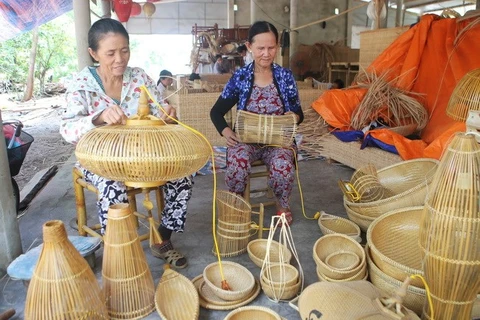
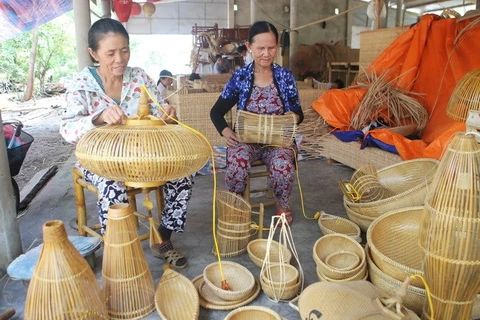
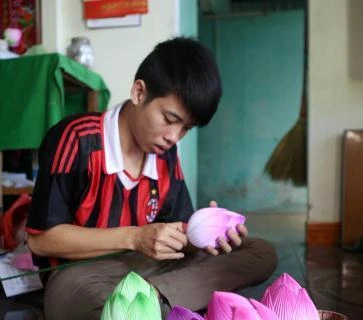
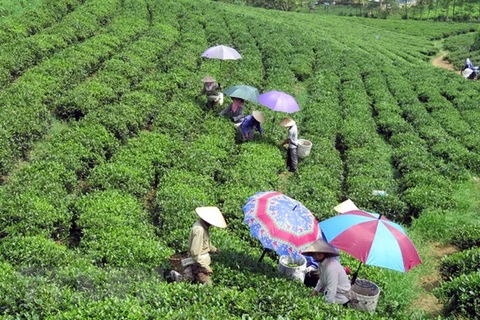
Illustrative image (Source: VNA)
 Quang Ninh (VNA) – The northeastern province of Quang Ninh said it will be organising a promotional event for its local “One Commune, One Product” (OCOP) programme.
Accordingly, during the third quarter of 2018, there will be a host of three-day-per-week events run across Dong Trieu, Quang Yen, Hai Ha district, Mong Cai, and Cam Pha.
These events, part of the OCOP promotion week, aim to support local participants of the programme in expanding their markets to traditional wet markets, industrial zones, and residential areas.
The total number of products engaged in the Quang Ninh OCOP programme amounts to 362, of which 179 are categorised as food stuffs, 60 as beverage, 46 herbal medicine, seven handicrafts, and two services. A total of 131 products have been rated with three, four, and five stars.
Meanwhile there are 44 enterprises, 64 cooperatives, and 56 households taking part in the programme.
OCOP products brought approximately 239 billion VND (10.23 million USD) to Quang Ninh in the first six months of 2018, up 7.4 percent year-on-year. The revenue resulted in a profit of 27.7 billion VND (1.18 million USD), an annual increase of 10 percent against the same period last year. Also during the period, the programme created 3,532 jobs with an average monthly income ranging between 5 and 9 million VND (213 – 385 USD) per person.
In 2013, Quang Ninh was the first locality in Vietnam to implement the programme, which was initiated by the Ministry of Agriculture and Rural Development in 2008, following the model of Japan’s “One Village, One Product” (OVOP) drive and Thailand’s “One Town, One Product” (OTOP).
Vice Chairman of the provincial People’s Committee Dang Huy Hau said Quang Ninh hopes to leverage its advantages in natural resources, culture, and rural labour through the programme. In turn, boosting the creation of high-quality products, generating jobs and increasing incomes for local residents, and bring the locality closer to its sustainable development aims.
The OCOP programme is designed to help develop and complete production and value chains through production, harvesting, processing, and consumption for local specialties and products, he said.
The OCOP brand is registered as intellectual property and will be printed on all products, according to Hau.
Chairman of Quang Ninh Alliance of Cooperatives Nguyen Van Nghi said the province has encouraged the participation of cooperatives in the OCOP programme, as well as the transformation of cooperatives in line with the 2012 Law on Cooperatives to receive preferential treatment and improve their operational efficiency.
In addition, 29 cooperatives have been established through the OCOP.
Nghi said the law has created a legal framework for cooperatives to develop sustainably and diversify production models, thus contributing to poverty reduction.
The OCOP is an economic development programme for rural areas focusing on increasing internal power and values, contributing to the implementation of the National Target Programme on New Rural Development for 2016-2020.
The classifications of goods and services defined in the programme include food (fresh and processed farm produce); beverages (alcoholic and non-alcoholic drinking); medicinal herbs (products made from herbal plants); fabric and textiles (products made from cotton and yarn); souvenirs, furniture, and decorations (products made from wood, fibres, rattan, metal, and ceramics); and rural tourism services and sales (services for sightseeing, tourism, study, and research).
The overall objective of the programme is to develop stable and sustainable forms of production for organisations and businesses (with priority given to developing cooperatives and small- and medium-sized enterprises), towards producing traditional products and improving services with high competitiveness on the domestic and international markets, thus promoting rural economy and national agriculture industrialisation and modernisation.
As of late April, 60 out of 63 cities and provinces nationwide have built their OCOP frame programme at the provincial level, 30 of which have already completed the programme design and 28 others are collecting feedback before approval. Paticularly, Quang Ninh province has entered the second phase.–VNA
Accordingly, during the third quarter of 2018, there will be a host of three-day-per-week events run across Dong Trieu, Quang Yen, Hai Ha district, Mong Cai, and Cam Pha.
These events, part of the OCOP promotion week, aim to support local participants of the programme in expanding their markets to traditional wet markets, industrial zones, and residential areas.
The total number of products engaged in the Quang Ninh OCOP programme amounts to 362, of which 179 are categorised as food stuffs, 60 as beverage, 46 herbal medicine, seven handicrafts, and two services. A total of 131 products have been rated with three, four, and five stars.
Meanwhile there are 44 enterprises, 64 cooperatives, and 56 households taking part in the programme.
OCOP products brought approximately 239 billion VND (10.23 million USD) to Quang Ninh in the first six months of 2018, up 7.4 percent year-on-year. The revenue resulted in a profit of 27.7 billion VND (1.18 million USD), an annual increase of 10 percent against the same period last year. Also during the period, the programme created 3,532 jobs with an average monthly income ranging between 5 and 9 million VND (213 – 385 USD) per person.
In 2013, Quang Ninh was the first locality in Vietnam to implement the programme, which was initiated by the Ministry of Agriculture and Rural Development in 2008, following the model of Japan’s “One Village, One Product” (OVOP) drive and Thailand’s “One Town, One Product” (OTOP).
Vice Chairman of the provincial People’s Committee Dang Huy Hau said Quang Ninh hopes to leverage its advantages in natural resources, culture, and rural labour through the programme. In turn, boosting the creation of high-quality products, generating jobs and increasing incomes for local residents, and bring the locality closer to its sustainable development aims.
The OCOP programme is designed to help develop and complete production and value chains through production, harvesting, processing, and consumption for local specialties and products, he said.
The OCOP brand is registered as intellectual property and will be printed on all products, according to Hau.
Chairman of Quang Ninh Alliance of Cooperatives Nguyen Van Nghi said the province has encouraged the participation of cooperatives in the OCOP programme, as well as the transformation of cooperatives in line with the 2012 Law on Cooperatives to receive preferential treatment and improve their operational efficiency.
In addition, 29 cooperatives have been established through the OCOP.
Nghi said the law has created a legal framework for cooperatives to develop sustainably and diversify production models, thus contributing to poverty reduction.
The OCOP is an economic development programme for rural areas focusing on increasing internal power and values, contributing to the implementation of the National Target Programme on New Rural Development for 2016-2020.
The classifications of goods and services defined in the programme include food (fresh and processed farm produce); beverages (alcoholic and non-alcoholic drinking); medicinal herbs (products made from herbal plants); fabric and textiles (products made from cotton and yarn); souvenirs, furniture, and decorations (products made from wood, fibres, rattan, metal, and ceramics); and rural tourism services and sales (services for sightseeing, tourism, study, and research).
The overall objective of the programme is to develop stable and sustainable forms of production for organisations and businesses (with priority given to developing cooperatives and small- and medium-sized enterprises), towards producing traditional products and improving services with high competitiveness on the domestic and international markets, thus promoting rural economy and national agriculture industrialisation and modernisation.
As of late April, 60 out of 63 cities and provinces nationwide have built their OCOP frame programme at the provincial level, 30 of which have already completed the programme design and 28 others are collecting feedback before approval. Paticularly, Quang Ninh province has entered the second phase.–VNA
VNA