RCEP may result in change in regional trade and investment flows: Cambodian expert

Although the COVID-19 pandemic has interrupted the global supply chain and hurt regional economies, it may become a driving force for the signing of the Regional Comprehensive Economic Partnership (RCEP), said Chheang Vannarith, President of the Cambodian-based Asian Vision Institute (AVI).
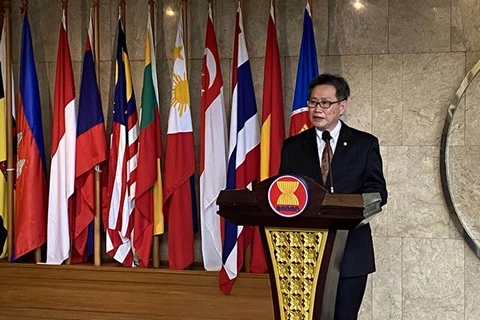
RCEP may result in change in regional trade and investment flows: Cambodian expert ảnh 1 President of the Cambodian-based Asian Vision Institute (AVI) Chheang Vannarith (Photo: VNA)

 Phnom Penh (VNA) – Although the COVID-19 pandemic has interruptedthe global supply chain and hurt regional economies, it may become a driving force forthe signing of the Regional Comprehensive Economic Partnership (RCEP), said ChheangVannarith, President of the Cambodian-based Asian Vision Institute (AVI). 

During an interview with the Vietnam News Agency's correspondents in Phnom Penh on November10, the expert said the ravaging pandemic has forced countries to furtherintegrate and connect their economies with others for quick recovery.

He noted that the trade agreement could lead to acomprehensive change in the flow of trade and investment in Asia-Pacific, promoteintra-bloc supply chains and bolster trust in the regional business sector.

Vannarith said that Cambodia always supports the RCEP’s buildingprocess coordinated and promoted by Vietnam, adding that Cambodia stands readyto sign the agreement at the 37th ASEAN Summit hosted by Vietnam.

The signing of RCEP also sends a clear sign that Asian economies arenot for unilateralism and trade protectionism, he affirmed.

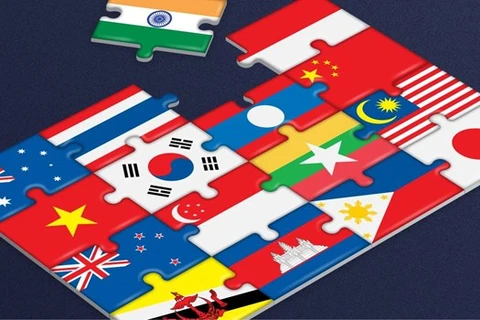
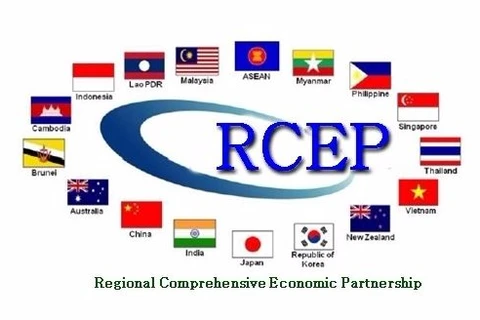
RCEP was initiated in November 2012, aiming to establish aneconomic platform between the 10 ASEAN member states and Australia, China,Japan, New Zealand and the Republic of Korea, focusing on trade in goods,services and investment.

If signed, RCEP would become the largest freetrade agreement in the world, covering about 30 percent of the world’spopulation while contributing nearly one third (29.3 percent) of the world’s gross domestic product./.
VNA

See more

Thai Deputy Prime Minister and Finance Minister Ekniti Nitithanprapas (centre), Commerce Minister Suphajee Suthumpun (left), and Foreign Minister Sihasak Phuangketkeow at the Bhumjaithai Party forum in Buri Ram province on March 8. (Photo: bangkokpost.com)

Thailand unveils “10 Plus” strategy to weather global instability

Deputy Prime Minister and Finance Minister Ekniti Nitithanprapas said the policy package focuses on concrete economic measures, including initiatives to help low-income households, elderly citizens and small businesses reduce debt, thereby supporting national economic growth.

Thailand takes strong action against complicity in cybercrime

Thailand takes strong action against complicity in cybercrime

Airin Phanrit, Deputy Spokesperson for the Prime Minister’s Office, said the damage caused by call centre scams is evident, with some Thais involved in fraudulent activities against their compatriots, including receiving money to open mule accounts. She urged the public, especially young people, not to be tempted by small sums of money to register SIM cards or give personal information to fraudsters for use in online criminal activities.

Indonesian Trade Minister Budi Santoso on the sidelines of the Closing Ceremony of Trade Expo Indonesia (TEI) 2025 at ICE BSD, Tangerang. (Photo:jakartaglobe.id)

Indonesia seeks WTO approval to suspend concessions to EU

The dispute dates back to 2018, when the EU issued a directive restricting the inclusion of crop-based biofuels in member states’ renewable energy targets and set a roadmap to phase out palm oil-based biofuels by 2030, citing concerns over the sustainability of palm oil production.

A motorist refuels at a station in Phnom Penh following a Ministry of Commerce warning against domestic fuel stockpiling. (Photo: Khmer Times)

Cambodia strengthens control over retail fuel sales

Cambodia’s Ministry of Commerce has called on the public and fuel station operators across the country to avoid hoarding fuel and to strictly follow technical safety standards in the sale and storage of petroleum products to prevent safety risks and ensure a stable supply.

Lao Prime Minister Sonexay Siphandone (Photo: Xinhua/VNA)

Laos identifies 10 key tasks to build independent, self-reliant economy

Laos will step up agricultural production to ensure food security, meet domestic demand and expand exports; encourage the development of agro-processing industries, including those related to rubber, aquatic products, cassava and sugarcane, as well as fertiliser and animal feed production, in order to increase added value and create jobs in rural areas.

Illustrative image (Photo: Nikkei)

ASEAN faces startup funding drought risks

ASEAN's startups raised 1.16 billion USD in October-December 2025, slightly down from the same quarter a year earlier. For the full year, funding increased 18% to 5.4 billion USD, but that was still about a fourth of the level seen in the peak year of 2021.

Environment Minister Hanif Faisol Nurofiq speaks to the press in Badung, Bali, on March 5. (Photo: Antara)

Indonesia steps up waste sorting at source

Waste sorting at source, combined with modern treatment technologies and stronger community participation, will play a decisive role in reducing pollution and building a sustainable waste management system in Indonesia in the coming years.

Lao girls in a festival. (Photo: asiakingtravel.com)

Laos marks International Women’s Day

The Lao People’s Revolutionary Party and the Lao Government have established policies and legal frameworks to promote women’s development, safeguard women’s rights and interests, and advance gender equality.

Two children play with a gadget in Jakarta. (Photo: ANTARA)

Indonesia sets age limits on digital platforms to protect children

Minister of Communication and Digital Affairs Meutya Hafid said Government Regulation No. 17 of 2025 on Electronic System Governance for Child Protection, known as PP Tunas, will delay access to high‑risk platforms until age 16, while lower‑risk services will be available from age 13.

Indonesia looks to expand engineering workforce amid AI push

Indonesia looks to expand engineering workforce amid AI push

President of the Institution of Engineers, Indonesia (PII) Ilham Akbar Habibie said the number of engineers per one million people in Indonesia remains low. The country currently has about 2,500 engineers per one million people, compared with around 9,500 in Vietnam – nearly four times higher. He described Vietnam as a typical example of how a nation can rely on engineering to strengthen its economy and drive robust economic growth.