RCEP signing postponed to 2020

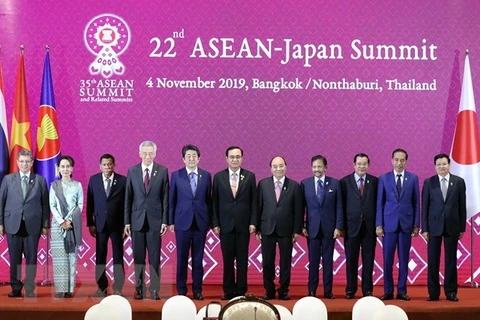
Leaders of 16 Asia-Pacific countries, including Japan, China, and India, on November 4 issued a joint statement on the postponing of the signing of the Regional Comprehensive Economic Partnership (RCEP) to 2020 instead of 2019 as scheduled.
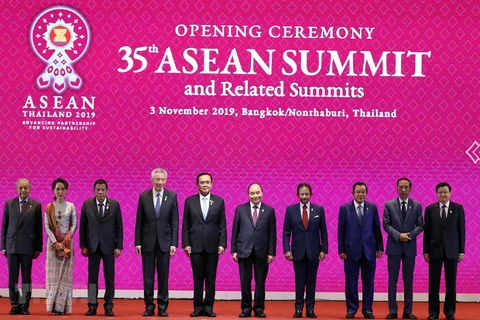
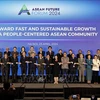
RCEP signing postponed to 2020 ảnh 1Leaders at the third Regional Comprehensive Economic Partnership (RCEP) Summit (Photo: VNA)

Hanoi (VNA) – Leaders of 16 Asia-Pacificcountries, including Japan, China, and India, on November 4 issued a jointstatement on the postponing of the signing of the Regional ComprehensiveEconomic Partnership (RCEP) to 2020 instead of 2019 as scheduled.

The statement, announced following a meeting of the 16countries’ leaders in Bangkok the same day, said that the leaders committed toinking the mega deal in 2020. It is likely that they will continue to negotiateon the agreement.

“We noted 15 RCEP participating countries have concludedtext-based negotiations for all 20 chapters and essentially all their marketaccess issues; and tasked legal scrubbing by them to commence for signing in2020,” said the statement.

“India has significant outstanding issues, which remainunresolved. All RCEP participating countries will work together to resolvethese outstanding issues in a mutually satisfactory way. India’s final decisionwill depend on satisfactory resolution of these issues,” it added.

“Present form of the RCEPAgreement does not fully reflect the basic spirit and agreed guiding principlesof RCEP,” Indian Prime Minister NarendraModi was quoted saying by Indian publicbroadcaster PrasarBharati News Services. “It does not address satisfactorilyIndia’s outstanding issues and concerns,” he stated.

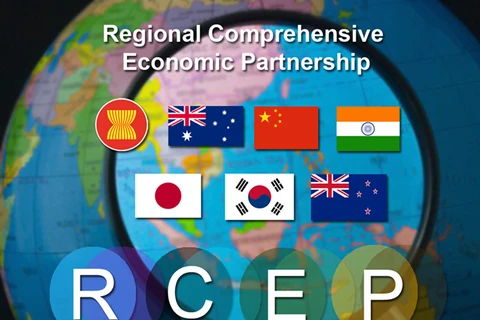
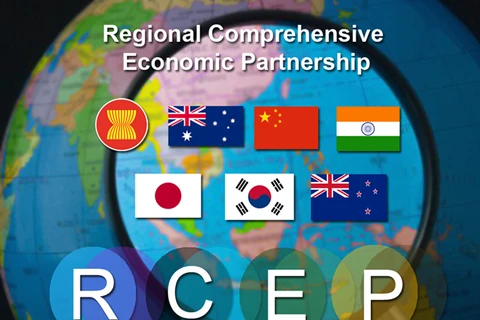
RCEP, launched in 2012, includes the 10 ASEAN members, as well as China,the Republic of Korea, Japan, Australia and New Zealand.


Once signed, the deal will create the largestfree trade area in the world with about 3.5 billionpeople and making up 30 percent of the global GDP./.
VNA
See more

The ASEAN Senior Officials’ Meeting (SOM) convenes in Manila, the Philippines, on September 9. The Vietnamese delegation is led by Deputy Minister of Foreign Affairs Dang Hoang Giang (fifth, left), head of the ASEAN-Vietnam SOM.(Photo: asean.org)

Vietnam calls for stronger ASEAN unity, resilience

Deputy Minister of Foreign Affairs Dang Hoang Giang urged ASEAN to make full use of existing mechanisms to enhance dialogue, build trust and prevent risks and conflicts, particularly by strengthening the Treaty of Amity and Cooperation in Southeast Asia (TAC), the Southeast Asia Nuclear Weapon-Free Zone Treaty (SEANWFZ), and cooperation based on international law.

Timor-Leste President Jose Ramos-Horta (Photo: VNA)

Timor-Leste diversifies economy, seeks to attract investment

The President noted Timor-Leste is pursuing sustainable development, stronger regional connectivity and expanded international cooperation while seeking investment opportunities in energy, tourism and emerging economic sectors to reduce its dependence on oil and gas revenues.

A Vietnamese business introduces durian cakes to Chinese visitors at the 22nd China-ASEAN Expo (CAEXPO) in 2025. (Photo: VNA)

Vietnam steps up trade, investment promotion at China-ASEAN Expo

According to the CAEXPO Secretariat, Vietnam will once again lease an entire exhibition area of about 3,000sq.m, featuring 170 booths, making it one of the ASEAN countries with the largest exhibition spaces at this year’s event. Nearly 100 Vietnamese businesses have confirmed their participation, including major brands such as Trung Nguyen Group, TH Group, Saigon Coffee and Biti’s.

Delegates pose for a group photo at the workshop (Photo: VNA)

Vietnam voices concerns over future of traditional media at ASEAN workshop

In his speech, Long outlined challenges related to policy, human resources, technological gaps and platforms, economic factors, and new issues arising from AI. He also introduced the VNA's solutions to address the challenges of digital transformation and shared VietnamPlus' experience in adapting to the digital environment.

An overview of the 29th ASEAN Labour Ministers Meeting (Photo: VNA)

Vietnam reaffirms commitment to building resilient, inclusive and integrated ASEAN Labour Market

To this end, Vietnam proposed three strategic priorities for ASEAN cooperation. First, ASEAN should expand and harmonise mutual recognition mechanisms by increasing the scope and number of Mutual Recognition Arrangements (MRAs) in the region; and promote the role of the ASEAN TVET Council (ATC) in connecting national skills certification systems with regional and global standards, based on national occupational skills qualification frameworks and regional references.

British Ambassador to Vietnam Iain Frew (Photo: VNA)

UK-Vietnam cooperation deepens ASEAN-UK partnership trust: ambassador

The UK is accelerating investment in clean power across Southeast Asia. The country is working closely together through its co-leadership of the Just Energy Transition Partnership (JETP) to support Vietnam’s ambition to expand renewable energy, unlock investment in offshore wind, and build a cleaner, more resilient energy system for the future.